
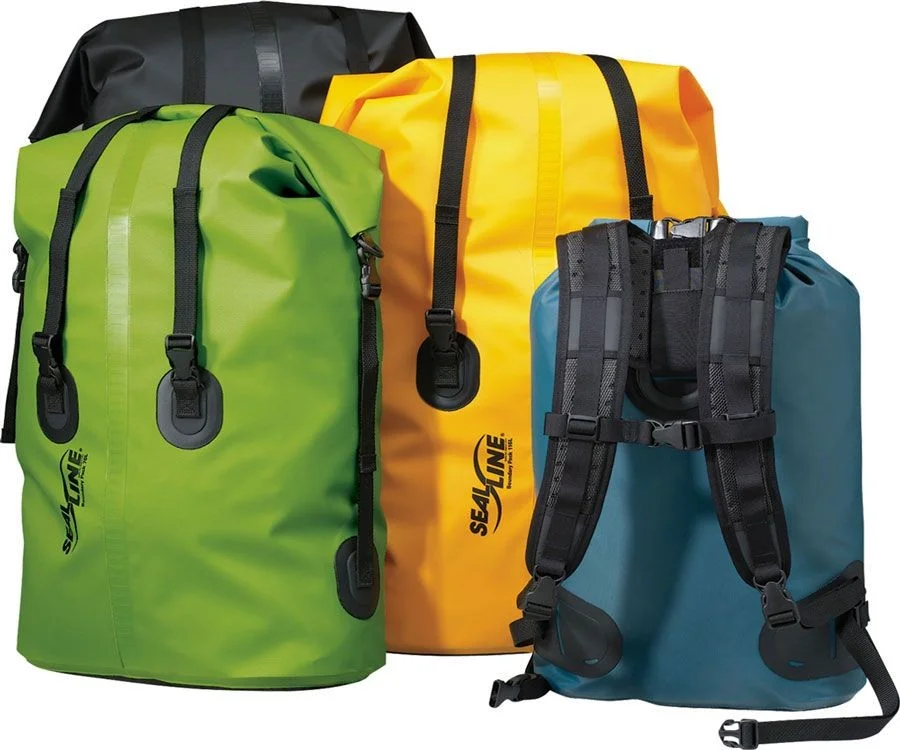
Bag or backpack
A dry bag protects belongings from water; versions with shoulder straps are easier to carry separately. It can sit inside an ordinary backpack or act as independent packaging. First decide what must stay dry: sleeping gear, clothing, food or electronics. Several smaller bags simplify access and separation of wet and dry items.
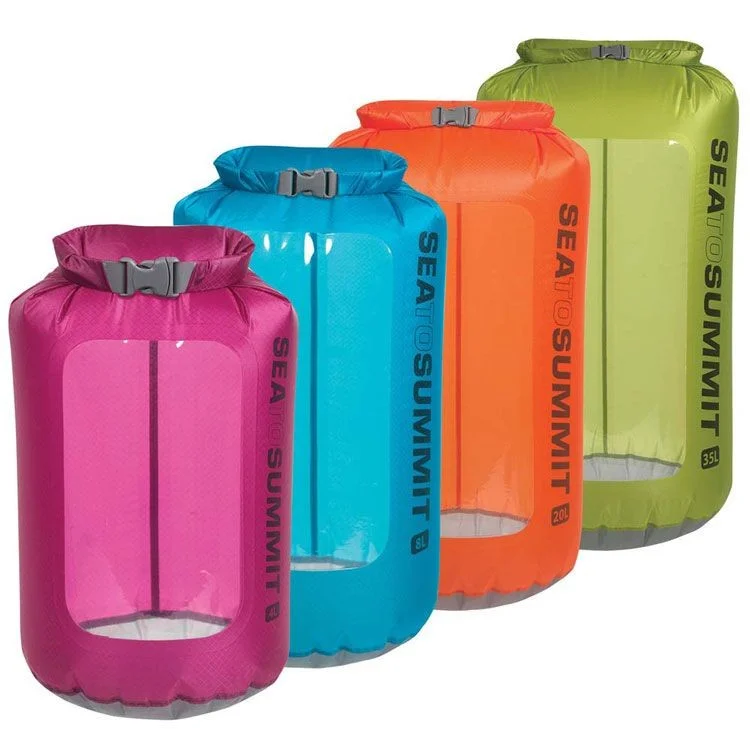
More than fabric
Nylon, coated fabrics and PVC come in different thicknesses and constructions. A material name alone does not establish protection. Check seams, valves and closure method; follow instructions for the number of neck rolls. Rain protection does not imply suitability for prolonged immersion. Check separate requirements for electronics and use appropriate additional packaging.
Convenience and testing
Try the straps with a realistic load and assess handles and access. Do not overfill a bag so that its neck cannot close correctly. Before travelling, test its sealing by a method safe for your belongings and consistent with the manufacturer’s instructions. An air-release valve must not remain open in water.
Care and limits
Pack sharp objects separately and clear sand from the closure area. Match repair materials to the coating and dry the bag before storage. Homemade packaging made from banner fabric does not automatically have the properties of a tested dry bag. A dry bag is not a lifesaving device and does not make a crossing safe.