Try before buying
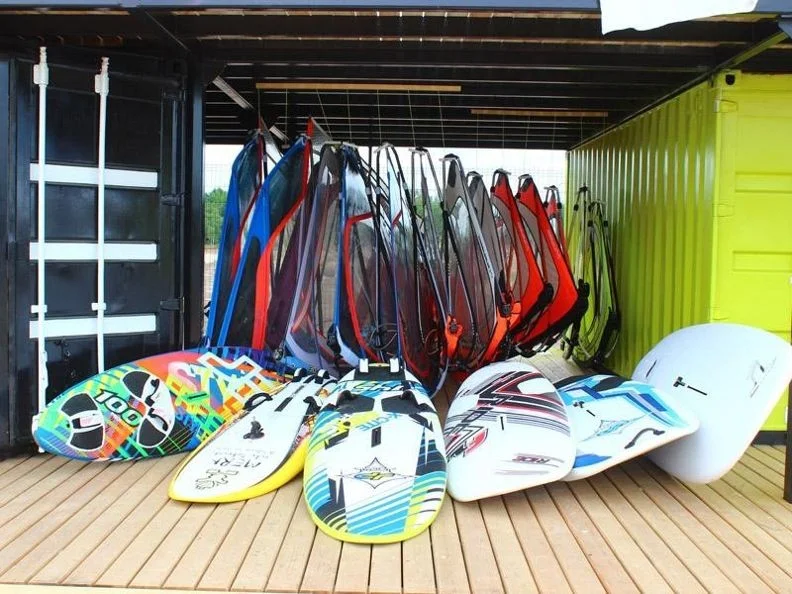
After your first lessons, owning a board can be tempting, but first understand your skills and likely sailing conditions. There is no universal rule to buy after ten sessions: people learn at different rates. A few lessons and trials of suitable rental setups provide more information than choosing from photographs.
Discuss where you will sail, how often, in what wind and how you will transport equipment with an instructor. Gentle learning, cruising, planing and waves call for different characteristics. Equipment intended for future progress should not prevent you from learning basic skills safely now.
Stability and suitable volume
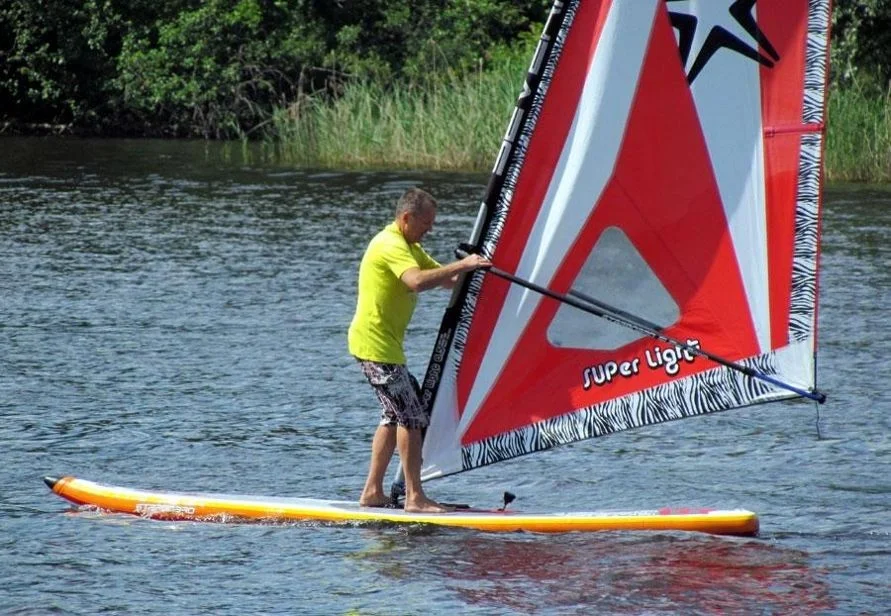
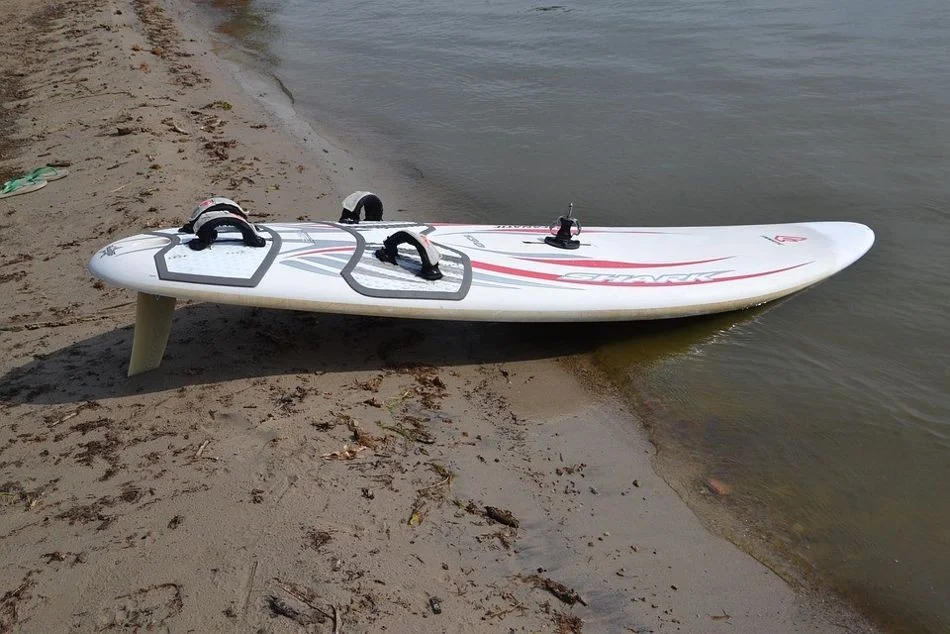
Volume, width, shape and weight distribution affect how a board behaves, alongside rider and rig weight. A large training model generally forgives more mistakes, but “bigger is always better” is not a complete selection rule. Check width and volume against the particular model’s specifications and recommended rider weight.
Check how comfortably you can stand, uphaul the sail and return to your starting point. A board with a daggerboard may help with training if it suits the lesson programme. Small size or a pointed nose alone does not make a board professional: intended use matters more than appearance.
Buy a compatible setup
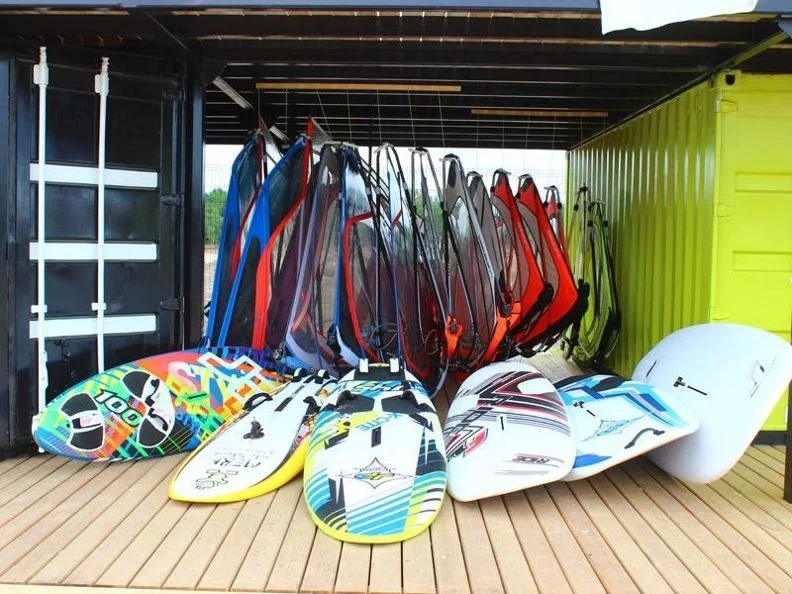
The board works with the sail, mast, boom, fin and fittings. An excessively heavy or unsuitable rig can spoil the experience even on a stable board. Check compatibility against documentation and school advice rather than assembling random components.
Inspect a used board’s surface, repair marks and fittings, and ask about past damage. If you cannot assess its construction, get expert help. A trial under suitable safe conditions is more useful than a seller’s promise that a model suits everyone.
A homemade board is a separate project
A composite board requires structural design, compatible materials and quality control. Foam, glass cloth and resin do not automatically produce a reliable craft. A short account of laminating does not replace a design, materials skills and checks of the completed hull.
For first lessons, use sound training equipment. If you build your own board, treat it as a separate engineering project rather than a quick route to safe sports equipment. Exterior finishing does not establish the strength of inserts or the hull’s watertightness.
Clothing, harness and conditions
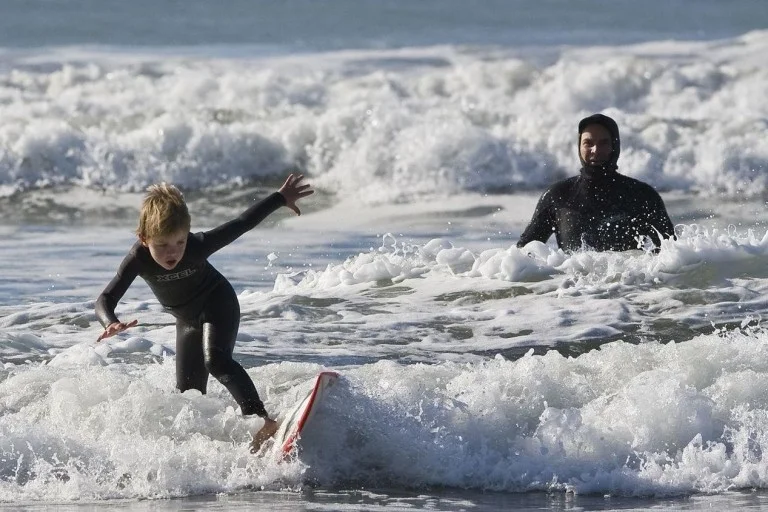
Choose a wetsuit for water and air temperatures, session length and fit, not just the resort’s name. A harness requires learning the technique; a beginner should not add one to a first setup without instruction. Waist and seat harnesses serve different purposes and must suit the individual.
Discuss buoyancy and protective equipment, sailing-area boundaries and return arrangements with the school before launching. A warm day does not prove conditions on the water are safe. A clear lesson with suitable equipment matters more at the start than buying the most sporting model.