
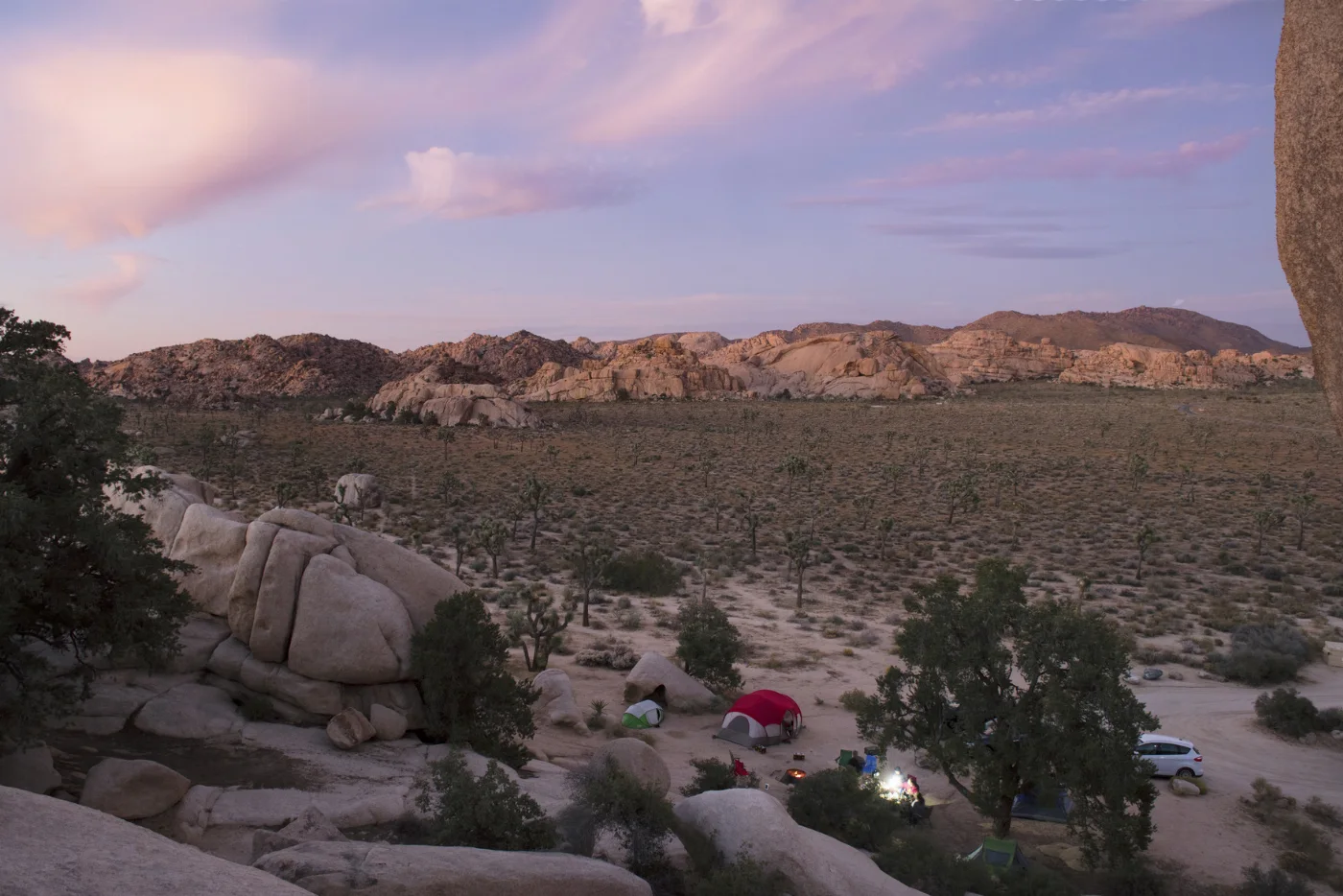
Illustrative photo: Hidden Valley campground, USA. NPS / Hannah Schwalbe · Public domain. Original photo
A car lets you bring more gear, but it doesn’t eliminate the need for a simple route. Choose a primary spot, a reliable place to stay overnight, and a backup option in case the weather changes or the approach is inaccessible.
What to watch out for
Approach to the site
Check the condition of the final kilometres, allowed parking areas and access restrictions. A pin on the map doesn’t guarantee passability after rain. Don’t schedule your first arrival at an unfamiliar, difficult location late at night.
Order in the trunk
Essential items should be reachable without fully unloading. Secure heavy equipment so it doesn’t shift when braking. Separate wet tents and dirty shoes from clean clothing.
Overnight stay without improvisation
Find out the campsite rules, arrival time, water availability and sanitary facilities in advance. A remote scenic spot isn’t necessarily a permitted parking area. Your plan should allow you to change the overnight location if needed.
Leave a buffer in the plan
Create a simple plan: where the route starts, how to return and when to inform relatives of completion. Count time for rests, photos and finding the way separately. If the group gets tired or the weather changes, shortening the walk is a normal decision. A short backup option is best prepared at home when you have connectivity and time to calmly compare possibilities.
Practical summary
Allow time for personal relaxation, not just travel between points. For a short weekend, one good base is often more convenient than a long list of mandatory stops.
Next step: open the trip planner and the site map, to link the recommendations with a specific outing. Check current access to the chosen area before you go.