
Illustrative photo: kayak on the Colorado River, USA. NPS / Andrew Cattoir · Public domain. Original photo
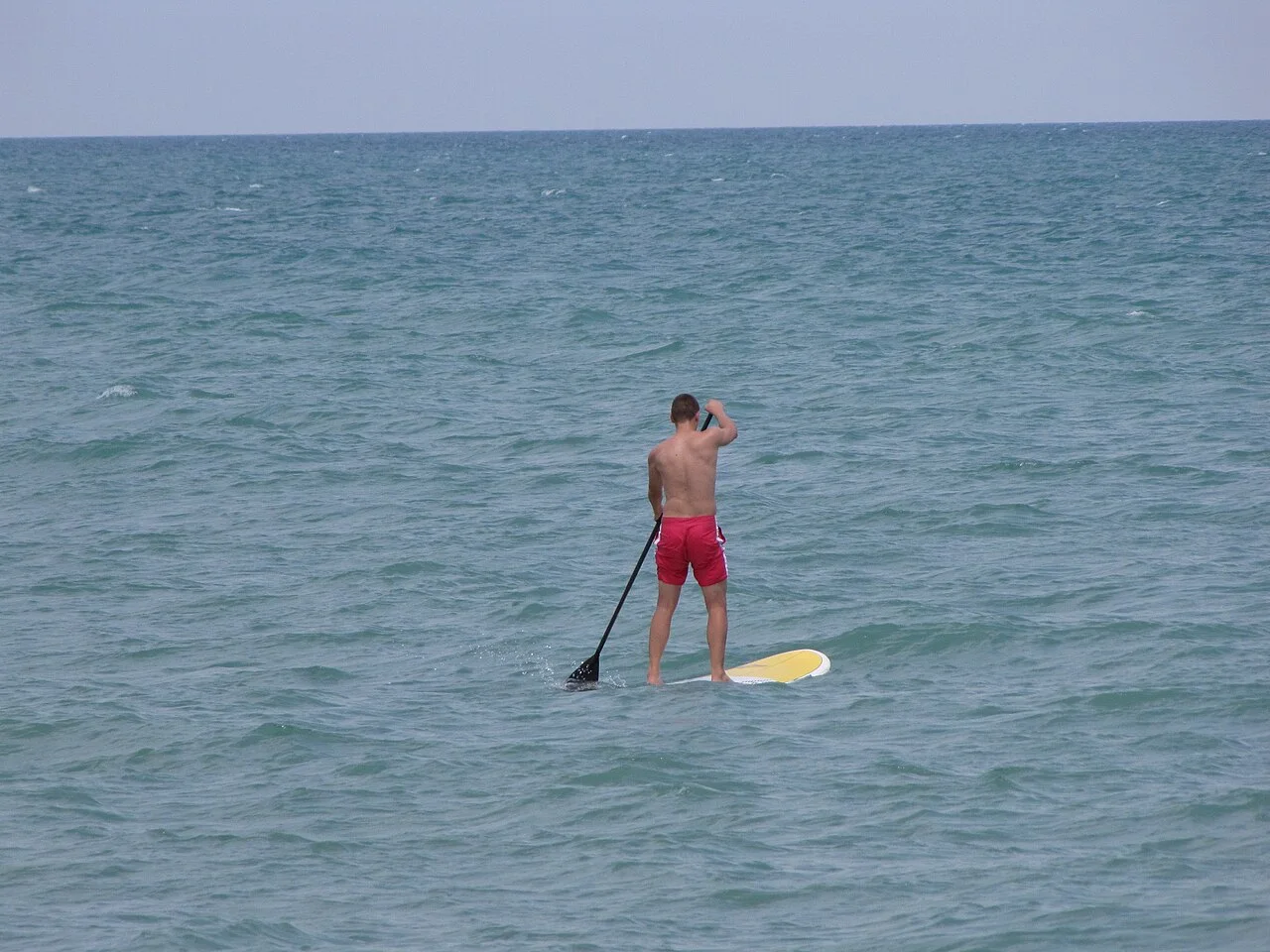
It is best to try stand-up paddleboarding (SUP) for the first time at an organized venue with an instructor. It is important to understand not only the board but also the wind, the limits of the water area, launching and returning to shore.
What to pay attention to
Equipment Condition
Check the condition of the board, fin and paddle together with the rental staff. Pressure and permissible load are defined by the manufacturer. Gear for open water and currents may differ, so do not copy a random setup from a video.
Weather near the shore
An offshore wind makes the return harder, even when the water looks calm. Agree on the direction of travel and the finish point. Do not plan the first session with a long crossing or a chase for a scenic spot.
Return training
During the session practice the basic actions shown by the instructor. The type of safety equipment must match the water area: moving water requires specific training. Do not experiment with unfamiliar fittings on your own.
First check the water conditions
Proximity to shore does not automatically make the launch easy: wind, current and other vessels change the situation. Before starting, agree on the boundaries of the outing, the return point and actions if the weather changes. For an unfamiliar activity, choose organized instruction and gear selected by the instructor. Do not automatically transfer experience from a quiet bay to an open water body.
Practical summary
The initial goal is to move in a controlled way and finish the outing confidently. Once the basic actions are clear, time on the water can be increased gradually, taking conditions and preparation into account.
Next step: open catalog of locations and rentals and map of sites, to link the recommendations with a specific trip. Check current access to the chosen area before you go.