
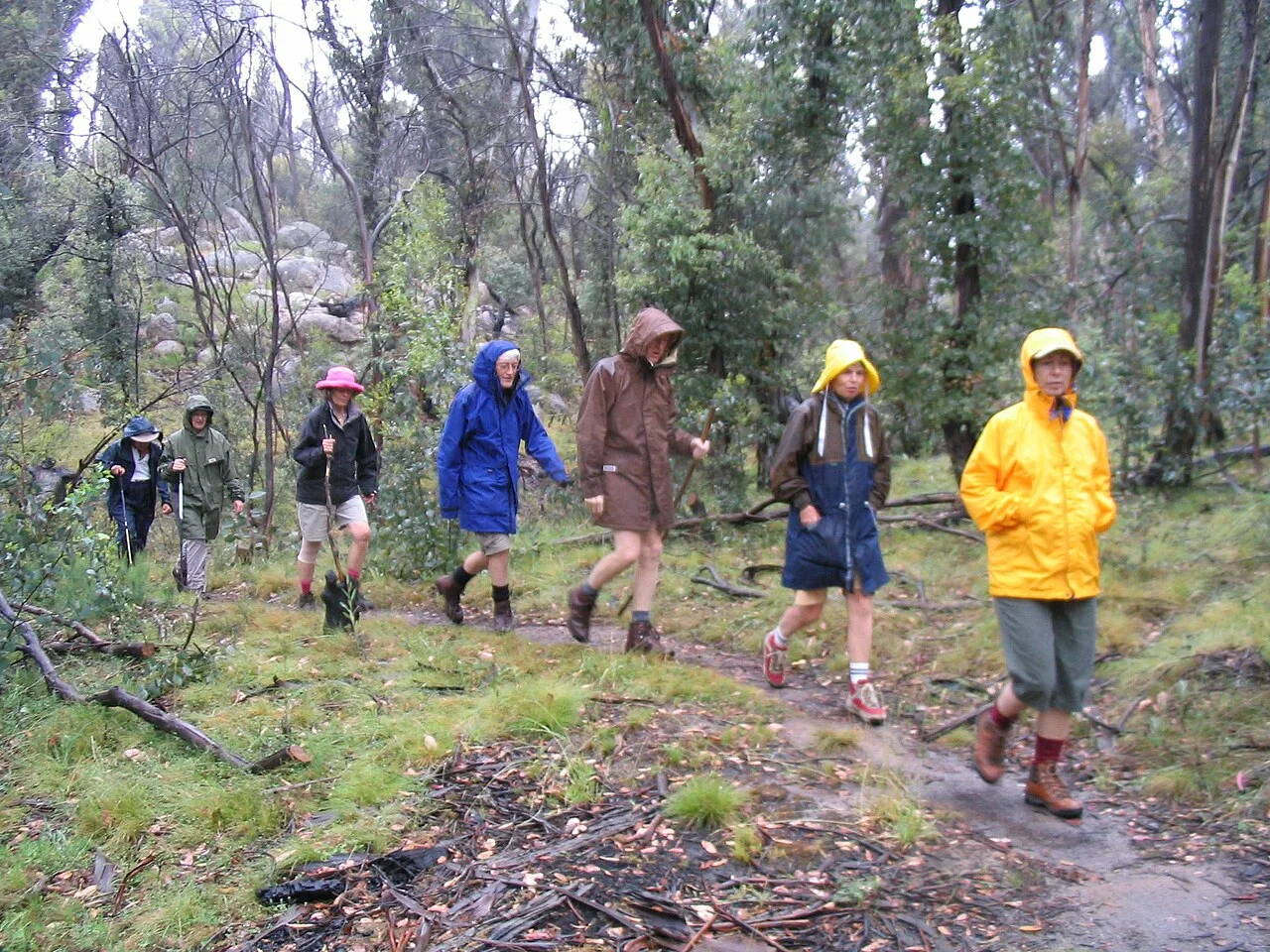
Start with a shorter route
A walk in light rain is a different plan from an outing with thunderstorms or strong winds forecast. Check the weather and route conditions, and identify an early return option. For your first wet-weather outing, choose a familiar, straightforward trail. Do not plan to cross a stream that may rise quickly simply because it is easy in dry conditions.
Divide equipment into three groups
The first group must stay dry: spare clothing, documents and electronics. The second contains items needed on the move: snacks, drinks and rain protection. The third is equipment that is already wet. Give each group its own space so a damp jacket does not end up next to spare socks.
Pack dry clothing in a sound dry bag or a suitable waterproof pack liner. A water-resistant label on the backpack itself does not guarantee protection from every downpour or from immersion.
A pack cover is only one layer
An external cover is useful but may leave the area near the back panel and shoulder straps exposed. Water can enter through openings, seams or while you open the pack. Protect essential items separately inside. Test the closure at home and follow the instructions for the particular dry bag rather than assuming all closures work the same way.
Keep frequently used items accessible
Place snacks, navigation and rainwear where you can reach them without unpacking everything. Keep your phone suitably protected rather than relying only on the device's water-resistance rating. If you need to use it often, check that you can operate it comfortably before leaving home. A separate small bag for wet gloves or a neck gaiter also saves time.
Adjust your pace before you get cold
It is easy to overheat while moving and dampen clothing from inside. Adjust your pace and available ventilation, and do not wait until you feel cold during a stop. Find shelter before changing into dry clothing; do not spread out the whole spare set in the rain. If dry reserves have been used, weather is worsening or someone cannot get warm, shorten the walk instead of forcing the original plan.
After returning
Empty every compartment and dry equipment according to the manufacturer's guidance. Check which protection worked and where water got in. Fixing that specific weak point will improve the next outing more than adding another random accessory.
Keep these near the top
- Rain protection you can put on quickly.
- Snacks and drinks without opening the dry clothing bundle.
- A map or suitably protected phone.
- Separate packaging for wet equipment.