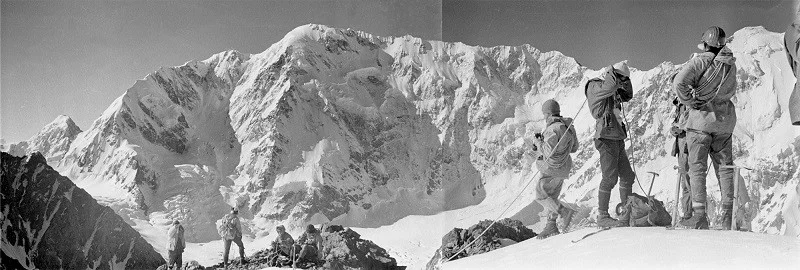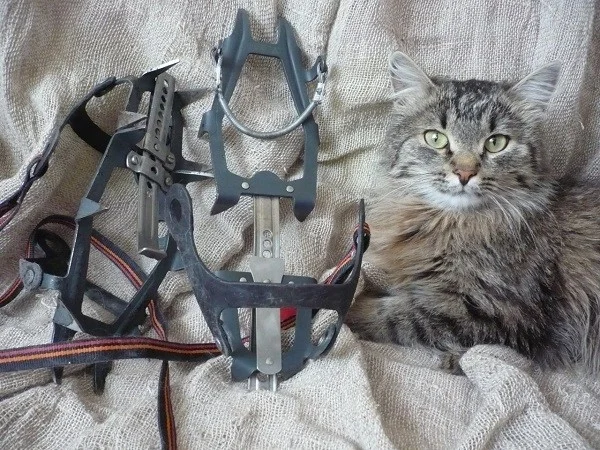
From practical traction to climbing
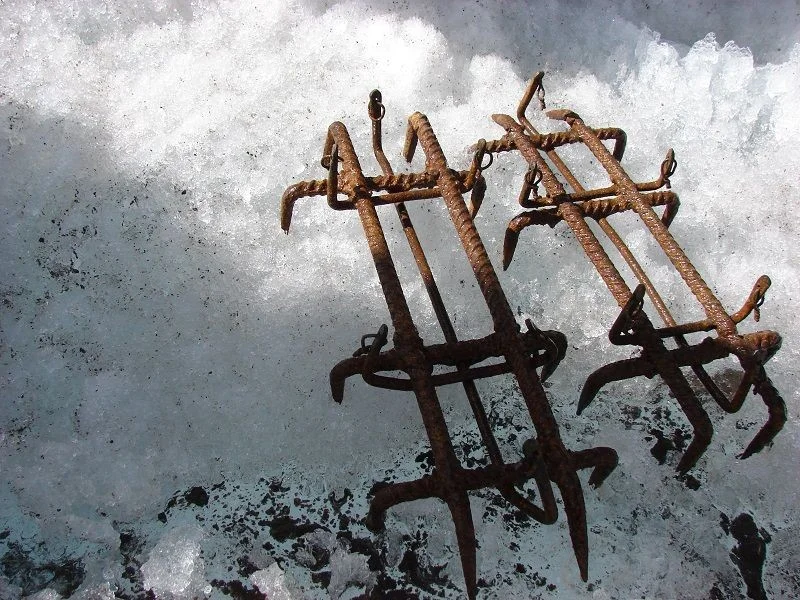
Spiked devices were used on slippery surfaces long before modern sporting models. Archive images illustrate design development rather than instructions for construction or use. Historical strap bindings do not establish that any footwear is suitable for climbing.
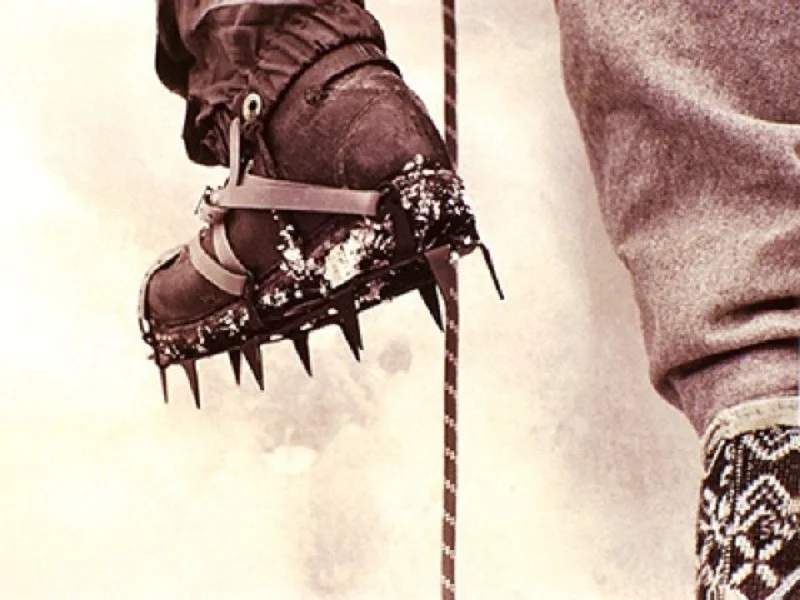
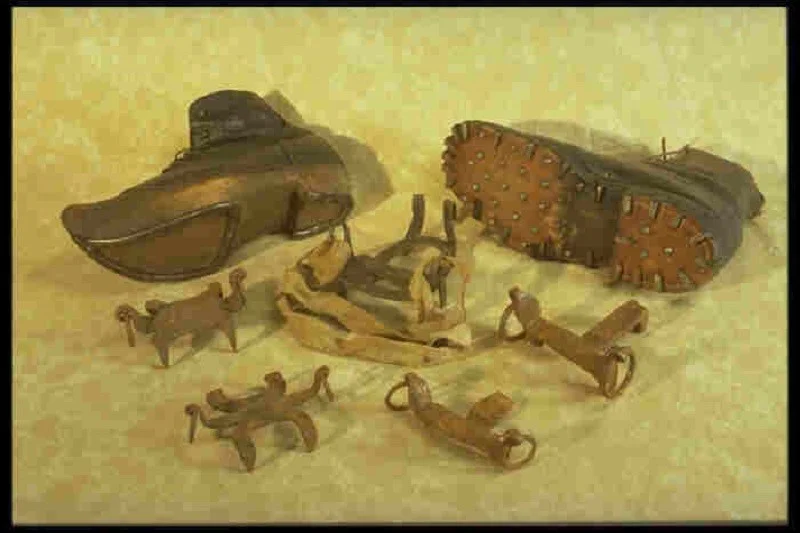
Ten and twelve points
Grivel’s history associates 1909 with manufacturing a ten-point model designed by Oscar Eckenstein. Front points later expanded possibilities on steep ice. Equipment development changed technique but did not remove the need to learn its use.
Material and purpose
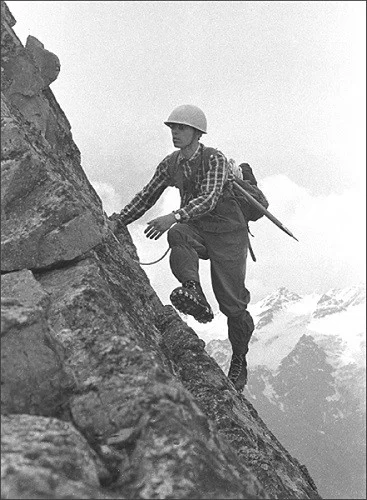
Choose steel or aluminium for route type, wear and the specific model’s limitations. Low weight does not make crampons suitable for every ice or rock section. Anti-balling plates reduce snow accumulation without eliminating it in all conditions. Inspect points, connections and plates.
Check the complete system
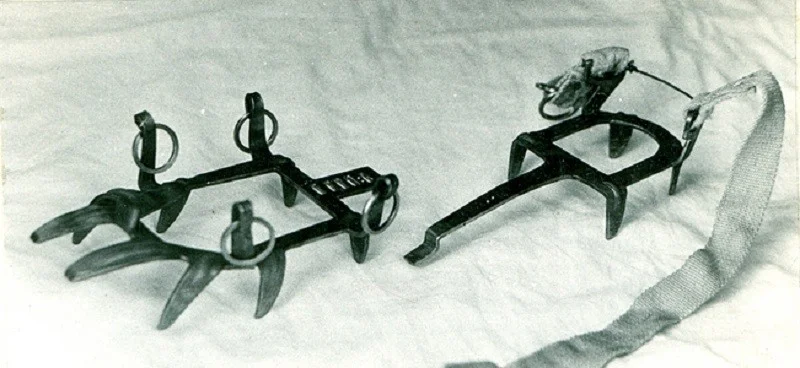
Strap, hybrid or automatic bindings must match the boot according to manufacturer instructions. Straps do not mean compatibility with every shoe, and rigid bindings do not guarantee a crampon can never detach. Check fit and adjustment with a trained instructor. Protect sharp parts during transport and select spares and sharpening methods for the model. Crampons do not replace training, protection systems or route assessment.