
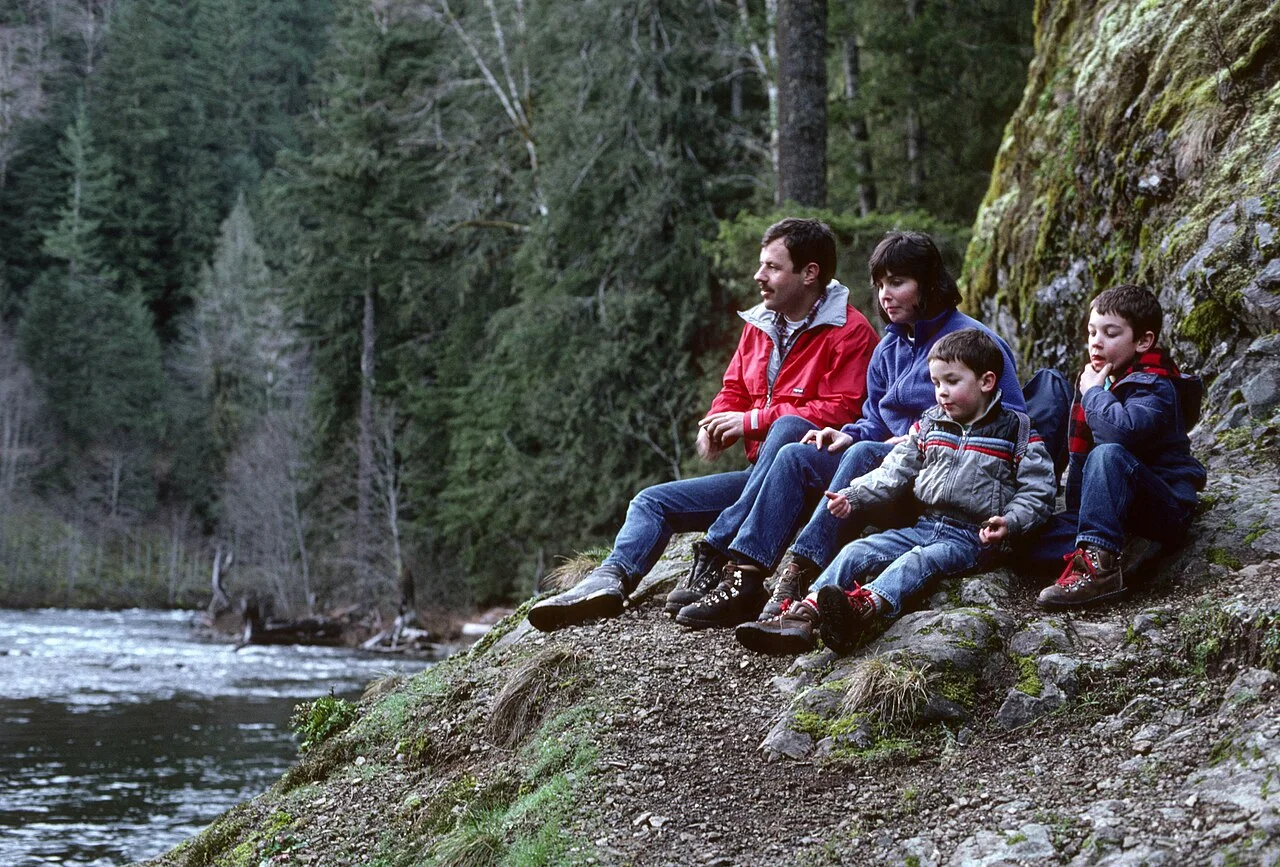
Illustrative photo: camp near the Appalachian Trail, USA. USGS / Jeff Marion · Public domain · Original photo
It’s easier to build a family outing around the children’s needs rather than a long list of locations. A nearby, accessible spot with clear basic amenities often provides more relaxation than a packed all‑day itinerary.
What to pay attention to
Short main plan
Choose one main activity and keep the others optional. Count travel time, meals and changing separately. Think about where you can rest and how to return early without complications.
Facilities and gear
Confirm the availability of a toilet, water, shade or shelter. Keep spare clothing and familiar snacks within reach. Don’t fill the whole luggage with toys: being able to quickly change wet items is more practical than carrying many random objects.
Adult responsibility
Near water, agree right away who will continuously watch the child. This responsibility should not be spread among everyone at once. Phone calls, conversation or cooking do not combine with attentive supervision.
Leave a buffer in the plan
Create a simple plan: where the route starts, how to return and when to inform relatives of completion. Count time for rests, photos and finding the way separately. If the group gets tired or the weather changes, shortening the walk is a normal decision. A short backup option is best prepared at home when you have connectivity and time to calmly compare possibilities.
Practical summary
Wrap up the day before participants become overly exhausted. A pleasant short outing creates a better foundation for future trips than a forced adult‑driven schedule.
Next step: open the outing plan and the map of locations, to link the recommendations with a specific outing. Check current access to the chosen area before you go.