
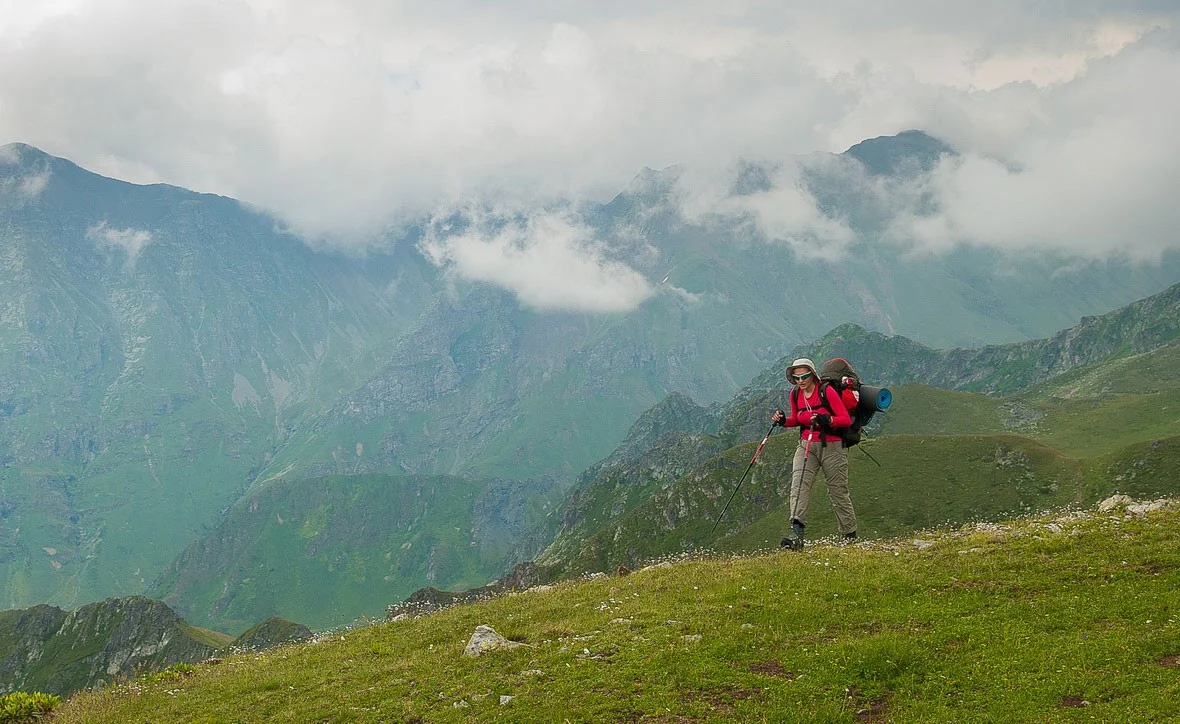
There is no compulsory “real hiker” format
A day walk, a hut-to-hut trip and a self-supported camping route are different ways to spend time outdoors. None has to be the next mandatory level. Start with how much walking you want, where you prefer to sleep and which facilities matter to you.
Duration alone does not determine difficulty. A short outing with considerable ascent and challenging terrain can be harder than several gentle days. Consider distances, elevation changes, trail surface, season and return options.
Day walks from a fixed base
You stay at home, at a campsite or in other accommodation and return from the route the same day. This introduces walking and lets you test footwear without the full load of a multiday trip. A fixed base also makes adjusting the programme to the weather easier.
However, a small pack needs more than a camera and snack. Plan water, food, rain and cold protection, navigation, personal medicines and lighting in case of delay. Choose pack capacity after making the equipment list rather than following a compulsory litre figure.
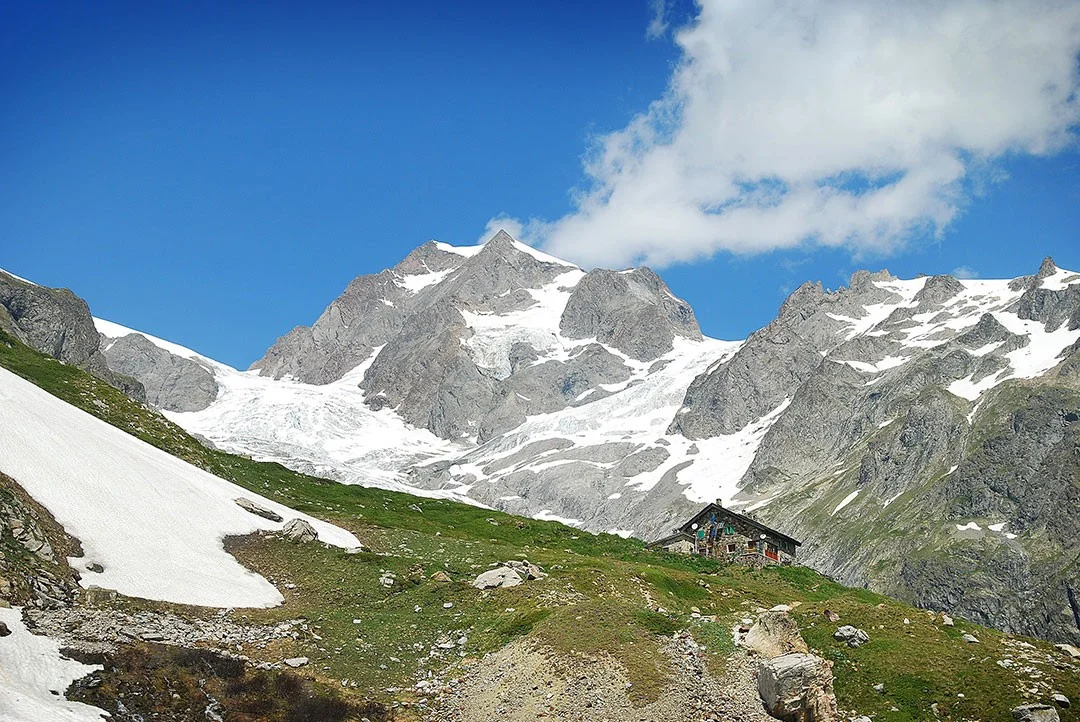
Routes with overnight hut stays
Huts and guesthouses may reduce the shelter and cooking equipment you carry, but facilities vary. The word “hut” does not guarantee a bed, blanket, meals, drinking water or hot shower. Check every stop, booking, payment and required personal equipment.
Allow spare time between stops and find out what to do if late or if a hut is closed. A marked trail does not eliminate navigation mistakes, fog or damaged signs. Save maps and route information in a form you can use without a mobile connection.
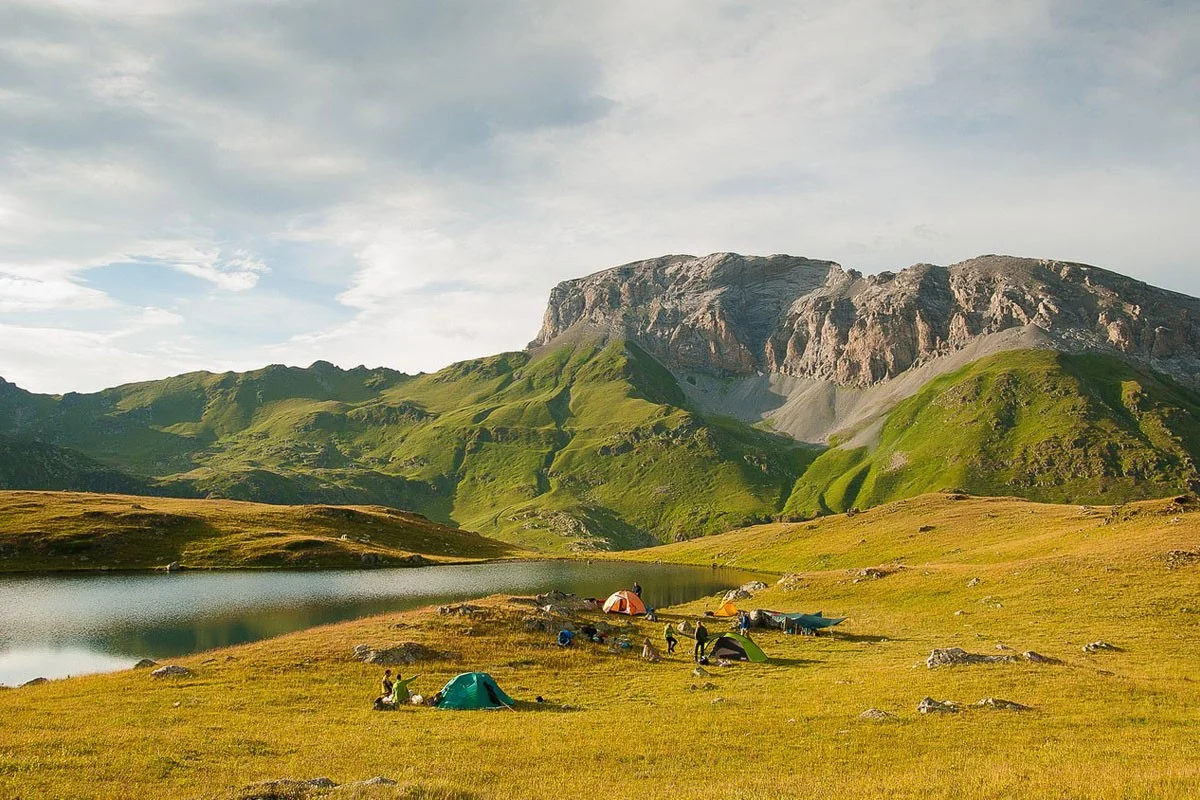
Self-supported tent routes
You carry shelter, sleeping equipment, food and cooking supplies, and arrange water and waste management. The load and preparation generally increase. A tent does not give permission to camp anywhere: overnight sites and access depend on local rules and current restrictions.
Before departure, try the packed rucksack on a walk, pitch the tent and test cooking arrangements. Plan a safe early exit and spare food. Self-supported hiking exists in many countries; it is not restricted to one region of the world or guaranteed to avoid other people.
Independently, with a club or with an operator
An independent trip requires allocating navigation, transport, overnight stays, meals and decisions when conditions change. An experienced companion helps, but their experience must suit the chosen terrain and season. Simply having company does not replace preparation.
A club may offer shared training and instruction, while a commercial operator takes on agreed logistics. Ask about leader qualifications, group size, actual exertion, included equipment, bad-weather plans and cancellation terms. An attractive website and reviews are useful, but do not prove safety.
Where to start
Choose an accessible, permitted route with clear information, straightforward return options and suitable conditions. Do not label a famous long mountain trek easy simply because it is popular. Assessment must concern the particular section, season and participants’ abilities.
In Ukraine, check visitor restrictions, border-area rules where applicable and warnings about mines. An old trip report does not establish access today. If uncertain, choose another area or confirm information with the responsible local authorities.
A final decision check
Write down travel time, walking stages, overnight arrangements, water, meals, forecast and possible expenses, including transport to the start. Leave your plan and expected contact time with someone close to you. If the chosen format still has too many unknowns, begin with a short outing and return to the larger route after gaining practice.