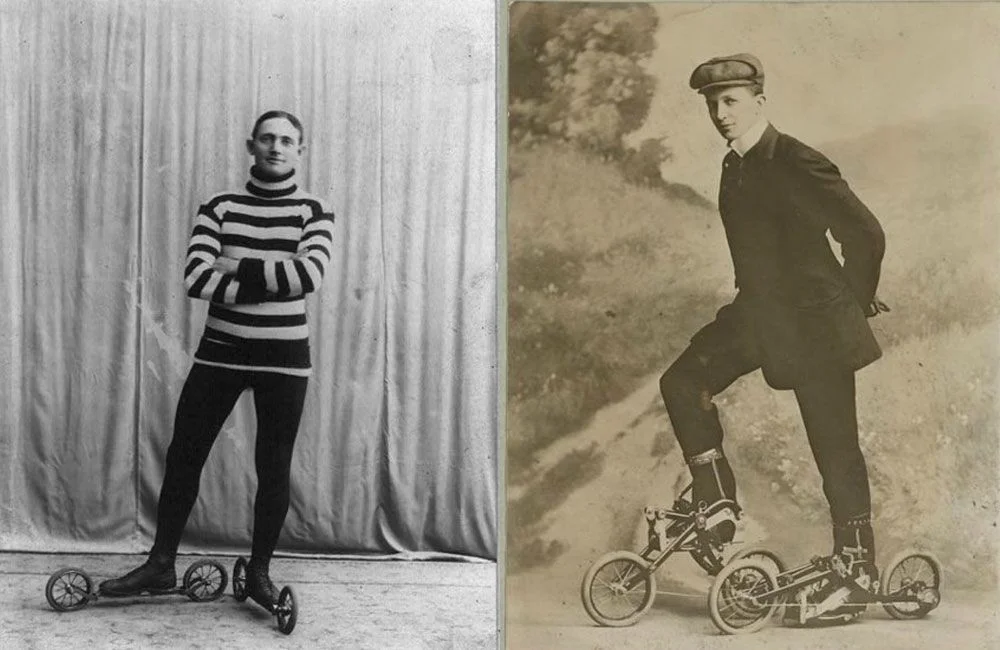
One documented milestone
The National Museum of Roller Skating identifies an important development with James Leonard Plimpton: in January 1863 he patented a four-wheeled turning skate. This is a specific documented episode. It does not mean that nobody had previously experimented with wheels on footwear.
Read the design in the image
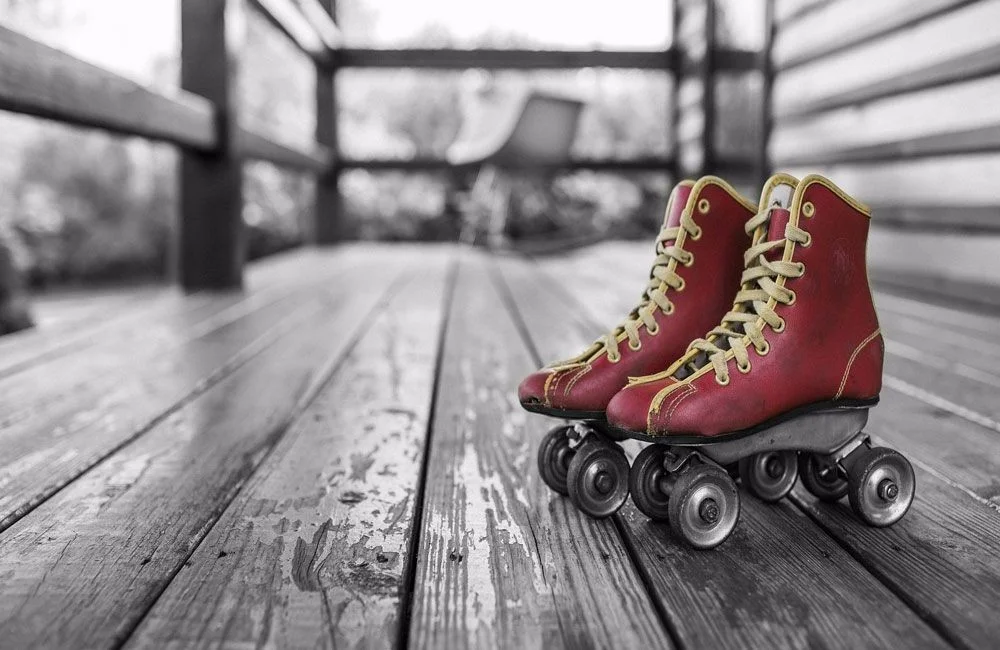
Look at whether wheels sit in pairs or a line, how platform and footwear connect, and which components appear beside the wheels. Archive photographs allow visual comparison, but cannot establish whether a particular pair is usable today. Do not identify an object's age or a person's identity solely from a caption in an arbitrary collection.
Separate legend from history
Stories about ancient inventors, secret techniques and precise world-first claims need documentation. A museum description, patent or dated catalogue is more useful than a memorable story of unknown origin. A photograph may show a prototype, a staged scene or an invention that never became common.
Avoid false conclusions about modern skating
Historical interest does not make old equipment suitable for an outing. A collectible is assessed separately from a modern pair for lessons, and serviceability depends on condition and documentation. The past can explain changing ideas; present equipment should be chosen for actual activities and conditions.