
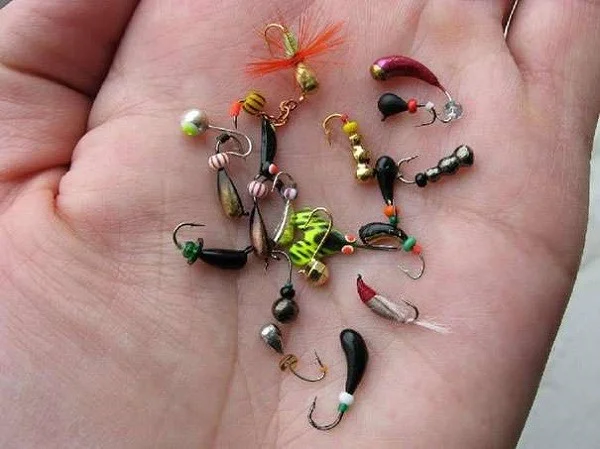
Start with a balanced setup
A mormyshka combines weight and hook, and its behaviour depends on mass, shape, line and the angler’s movements. Match the setup to depth, flow, bait and target fish. A tiny, light jig on excessively thick, stiff line may behave differently from what you expect.
Do not correct every mismatch by adding a second jig. Learning one lure and adjusting the tackle to it is simpler at first. A more complex rig makes sense only when you understand its purpose and local fishery rules allow it.
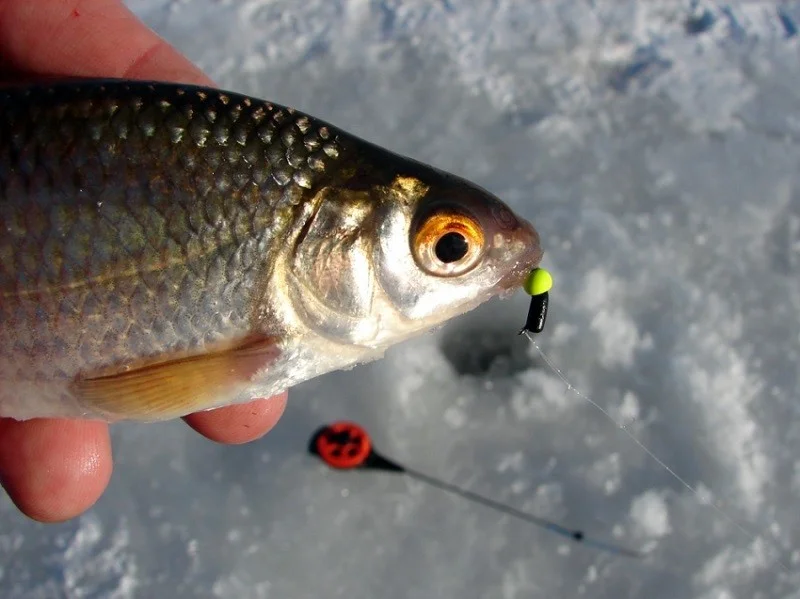
Weight, line and spring indicator
In deep or flowing water, the lure must remain controllable and reach the intended depth. Choose weight for the conditions rather than a rule that deeper water always needs a lighter jig. Excessive weight changes presentation too.
Where a spring bite indicator is used, match it to the working load and jigging method. Test it with the jig attached: it should help reveal changes and control movement. No single adjustment suits every shape and material.
Attachment depends on design
Jigs with an eye and those with a hole through the body may need different tying methods. Use a suitable knot and check that the hole’s edge does not damage the line. After tightening, inspect the connection and the lure’s position, especially if it changes after a snag.
There is no compulsory universal angle of one hundred and fifty degrees that guarantees a hook-set and landing. Hook position relates to the particular design and presentation. An illustration of someone else’s rig does not replace testing your lure in water.
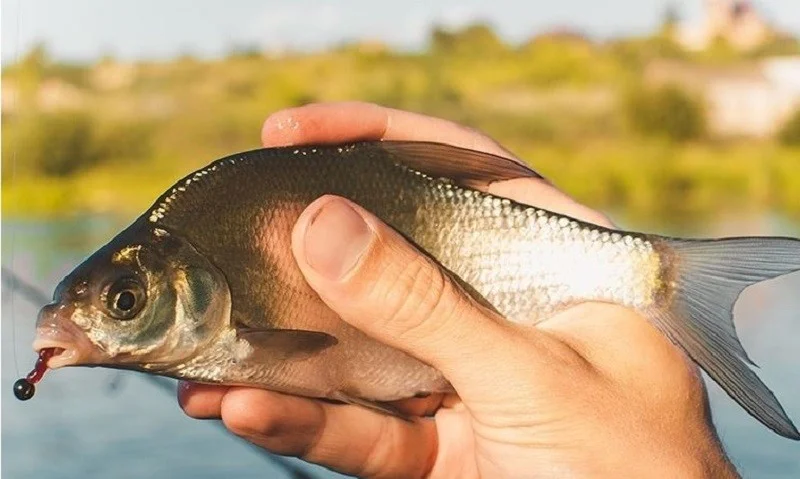
Working the jig and finding bites
Begin with a clear sequence: lower, stop, make small movements and pause. Observe how pace, amplitude and fishing depth affect results. Change one variable at a time to understand the fish’s response rather than simply moving the rod faster.
Baited and unbaited jigs may need different movements. Check bait condition and that the point remains clear; after snagging, inspect line and attachment. No jigging pattern promises bites on every water.
Colour and shape without rigid rules
Silver, dark or brightly coloured jigs are options to compare, not guaranteed answers to sunshine, cloud cover or a particular depth. Water clarity, lighting, background and fish activity affect visibility. A few understandable options are more convenient than changing the whole setup at once.
Record depth, lure, bait and presentation. A log helps repeat a successful approach and notice what changes on another visit. Catch size does not establish one colour or knot as universally effective.
Winter fishing begins with safety
If fishing through ice, equipment and other anglers’ experience do not establish that access is safe. Follow official warnings and restrictions, and do not venture onto unknown or unreliable ice. Choosing a jig must not become a reason to take risks for another hole.