
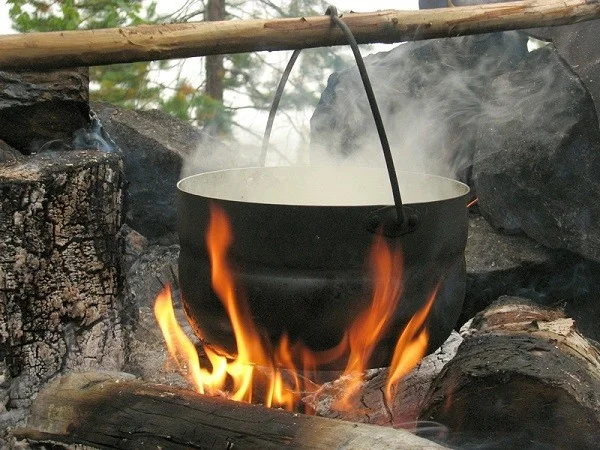
How much food to cook
Start with portions and cooking method. Boiling water for prepared meals and cooking group soup require different usable capacities. Allow room for stirring and safe boiling rather than filling to the rim. A half-litre-per-person formula can only be a rough guide, not a rule for every menu. Leftovers require appropriate storage even if you intend to eat them the same day.
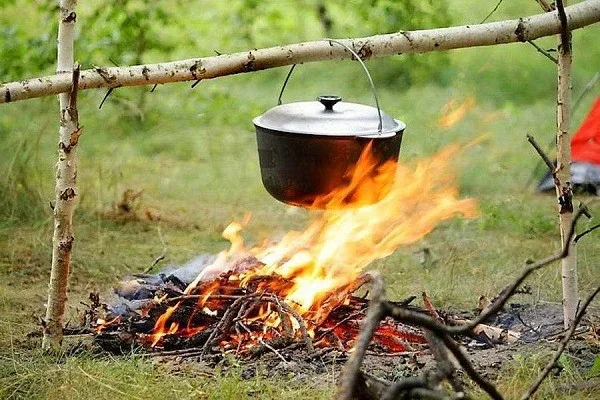
Steel, aluminium and titanium
Compare the actual set’s weight, wall thickness, coating and care requirements. Stainless steel is not invulnerable, aluminium does not necessarily last only a few years, and titanium cannot guarantee that food stays hot for a long time. Thin bases need careful heating and stirring. Do not clean coatings by methods prohibited by the manufacturer.
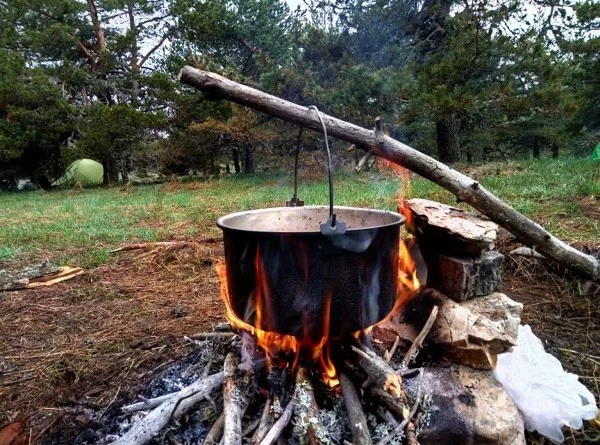
Shape and handles
Check stability on your stove, support diameter and permitted filled weight. An oval shape packs conveniently but must suit the heat source. Side handles do not mean a pot should be placed directly in embers. Suspension requires suitable attachments and a permitted location; do not rely on a random branch. Handles and lids may become hot.
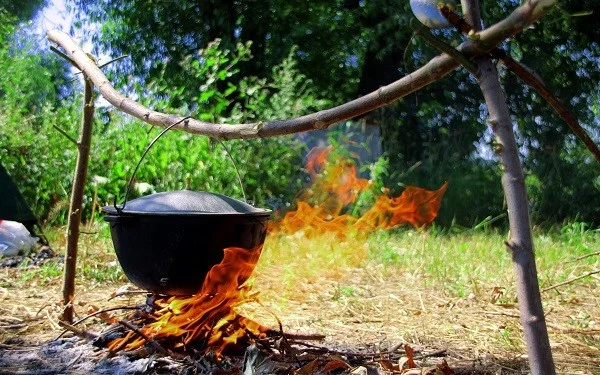
Packing and care
Check the lid, handle retention and whether other items fit inside without damaging the coating. A bag separates soot from belongings but does not replace cleaning. Bright colours cannot guarantee a pot will not be forgotten: check equipment when breaking camp. Cook outdoors and dispose of food waste according to site rules.