Which tasks matter
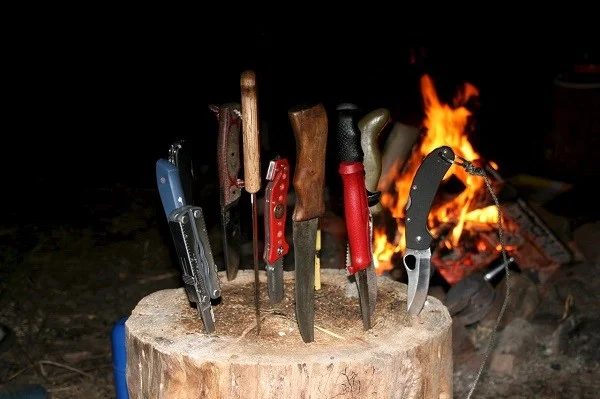
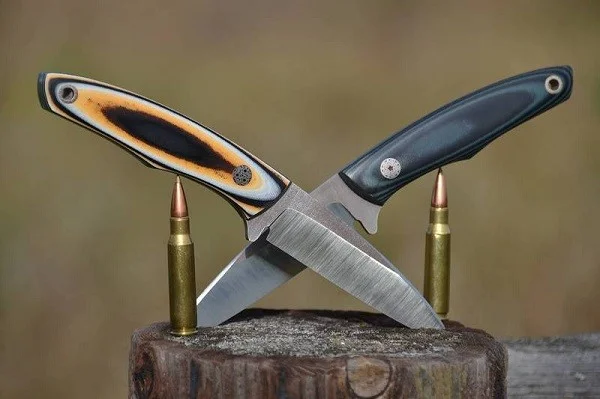
A convenient small knife often suffices for food, packaging and minor camp chores. Preparing fish and cutting vegetation are different tasks; not every traveller needs a specialist blade. A knife is not a plan for protection from animals. Follow site rules and do not damage plants simply to test the tool.
Steel and geometry
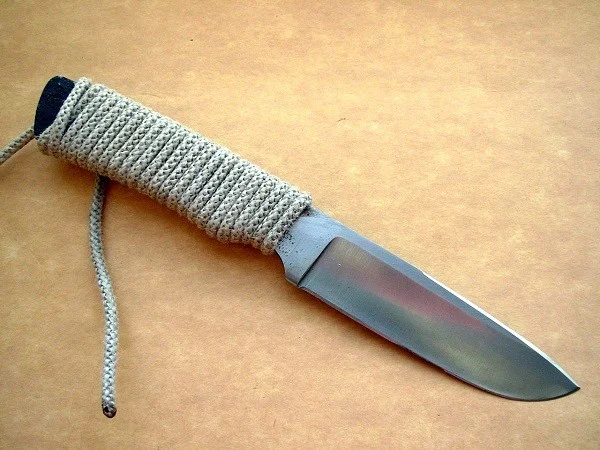
Steel grade alone does not determine quality: heat treatment, thickness, edge geometry and care matter. Do not choose from a universal list of supposedly superior national steels. Corrosion resistance does not remove maintenance; clean and dry the blade after use.
Shape and working grip
Straight or dropped points and plain or serrated edges behave differently when cutting. First establish a safe grip and a clear operation. Do not use the point to pry heavy parts or the blade as a screwdriver or lever.
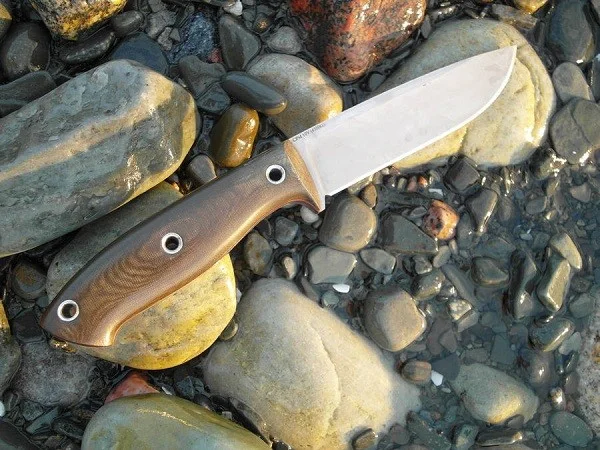
Handle and sheath
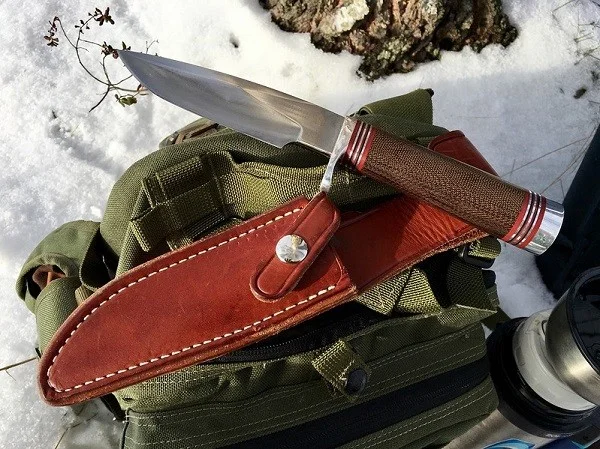
Check dry and damp-hand retention without hazardous experiments. A sheath must cover the cutting edge and securely hold the tool. A lanyard cannot guarantee injury prevention and does not suit every task. Carry the knife covered and inaccessible to children.
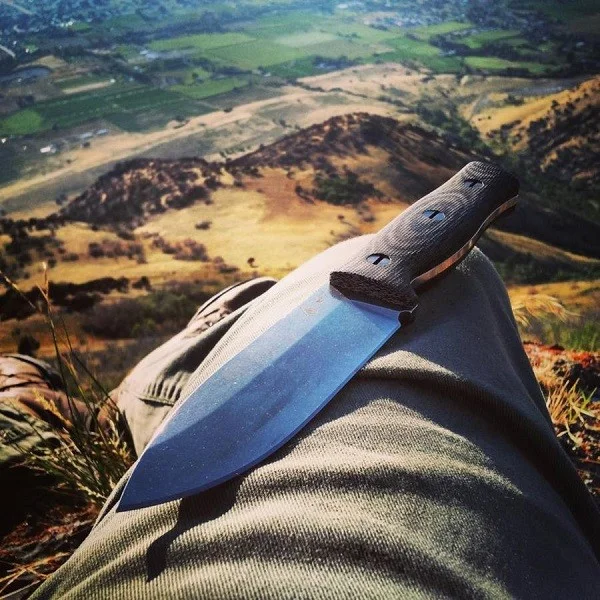
Folding or fixed
For a folder, inspect the joint and intended retention and keep fingers outside the closing path. A fixed blade needs a suitable sheath. A camping label alone does not establish legal status: check storage, carrying and transport rules separately for the country and transport involved. A children’s set or foreign certificate is not universal permission.