
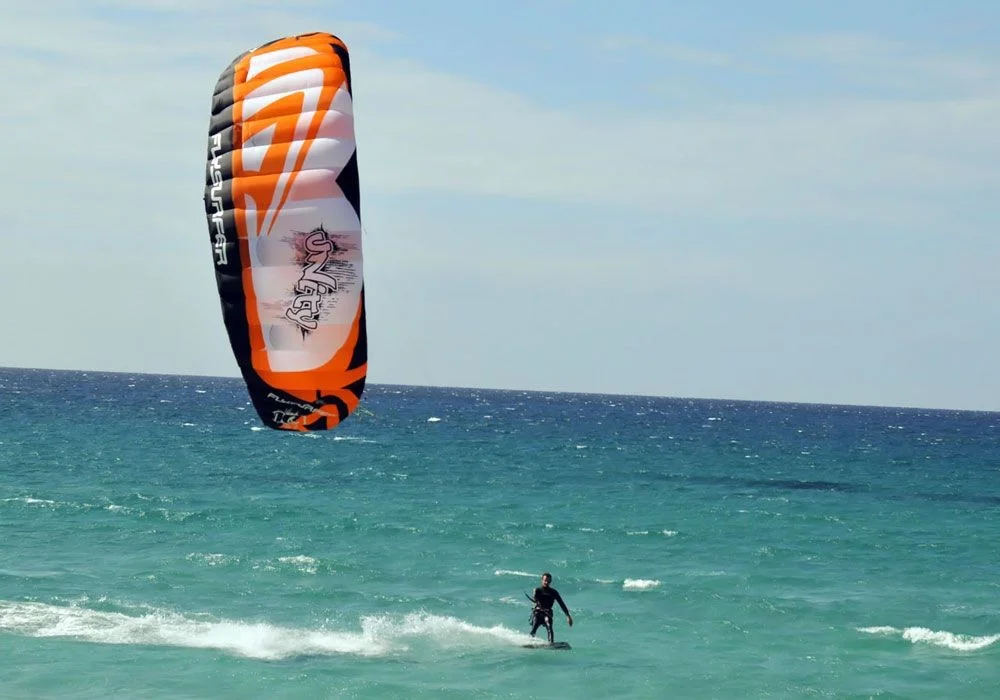
Inflatable and foil kites
Inflatable kites use air-filled tubes to support their shape. Foil kites use air inside cells and a bridle system. Foils have different constructions, including closed-cell models for water. The old claim that every foil necessarily sinks and is unsuitable for water riding is incorrect.
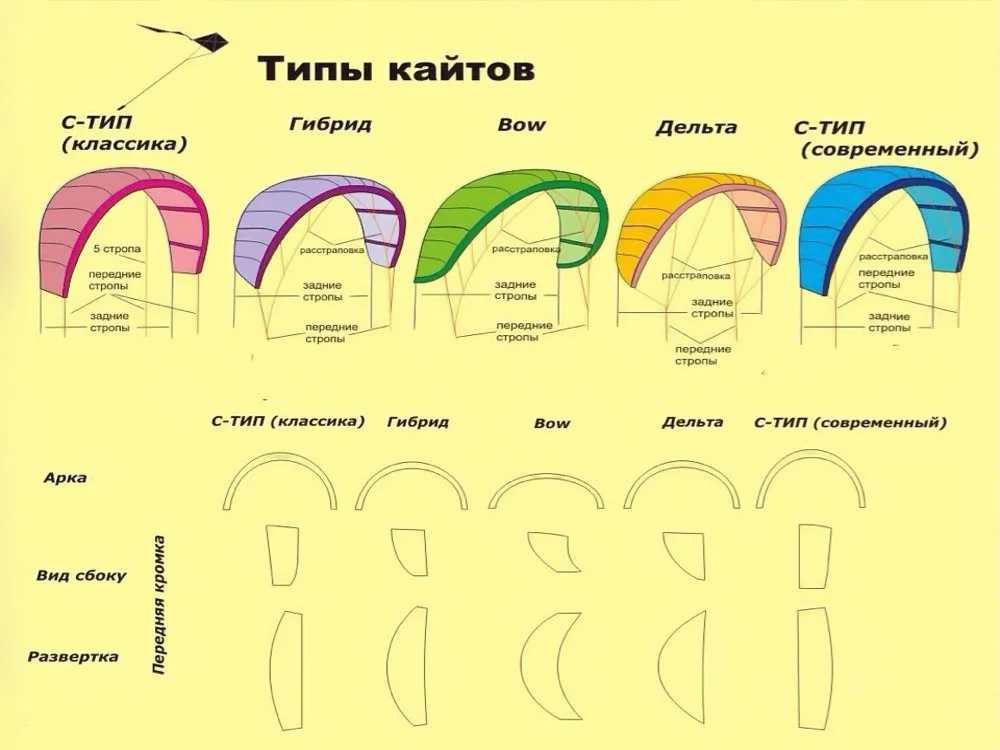
Shape does not answer everything
C-type, bow, delta and hybrid describe geometry and support arrangements, but distinctions depend on the model. Identical handling cannot be promised for every hybrid, nor safe riding in any wind for a bow kite. Relaunch and power adjustment depend on design, setup and skills.
Consider the whole system
Check wing, bar, line and emergency-release compatibility in the documentation. Choose size for conditions, rider weight, board and ability. One shape label does not establish suitability for beginners, snow, water and land simultaneously.
Start with instruction
Take lessons with a qualified instructor before purchasing and assess equipment in controlled conditions. Learn launching, landing and emergency actions rather than only moving across water. Do not independently try someone else’s kite simply to compare shapes. Check wind, obstacles and permitted locations; no canopy type removes these limitations.