A route the group can manage
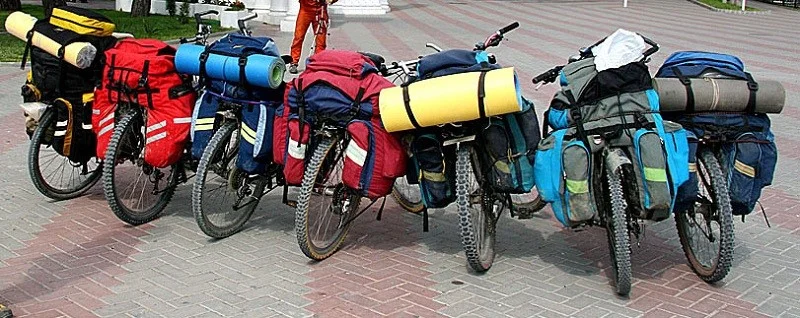
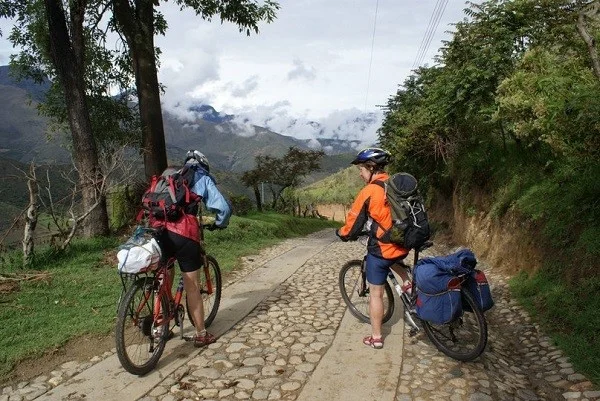
Allow for surfaces, climbing, breaks, water and ways to leave the route. Map distance does not describe the difficulty of a dirt road. Leave spare time for a first trip and test the plan on a short loaded ride. Discuss exertion with your own clinician if medical limitations apply.
Checking the bicycle
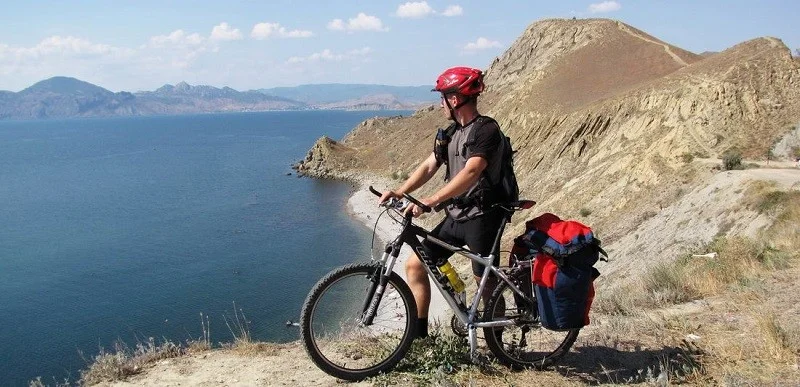
Inspect tyres, wheels, brakes, steering and luggage attachments. Use pressure and tightening requirements for the actual components. Lubricant belongs on appropriate mechanisms rather than every metal surface: keep it away from brakes. Resolve faults before riding.
Repairs and overnight stops
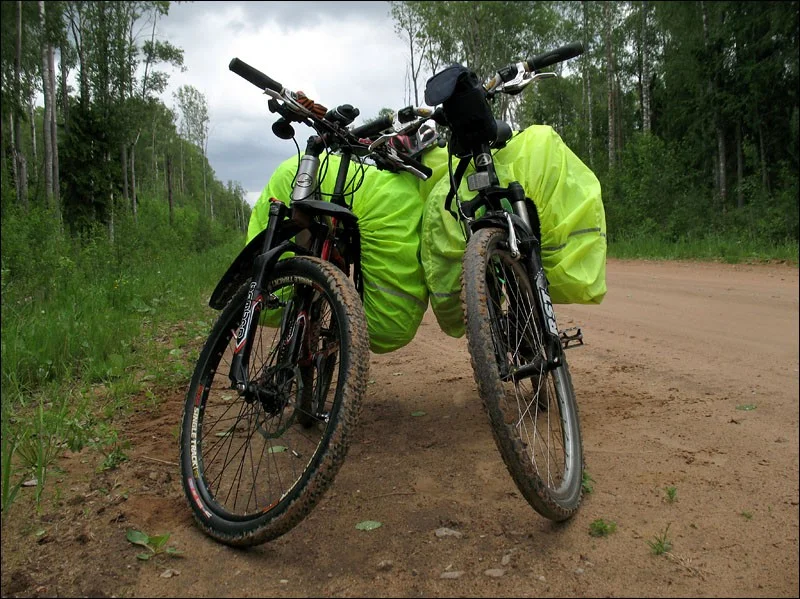
Take a compatible pump, puncture-repair supplies and tools you know how to use. Check lights and spare power. For a tent overnight, plan equipment storage without blocking the exit with the bicycle. A large vestibule is not essential to keeping a bicycle serviceable.
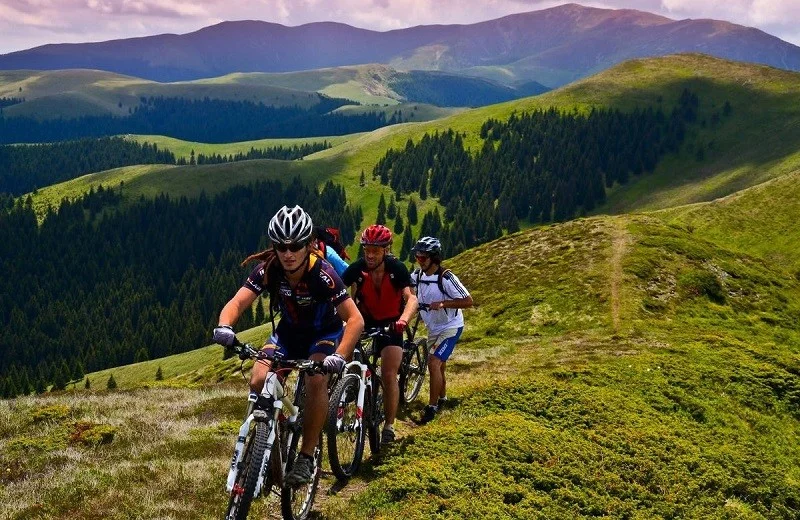
Clothing and safety
Choose a well-fitting helmet, visible clothing and weather protection. Bright colours do not replace lights or observance of road rules. Carry dry spares and first-aid supplies rather than building a kit around a generic medicine list. Keep maps and a charged phone accessible.
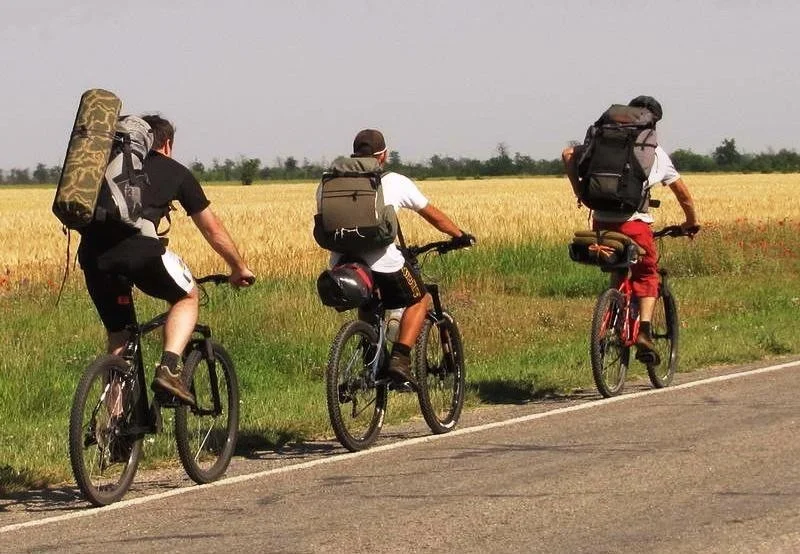
If you lose the route
Stop somewhere safe, assess your position on the map and contact the group. Do not continue at random. Seek assistance when needed and report your location. Lighting a fire is not a compulsory response to losing the way and may be prohibited or dangerous.