
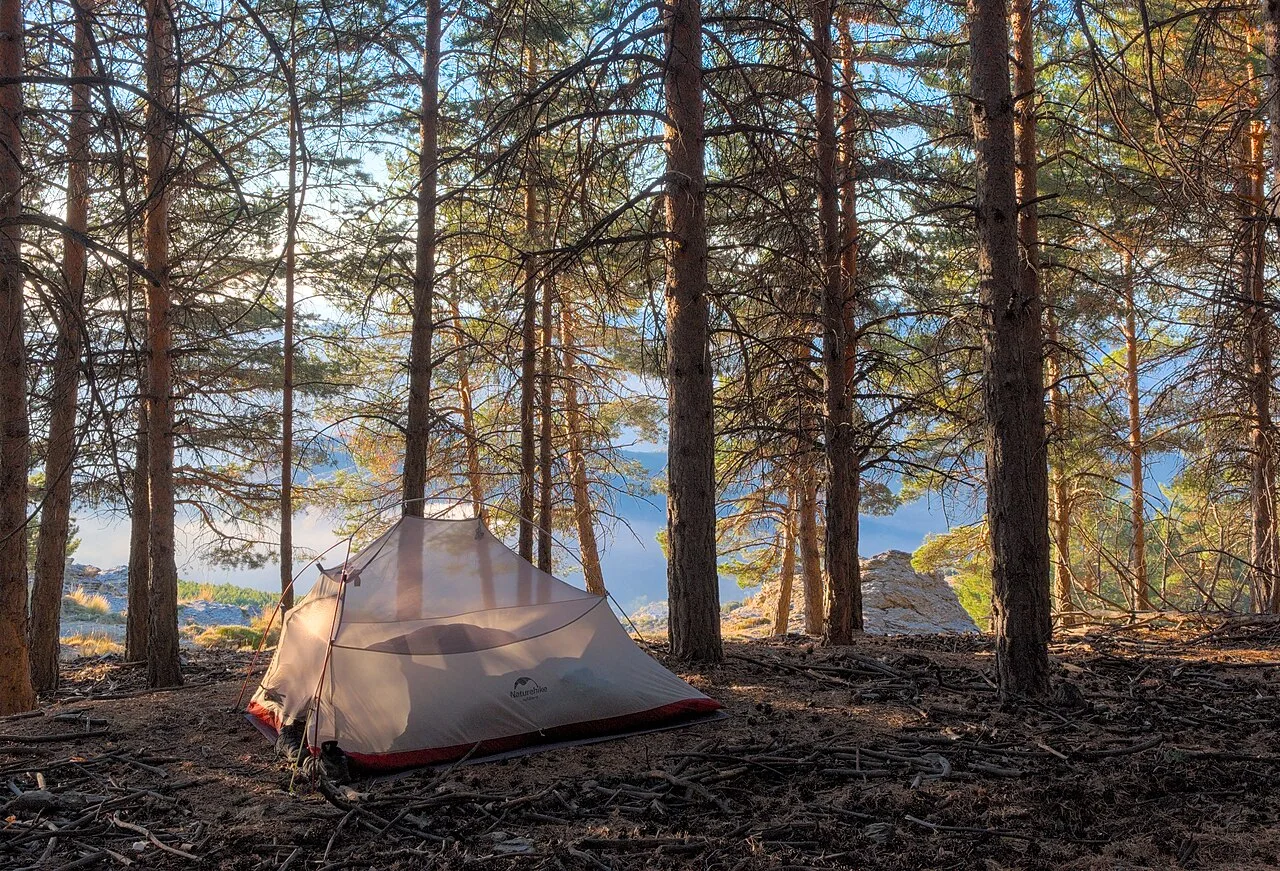
Where the water comes from
People release moisture as they breathe, while wet clothing and boots add more. When humid air meets a colder flysheet, droplets can form. On a double-wall tent, they are often visible on the inside of the outer fabric. Droplets alone do not prove that the fabric has lost its waterproofing.
If water repeatedly appears beneath one seam or runs onto the floor from outside, check other causes too: seam condition, tension, contact between layers, groundsheet position and rainwater drainage. Condensation and a leak can occur at the same time.
Choose a pitch that can ventilate
A damp hollow or a corner sheltered from all air movement may make matters worse. Within an authorised camping area, choose level ground without an obvious water runoff channel. Do not move the tent into an unsafe position merely to catch more wind. Consider the forecast, possible gusts and the rules of the campsite.
Set up ventilation before bed
Open the vents provided by the design and check that fabric or equipment does not cover them. Pitch the flysheet according to the instructions so the layers do not stick together. Pulling the fabric as tight as possible is not the goal: correct geometry and the intended gap matter more than excessive force.
On a cold night, closing everything feels tempting, but it can reduce air exchange. Match ventilation with suitable sleeping insulation and clothing rather than trying to turn the tent into an airtight room.
Keep wet equipment separate
Dry equipment before bed where practical. Place a wet jacket and boots where they will not touch your sleeping bag or obstruct the exit. Use vestibule space with the tent design and weather in mind. Do not cook or operate a stove or other fuel-burning appliance inside the tent or an enclosed vestibule. That is not a safe solution to condensation.
What to do in the morning
Blot droplets with a separate cloth without wiping water onto your sleeping bag. If time and weather allow, dry the tent before packing. If you must pack it wet, unpack and dry it after returning. No breathable storage bag makes prolonged storage of wet equipment a good idea.
Before going to sleep
- Vents are open and the exit is clear.
- The flysheet is pitched without unwanted contact between layers.
- Wet equipment is separate from the dry sleeping bag.
- There are no open flames or fuel-burning heaters inside.