
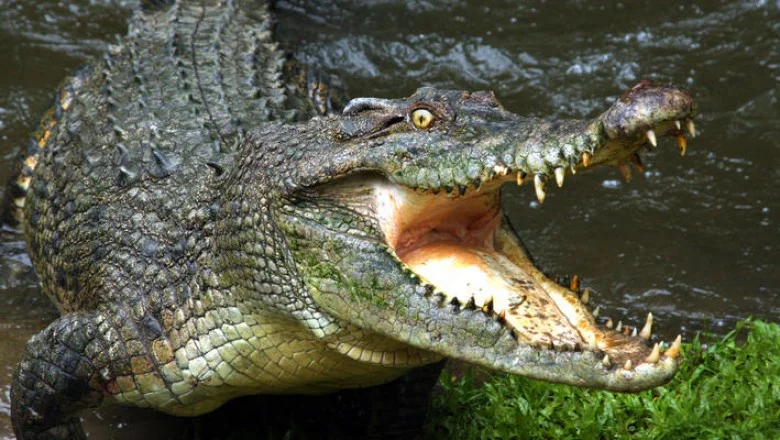
The archive illustration does not establish present conditions or access.
Learn about the particular location
Before walking, check information from the protected area’s administration and local warnings. Confirm where walking and observation are permitted and which areas are closed. Missing signs should not be treated as confirmation that water is suitable for swimming, a point specifically raised by Mexico’s Conanp.
Do not turn observation into interaction
Do not feed, touch or attempt to move an animal. The US National Park Service’s Everglades guidance warns that an apparently lethargic crocodile or alligator can quickly become active again. A calm appearance is not an invitation to approach for a photograph.
Choose how to photograph beforehand
Use authorised viewpoints and camera zoom instead of moving closer. Do not cross barriers or ask a guide to ignore restrictions for a picture. Check distance and access rules for the actual location; a number from another park’s guidance is not universal permission.
Plan for the whole group
Agree on the route and return point with companions, and establish rules for children and pets beforehand. Leave no food or waste near the water. If an area is closed or an animal appears unexpectedly, do not gather a crowd around it; contact the area’s staff.
What to record afterwards
State where, when and under what conditions you observed wildlife. Do not present an archive photograph as a report of an emergency today. A useful account describes current routes and visitor arrangements rather than how close someone managed to get to a wild animal.