
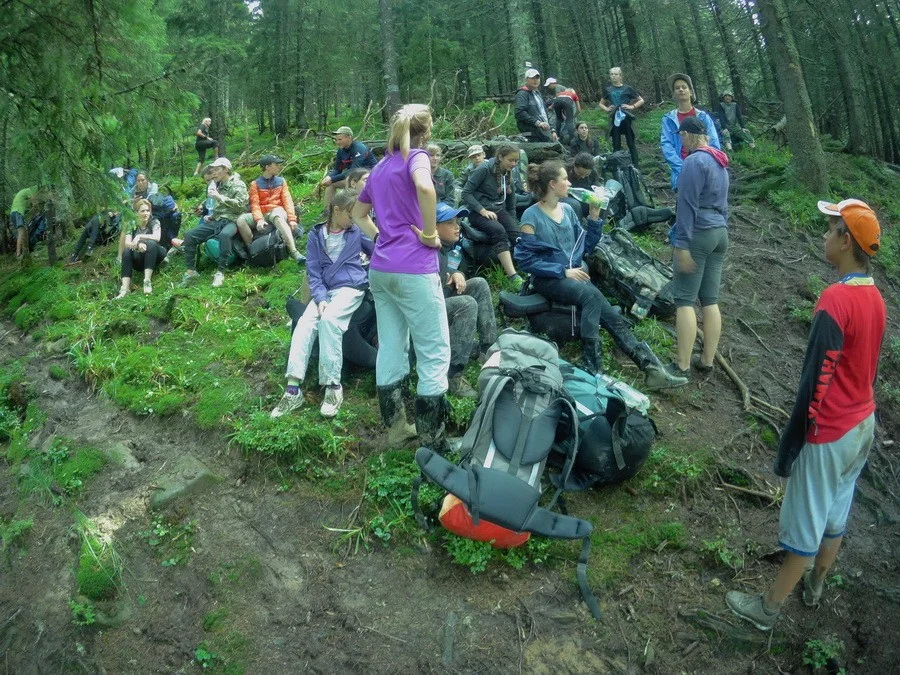
Start with a shared interest
A hike does not have to become a character test or a compulsory break from phones. Ask participants what interests them: photography, birdwatching, preparing lunch or exploring a new path. One clear reason to go out is more useful than a long lecture about the benefits of walking. Agree on a format that suits everyone, whether that is a few hours outside or an introduction to an equipped campsite.
Choose the route for the group
Consider everyone’s experience, fitness and willingness, not just the enthusiasm of the most active adult. A first outing needs an obvious way home and an option to shorten the walk. Allow for breaks and spare time instead of treating distance as a compulsory target. If somebody gets tired, the purpose of the trip can change.
Before travelling in Ukraine, check whether the area is open to visitors and read current local warnings. Abandoned structures, closed shorelines and unfamiliar woodland paths are not suitable settings for a learning adventure. An unfavourable forecast is a sufficient reason to postpone or choose a different activity.
Give participants meaningful jobs
Invite them to choose a stopping point from options checked in advance, plan snacks, save a map or check the cooking utensils. Tasks should match age and experience, while adults remain responsible for safety and difficult decisions. This is participation in a shared project, not a test of independence without support.
Distribute shared equipment according to ability too. Do not give the heaviest load to whoever feels least able to object. A practice walk with the equipment helps identify problems before the main outing.
Discuss expectations before setting off
Agree not to leave the group without checking, to mention discomfort and to know the meeting point. Explain whom to approach for help. Discuss photography and personal boundaries: sharing somebody’s image online should not be a compulsory part of the trip. With an organised group, establish beforehand who is responsible for supervision and communication with parents.
Finish with a conversation, not a score
After returning, ask what people enjoyed, what felt awkward and what outing they would choose next. Do not compare participants by speed or kilometres covered. A successful first hike leaves people wanting to return outdoors with a better understanding of their own capabilities.