
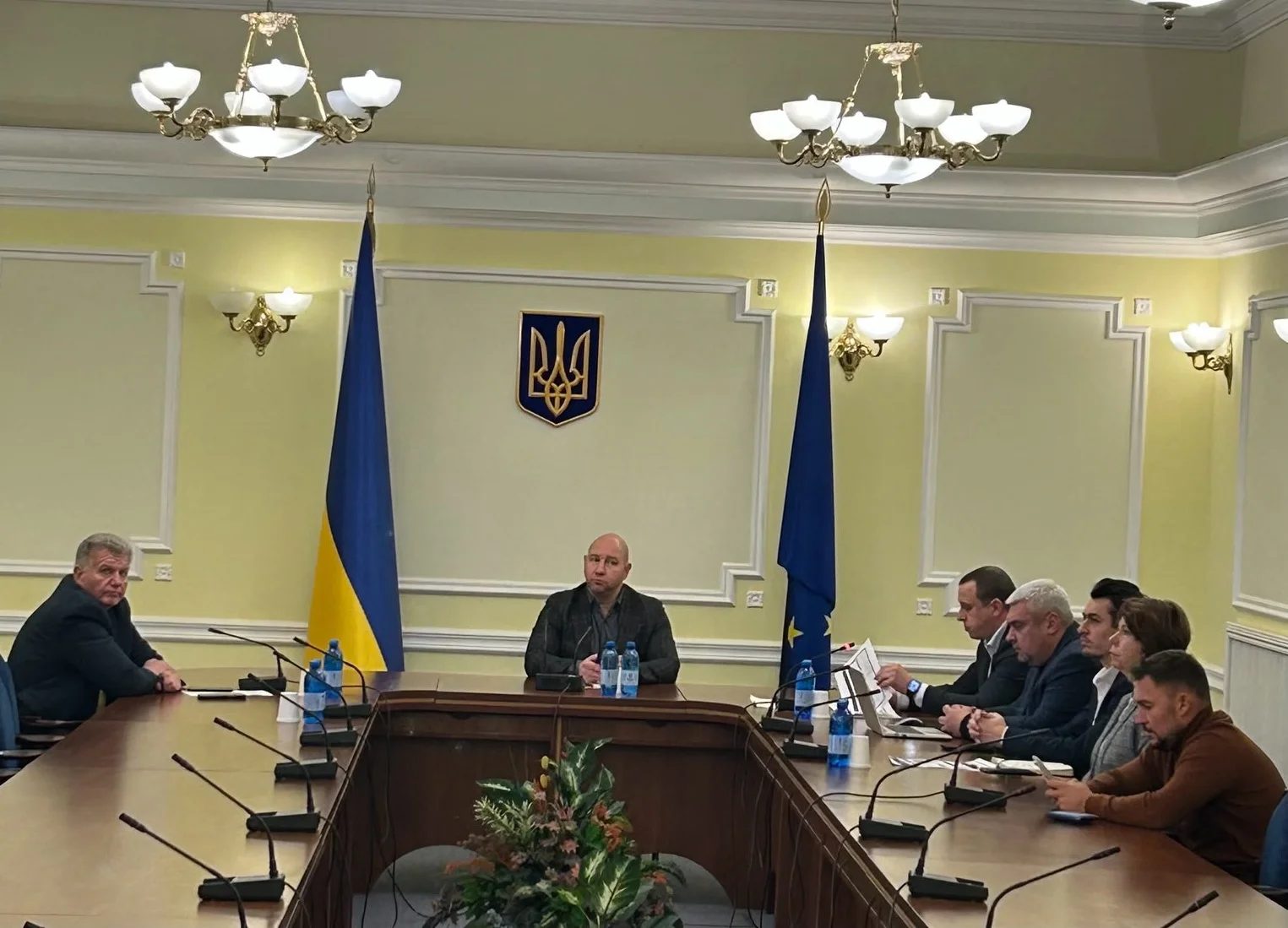
Under the chairmanship of Oleksandr Haidu, head of the Committee of the Verkhovna Rada of Ukraine on agrarian and land policy, a working meeting was held to discuss specific provisions of the draft Law “On Amendments to Certain Legislative Acts of Ukraine Regarding the Implementation of European Union Law Norms and the Improvement of State Regulation in the Fishery Sector and the Field of Aquaculture”.
The event was attended by Ukrainian MPs, the head of the State Fishery Agency Ihor Klymenok, his deputy Andriy Zinchenko, representatives of the Ministry of Agrarian Policy, fisheries protection patrols, the public, relevant associations and the business community.
This is the second meeting dedicated to the detailed elaboration of the draft law’s provisions by specific areas. This time the focus was on aquaculture and recreational fishing, particularly the implementation of the relevant European legislative norms, the improvement of state‑regulation mechanisms and the creation of favorable conditions for the sustainable development of the fish sector.
Thus, in the field of aquaculture it is proposed to enshrine modern principles of state governance that take into account regional specificities, employ science‑based approaches, involve interested parties in shaping sector policy, and increase the transparency and efficiency of regulation.
One of the key innovations is the introduction of an electronic register of aquaculture entities, which will be maintained through the Unified State Electronic System for Managing the Fishery Sector. This mechanism is intended to ensure the systematic collection of information on business entities, water bodies and hydraulic structures used for the cultivation of aquatic biological resources.
The participants gave special attention to regulating the legal status of hydraulic structures for aquaculture purposes and fish‑farm technological ponds. In particular, the need for a clear distinction between protective and non‑protective structures, the definition of their maintenance and operation specifics, and the regulation of legal relations concerning the use of objects of various ownership forms were discussed.
The introduction of a mechanism for moving non‑native and non‑local hydro‑biota species for aquaculture needs was also discussed. The proposed changes aim to broaden domestic producers’ capacity to cultivate new types of aquatic biological resources while ensuring proper protection of natural ecosystems. To this end, special permitting procedures, requirements for scientific‑biological justification, monitoring and the liability of business entities for possible adverse effects of such activities are envisaged.
Another important topic of discussion was the improvement of regulation of recreational fishing in line with European approaches. In particular, the draft law proposes to introduce an electronic declaration for carrying out recreational fishing, which will be submitted online, free of charge and will have an indefinite duration. It will also confirm the fisher’s familiarity with the fishing rules.
In addition, the introduction of a fishing ticket is envisaged, which will allow catching aquatic resources beyond the established free daily quota. At the same time, citizens’ right to free fishing within the defined limits will be retained, and the proceeds from ticket sales are proposed to be directed exclusively to fish stocking of water bodies, which will promote the restoration and preservation of fish stocks.
At the same time, the draft law provides for a postponement of the mentioned innovations. Specifically, the mandatory submission of the electronic declaration is planned to be introduced four years after the termination or lifting of martial law, and the provisions regarding the fishing ticket are to come into force two years after its conclusion.
"The proposed changes are aimed at creating a transparent and efficient fishery management system, improving accounting and control in the field of recreational fishing, developing a competitive aquaculture sector and ensuring the sustainable use of aquatic resources in line with European standards," said the head of the State Fisheries Agency, Ihor Klymenok.
Following the meeting, participants emphasized the need for further refinement of certain provisions of the draft law in order to fulfill Ukraine’s Euro‑integration obligations, ensure balanced development of the fisheries sector and take into account the interests of the state, business entities and citizens.
Presentation materials of the event are available on the source page.
Source: State Fisheries Agency. Original date: 11.11.2026. CC BY 4.0. Formatting adapted.