
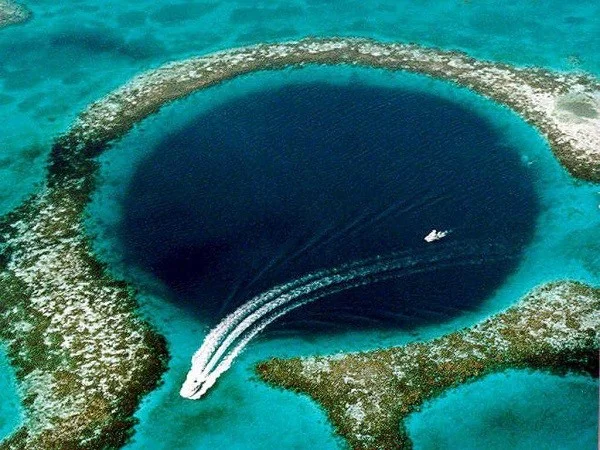
Where it is
The Great Blue Hole lies within Lighthouse Reef off the coast of Belize. Its dark circle against shallow water looks unusual, but a regular shape does not establish an artificial origin. It is a natural structure in limestone.
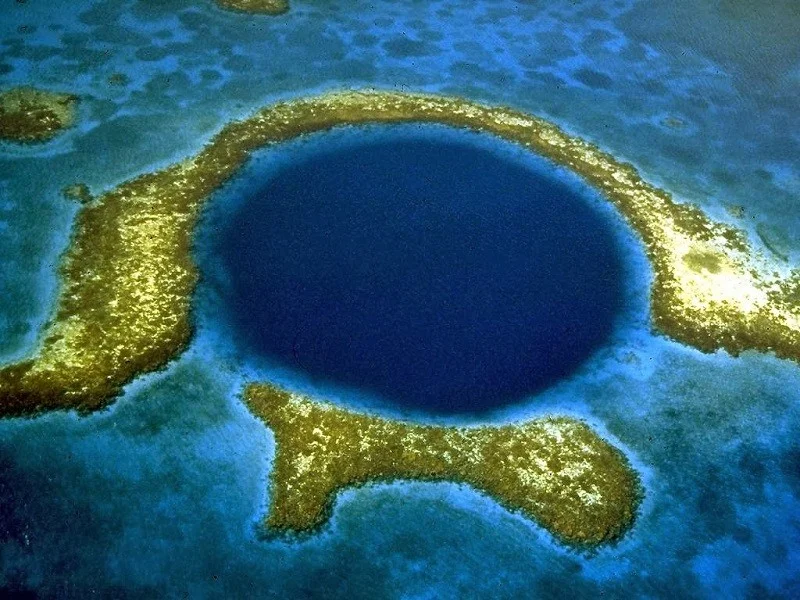
How the landscape formed
The sinkhole’s history involves karst caves and changes in sea level. Surviving submerged cave formations help show that parts of the system developed under different conditions. There is no basis for explaining it as a UFO landing or a meteorite scar.
Looking or diving
The site can be appreciated as a landscape and as a subject of marine research. Diving is a separate undertaking: depth and cave sections require appropriate training, and fame does not make the location a training ground for every beginner. Confirm visit arrangements and restrictions with responsible operators; a colourful photograph does not replace assessing conditions.