
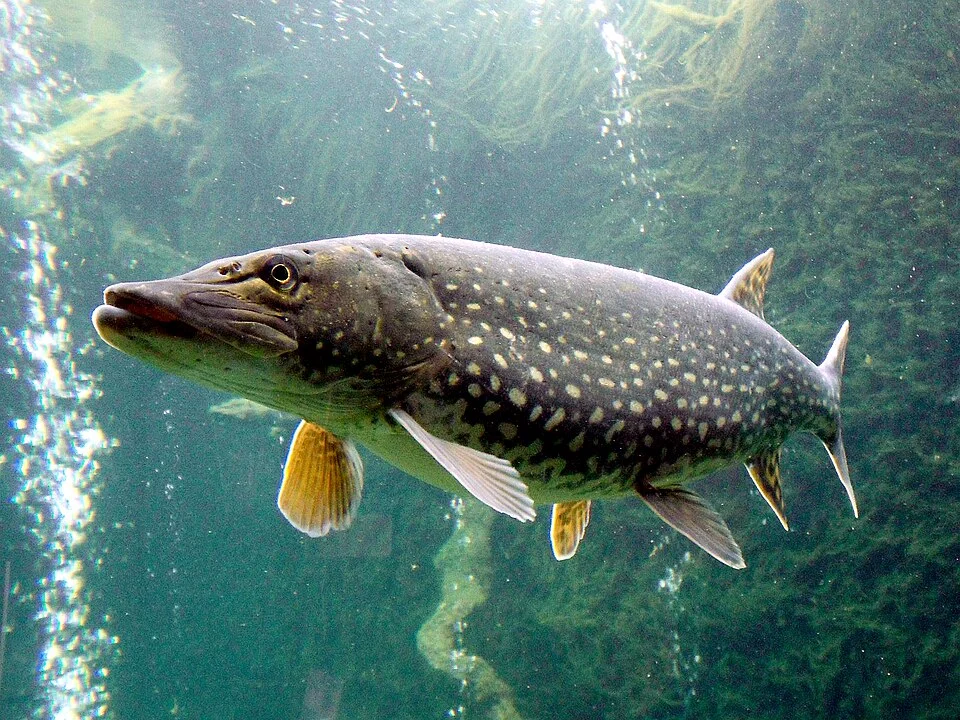
Jik jik · CC BY-SA 3.0 · Original photo · Photo usage terms

Pike is a toothy predator that needs a bite‑resistant leader. Getting to know the species is best started with the waterbody’s conditions, the accessible fishing method, and a brief observation plan. This way preparation isn’t reduced to a random assortment of lures.
What to pay attention to
Where to start looking
Guidelines for scouting: the edges of vegetation and clear water. This is an initial hint, not a confirmed fish-holding area. Rivers, lakes and reservoirs; weed beds and cover near open water.
Presentation for the conditions
It’s useful to alternate checking nearby cover, changing the angle of presentation. Match the lure to the depth. Use a bite‑resistant leader and a long hook tool. Compare the recommendation with your own gear’s capabilities and the space available on the bank.
First observations
Record distance, presentation depth and contact times. Compare neighboring accessible points rather than judging the whole waterbody after a single cast. Lack of a bite doesn’t prove the species is absent, but it isn’t a reason to endlessly feed at random.
Work with the conditions you see
Record observations together with time, location, and presentation method. Change one variable at a time; otherwise it’s unclear what produced the result. A short note after the trip is more useful than a rushed conclusion about the entire body of water: water level, lighting and fish activity can shift even within a single day.
Practical summary
Prepare your landing net and tool before you start fishing. Read more about the species and its habitat in our guide: pike. Activity dates in the calendar are reference points, and the current rules for the specific waterbody should be checked separately.
Next step: open the angler’s calendar and the map of spots, to link the recommendations with a specific outing. Check current access to the chosen area before you go.