
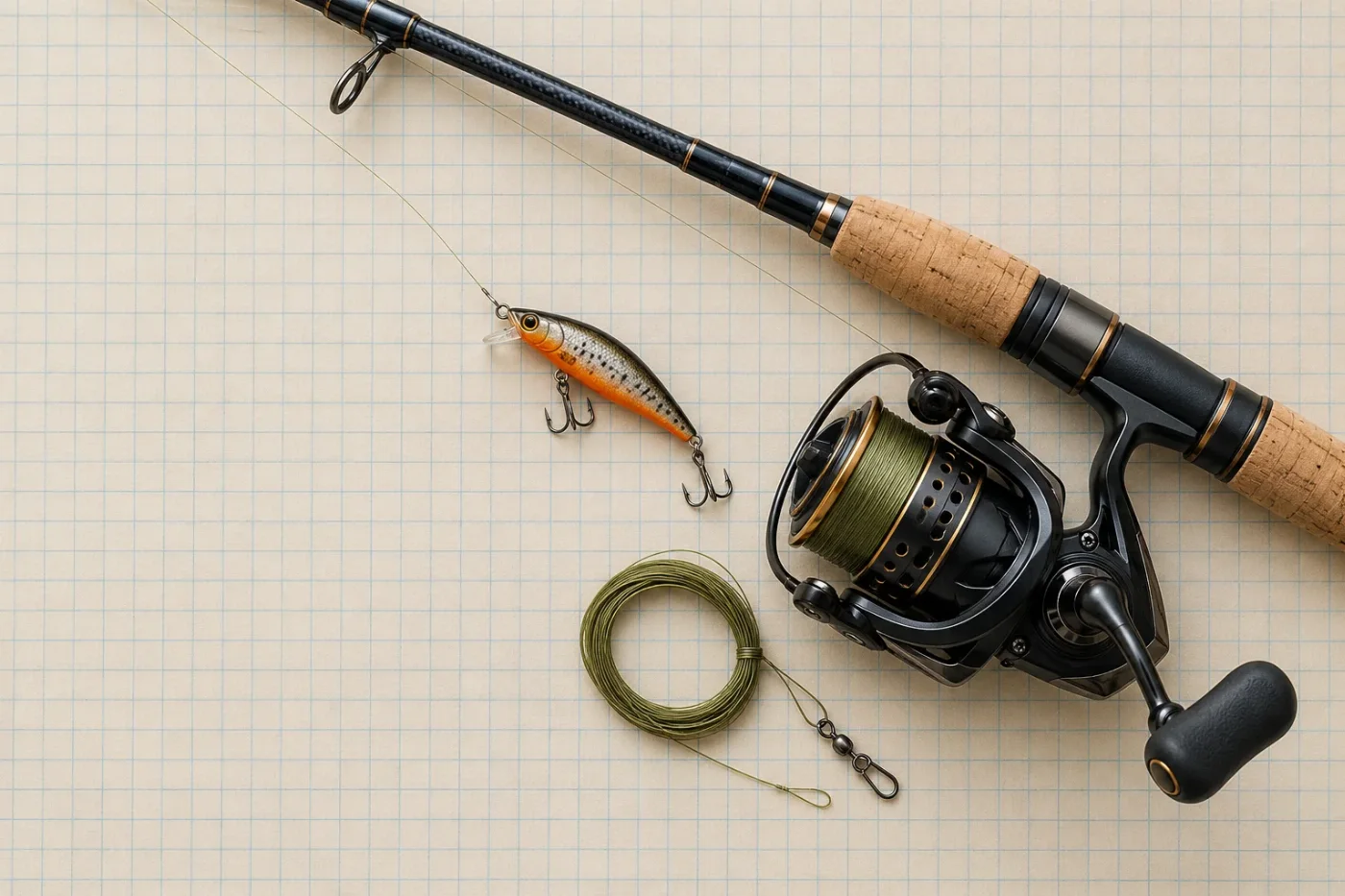
Editorial illustration SNASTI.NET.
It is easier to learn with one straightforward tackle setup than with several mismatched rods. Start with a body of water near home and one fishing method you can practice regularly.
What to Pay Attention To
Match Your Tackle to the Conditions
A small pond and an open large river require different solutions. Note whether there is current, how much space you have for casting, and which fish you plan to target. These answers narrow the choice faster than comparing dozens of brands.
Compatible Kit
The weight of the lure or loaded feeder must stay within the rod’s stated casting-weight range. The reel, line and leader must match the fishing method. Don’t try to compensate for an unsuitable blank with an overly thick line.
Useful Accessories
Add a landing net, a hook tool, and several spare leaders to the basic kit. Arrange them so you don’t have to search the bottom of your backpack when the tackle is already in the water.
How to Check Your Choice
Gear is evaluated as an assembled set. At home, check connections, access to adjustments, and ease of handling with wet hands. On the water, start with a short test near an accessible shore: it’s easier to notice twists, excess friction or poor placement of items than to fix them while fishing.
Practical Summary
First build a reliable working foundation, and postpone purchases for niche tasks. After a few trips you’ll see what you truly lack and what only adds weight to your bag.
Next step: open tools for preparing tackle and a map of spots, to link recommendations to a specific outing. Check current access to the chosen area before you go.