
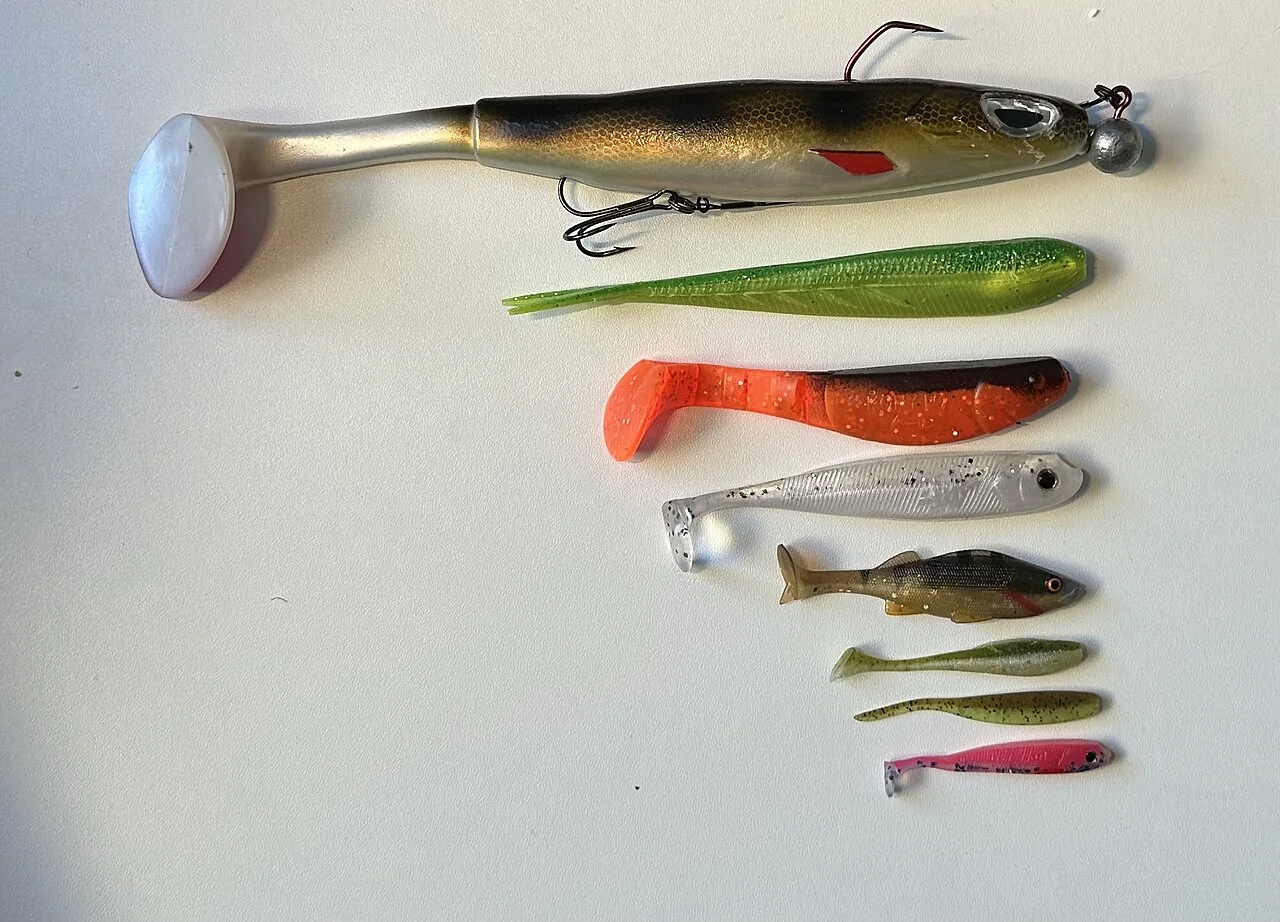
Editorial illustration SNASTI.NET.
A compact box lets you change the presentation faster and spend less time searching for a lure. It is filled for the river conditions, not by the principle of having every possible model.
What to pay attention to
Different tasks
Leave a few lures for shallow water, current and accessible deeper spots. It’s more important to have different working depths and speeds than many similar colours. The total weight of the lure and rig should stay within the rod’s casting-weight rating.
Spare parts
Pack separate snaps, the required leaders and several rigs for replacement. When targeting pike, consider its teeth and use a suitable bite-resistant leader. Do not put open hooks in your pocket.
Post‑trip order
Dry wet lures before closing the box. Set aside damaged hooks and snaps for replacement rather than returning them to the working compartment. Mark the empty spot so you can replenish the stock at home.
How to check your choice
Gear is evaluated as a complete set. At home check connections, access to adjustments and ease of handling with wet hands. On the water start with a short test near an accessible bank: it’s easier to notice twists, excess friction or poor placement of items than to fix them while fishing.
Practical summary
A good small box contains clear solutions for your spots. After the season keep the models you actually use and store experimental lures separately.
Next step: open tools for gear preparation and location map, to link the recommendations to a specific trip. Check current access to the chosen area before you set off.