
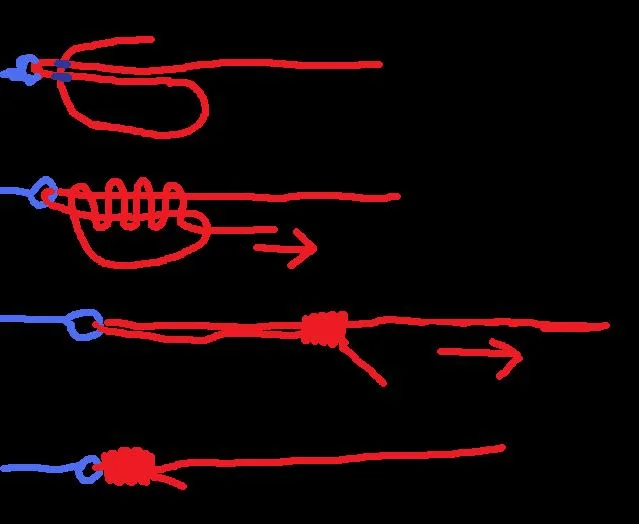
Editorial illustration SNASTI.NET.
Knots are easier to learn one at a time, linking each to a specific task. For training, gather materials from your working kit and the diagram of a proven connection recommended for them.
What to pay attention to
One task per session
Choose a connection for a hook, a clasp, or two materials and do not mix different patterns in the first attempt. Compare identical sections to spot an error in the sequence of turns rather than a difference between materials.
Repetition without haste
Start working under good lighting with your tools laid out comfortably. Check the tightening order against the diagram. Move to exercises with hooks carefully, keeping control of the sharp parts.
Transfer to the shore
Keep a short offline reminder. Do not practice a new complex knot for the first time when the gear is already tangled and you need to hurry. A few stable working connections are more practical than a large number of poorly memorised ones.
Test this in calm conditions
Try a new technique or set of items first at home or on a short accessible route. Determine in advance what should work without prompting and what requires practice. After returning, note one or two specific changes for the next trip. This way the kit gradually adapts to your conditions, and decisions are based on your own observations rather than only on others’ lists.
Practical summary
The result of training is not speed for speed’s sake, but repeatable, tidy work. It is better to retie a doubtful knot than to try to compensate for uncertainty by pulling harder.
Next step: open the preparation list for the trip and the map of locations, to link the recommendations with a specific outing. Check current access to the chosen area before you go.