

Why a tent needs guylines
Guylines help distribute loads through the intended attachment points and maintain the shelter’s shape. They may also separate the flysheet from the inner tent and hold ventilation features open. Cords do not make every tent suitable for every wind: model, condition, campsite and correct assembly matter.
Pitch the tent according to its instructions before travelling and identify all working attachment points. Check peg and cord quantities: the supplied kit may not include everything needed for your conditions. Learn a complicated pitch in daylight at home rather than for the first time in bad weather.
Guyline direction
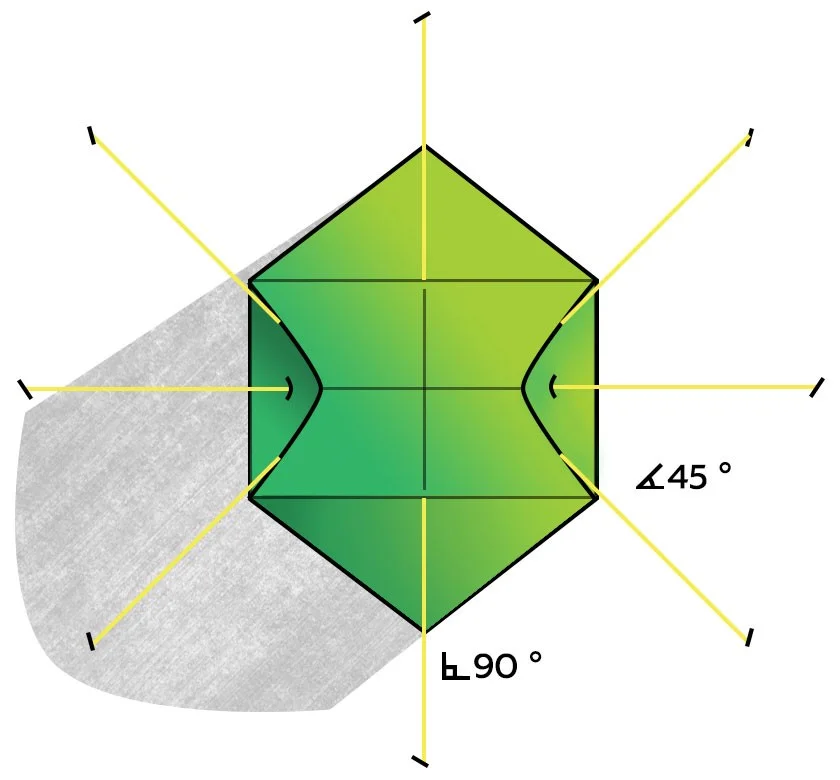
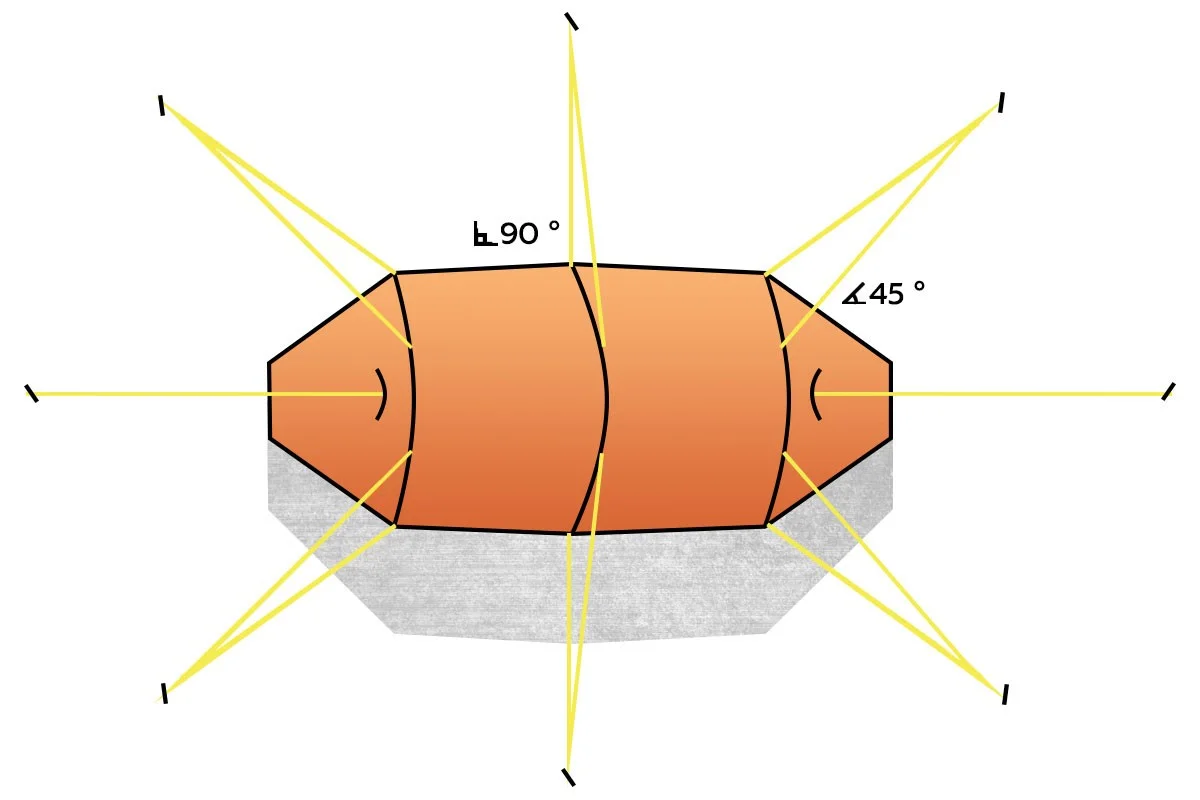
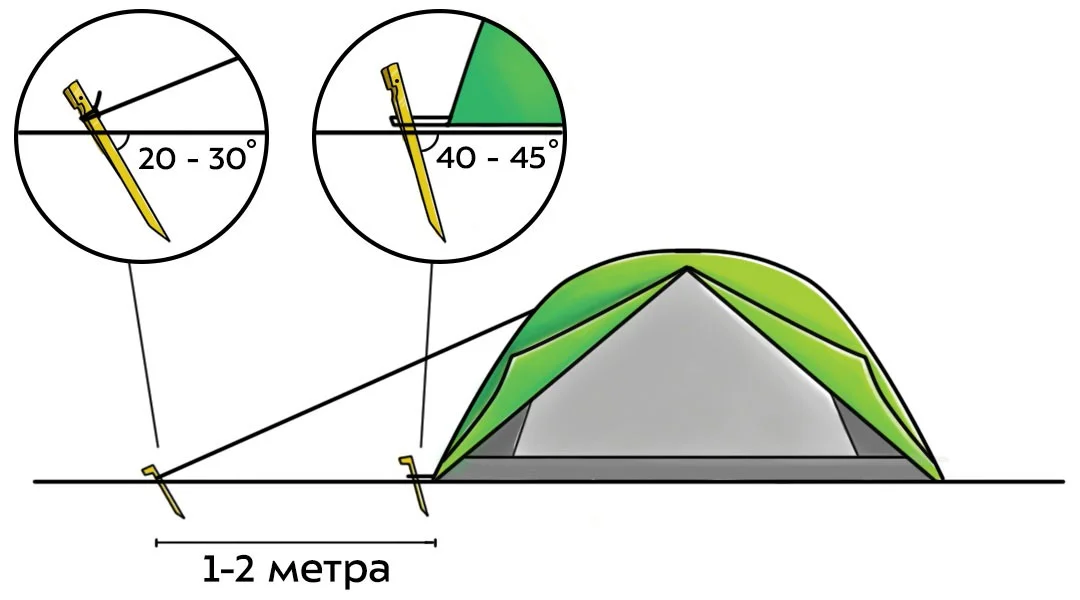
Start with the manufacturer’s diagram. On many rectangular tents, side guys run outwards from their attachment points and corner guys continue the direction of the corner. The same forty-five-degree rule cannot automatically apply to every shape, frame or attachment.
Check that the fly is not twisted and tension does not bend a pole unnaturally. A guyline should load its reinforced attachment in the intended direction, not merely reach the nearest convenient rock. Match the illustrated examples to your own design.
Ventilation and the base
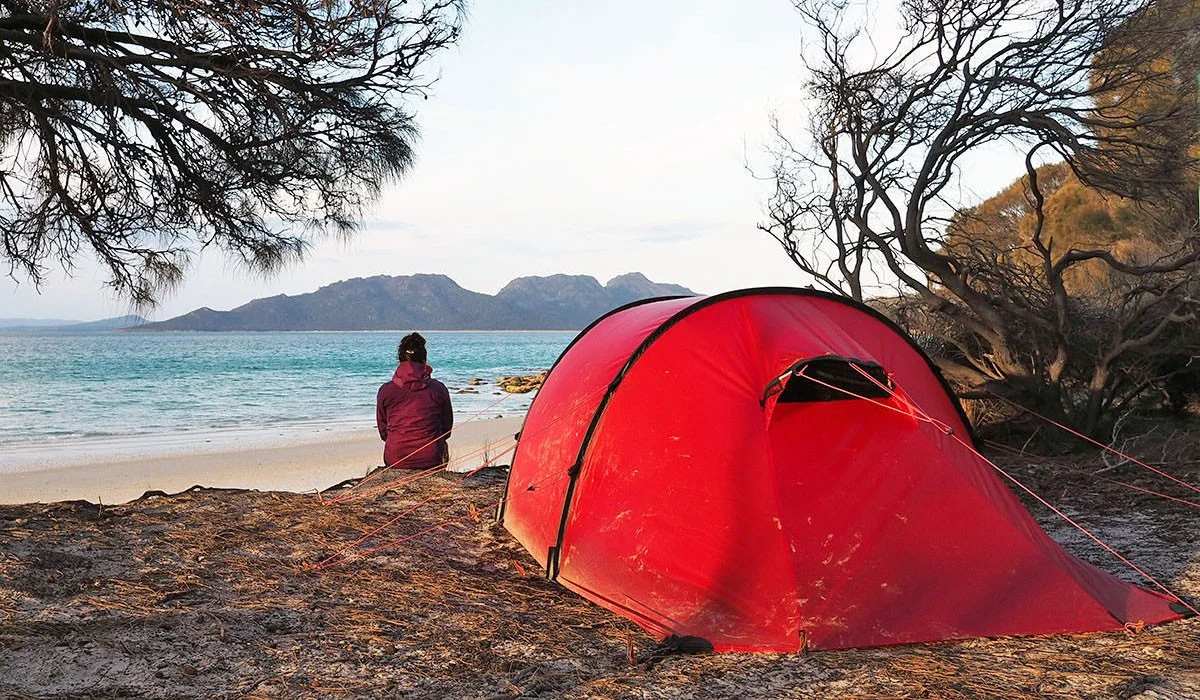
Use ventilation guys where the instructions specify them: they may be needed to keep an opening clear. Do not tension fabric so tightly that it closes vents or distorts the doorway. Check that zips open without excessive force.
Securing the base
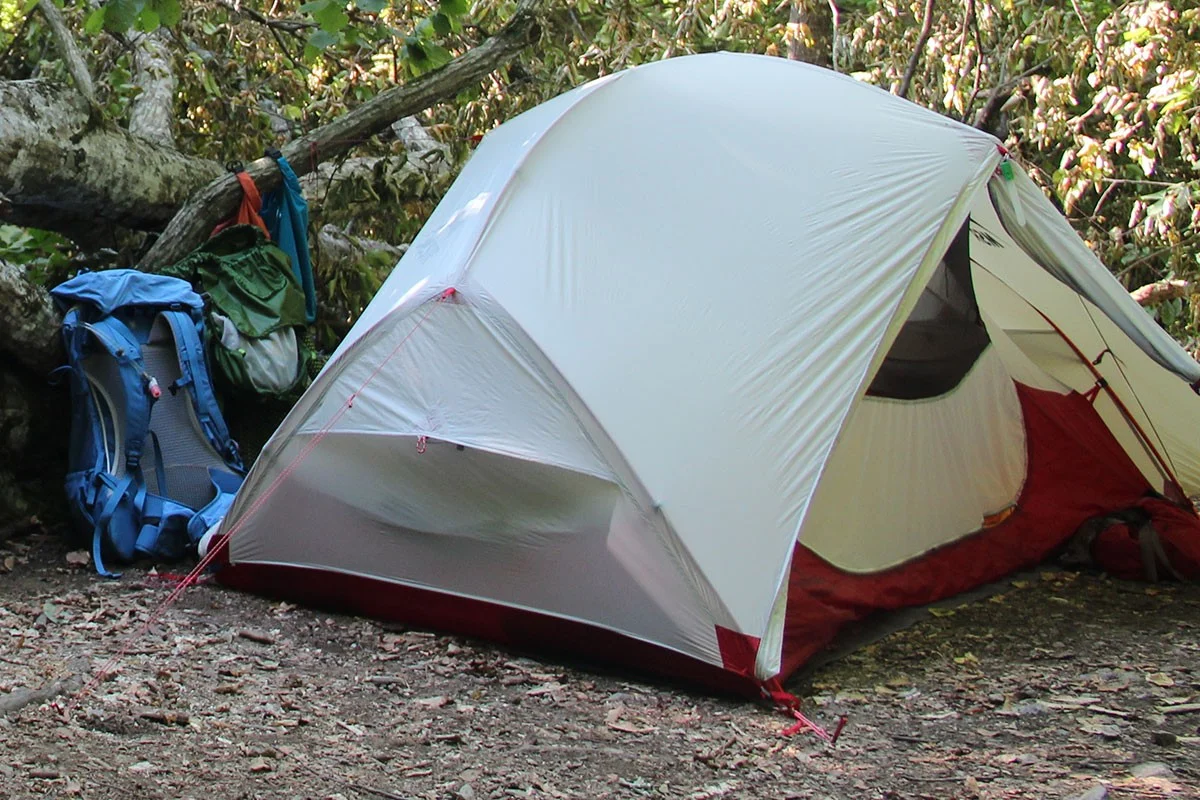
Guylines do not replace securing the base. Use the intended loops and other pitching points. Pegs must suit the ground and load; choose their insertion angle according to their design and the tent instructions rather than one figure for every situation.
Cord length and attachment
Leave enough space for the cord to pull in the correct direction and for adjustment. There is no fixed one- or two-metre distance for every tent. Consider the supplied guyline length, attachment height and available pitch.
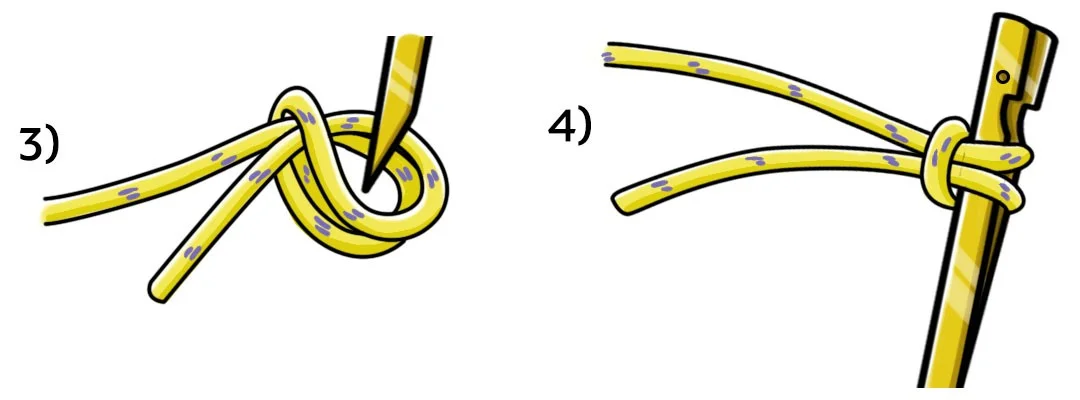
The loop must stay securely on its peg or other permitted anchor. Use a method you understand that suits the hardware, and test it under load. Keep sharp components out of walkways and do not rely on an improvised knot you cannot check.
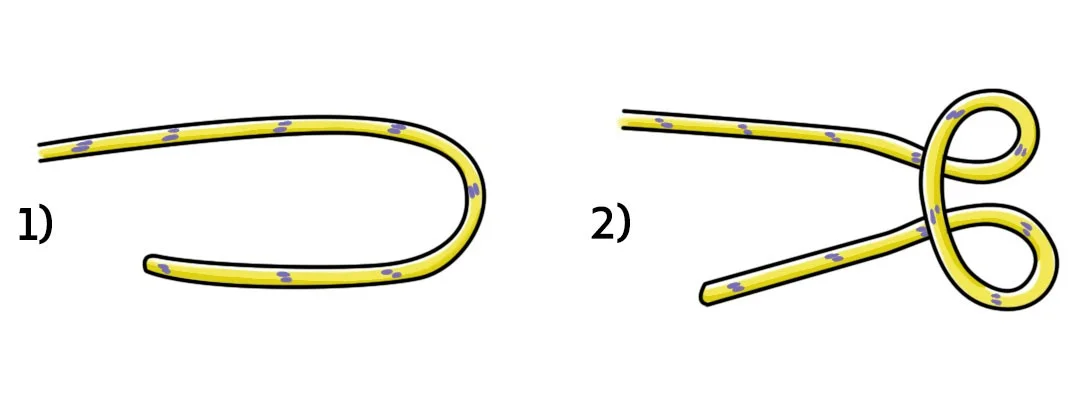
Pegs and ground
Inspect the site first: loose soil, stones and hidden obstacles affect anchor reliability. Do not drive a peg blindly near buried services. After placing it, check for twisting or lifting under a gentle load in the working direction.
Simple adjusters
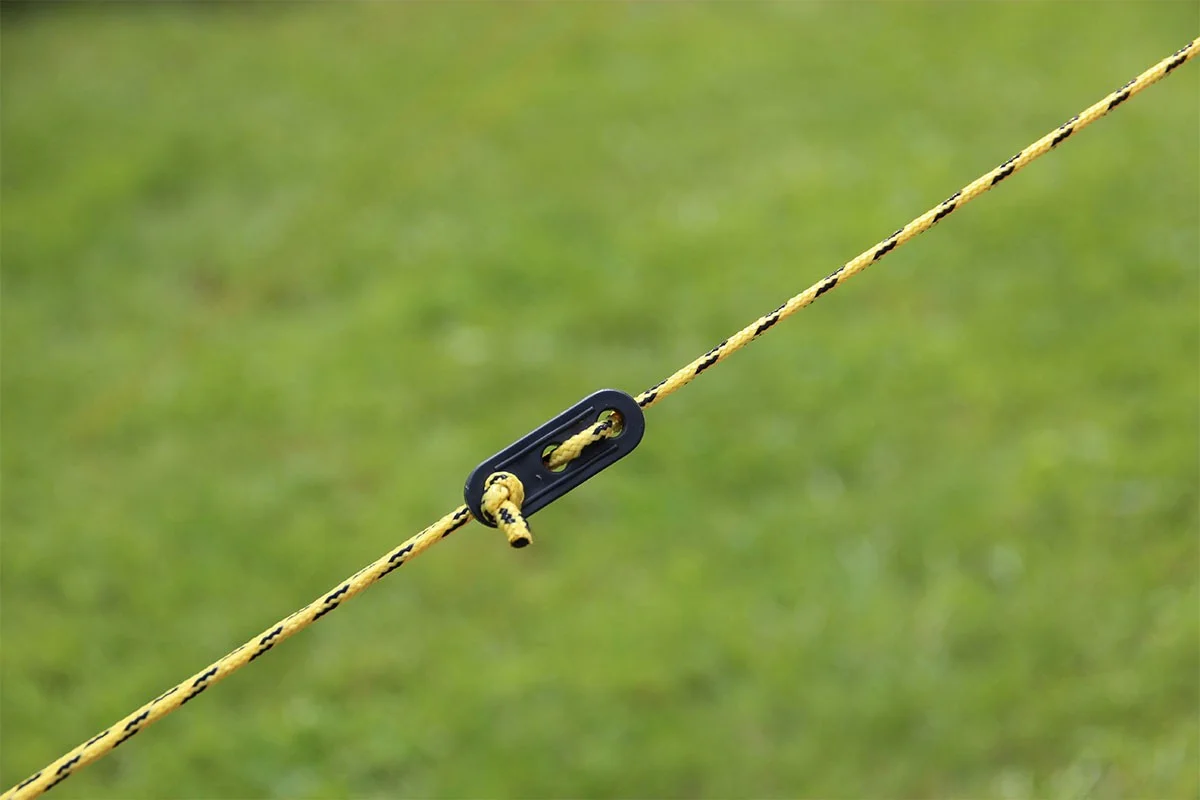
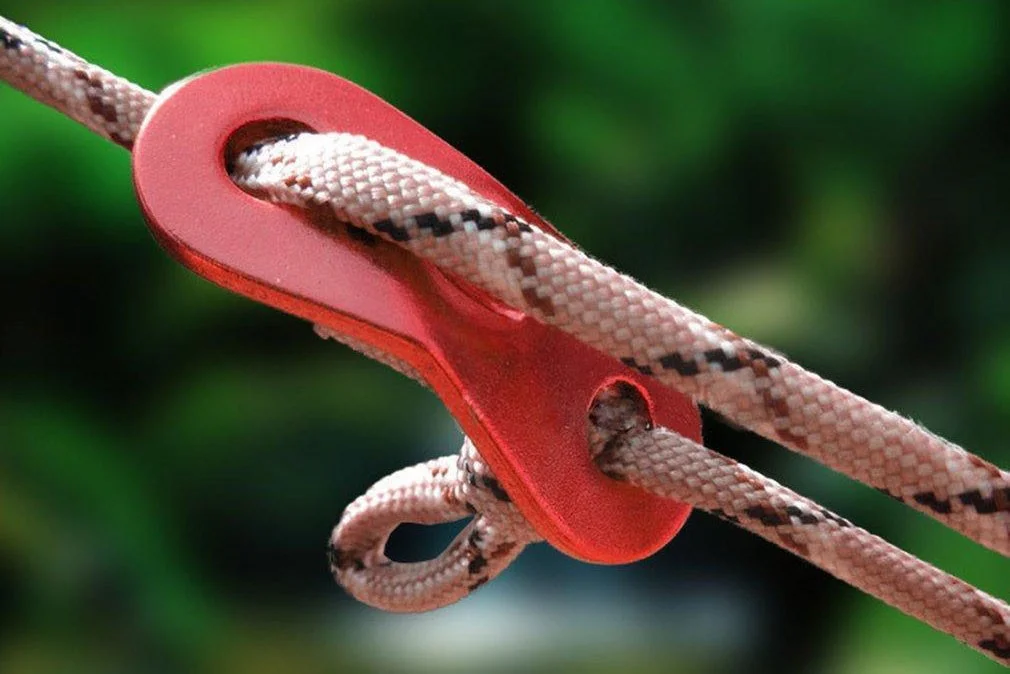
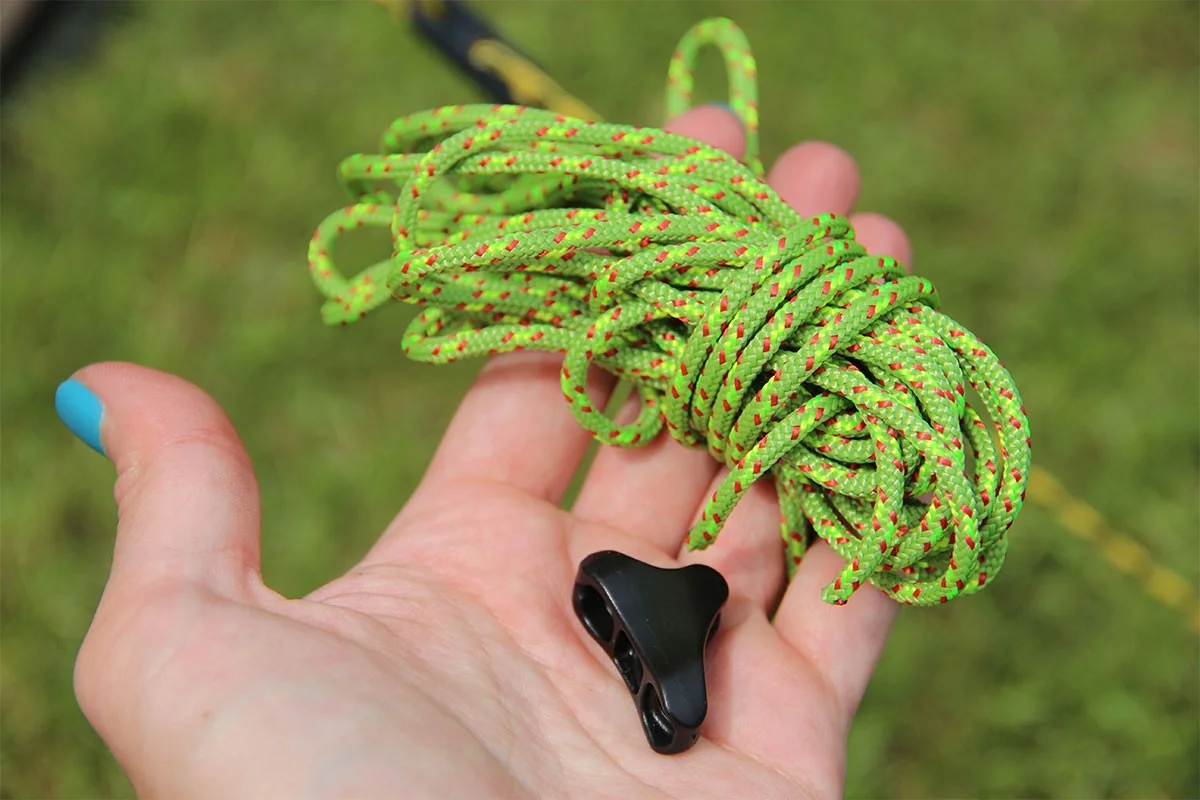
Plates with holes and other simple runners let you change loop length and hold cord by friction. Performance depends on shape, material, threading and cord diameter. A plastic plate is not necessarily poor, and a metal component is not automatically reliable.
Test adjustment on your own guyline, including conditions resembling the trip: wet or dirty cord may behave differently. Replace worn, cracked or incompatible hardware rather than compensating with excessive tension.
Clamping adjusters
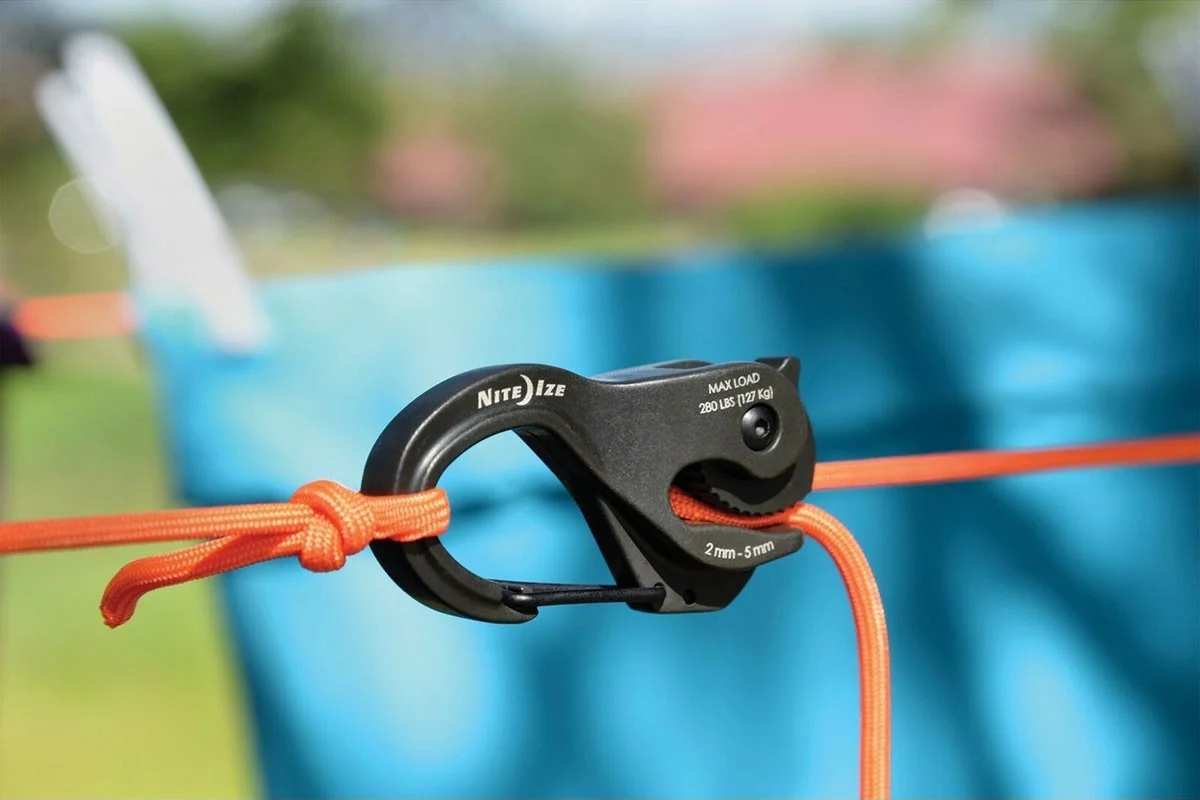
Line Lock-type fittings and cam clamps have their own threading arrangements and cord-diameter ranges. Compatibility matters more than the general name. A convenient mechanism may slip if the cord is too thin or incorrectly threaded.
Practise loosening and tightening the system before departure. Check holding performance after loading as well as one-handed convenience. No adjuster type guarantees that the pitch will never need checking again.
Tension without distortion
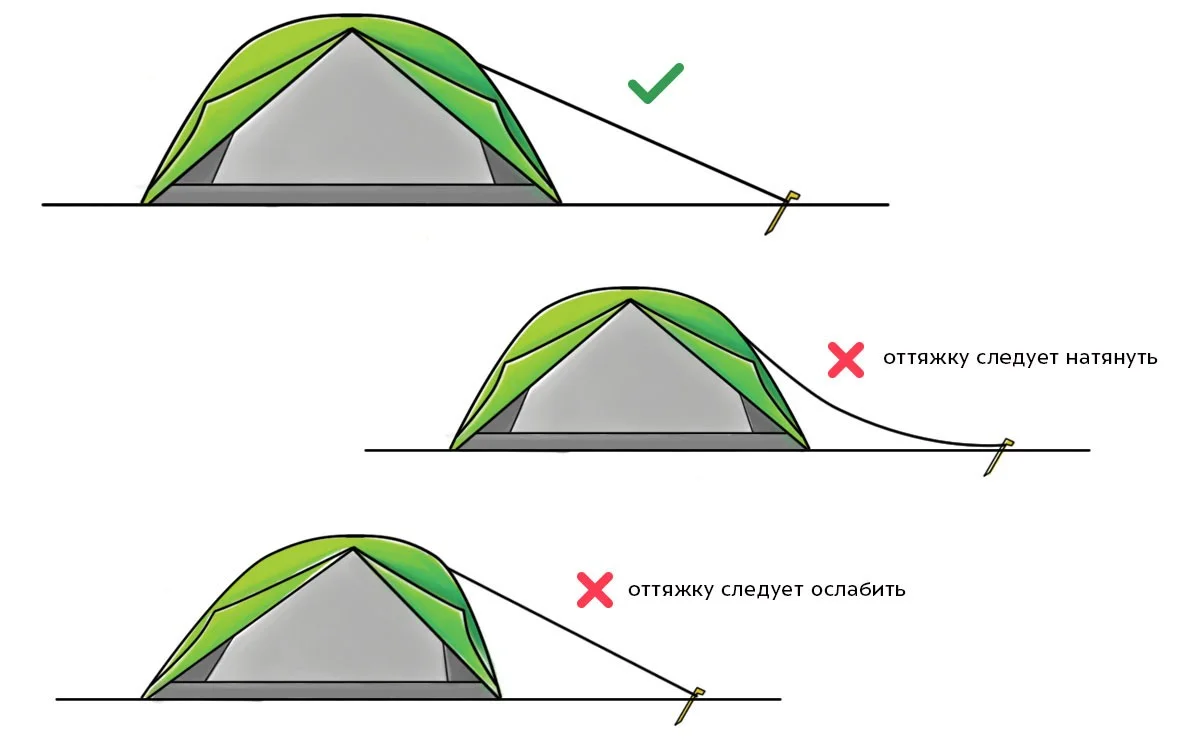
Tighten guys gradually while preserving the tent’s shape. A slack cord cannot do its job, but pulling it rigidly tight can overload fabric, attachments or poles. Check the whole pitch after adjusting one side.
Fabric and cords may change tension after rain or temperature changes. Inspect them after wetting and when weather changes. If an anchor will not hold, reconsider it or the campsite instead of continually tightening the cord.
Sand, rocks and snow
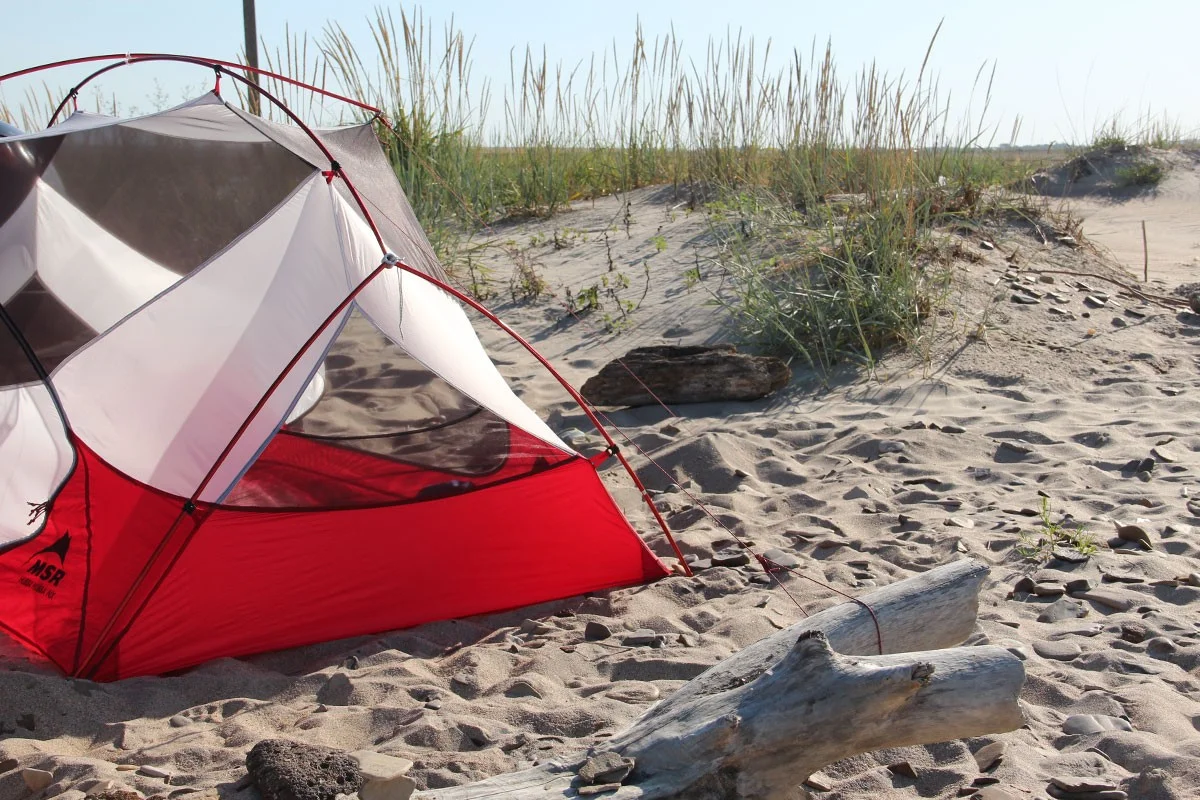
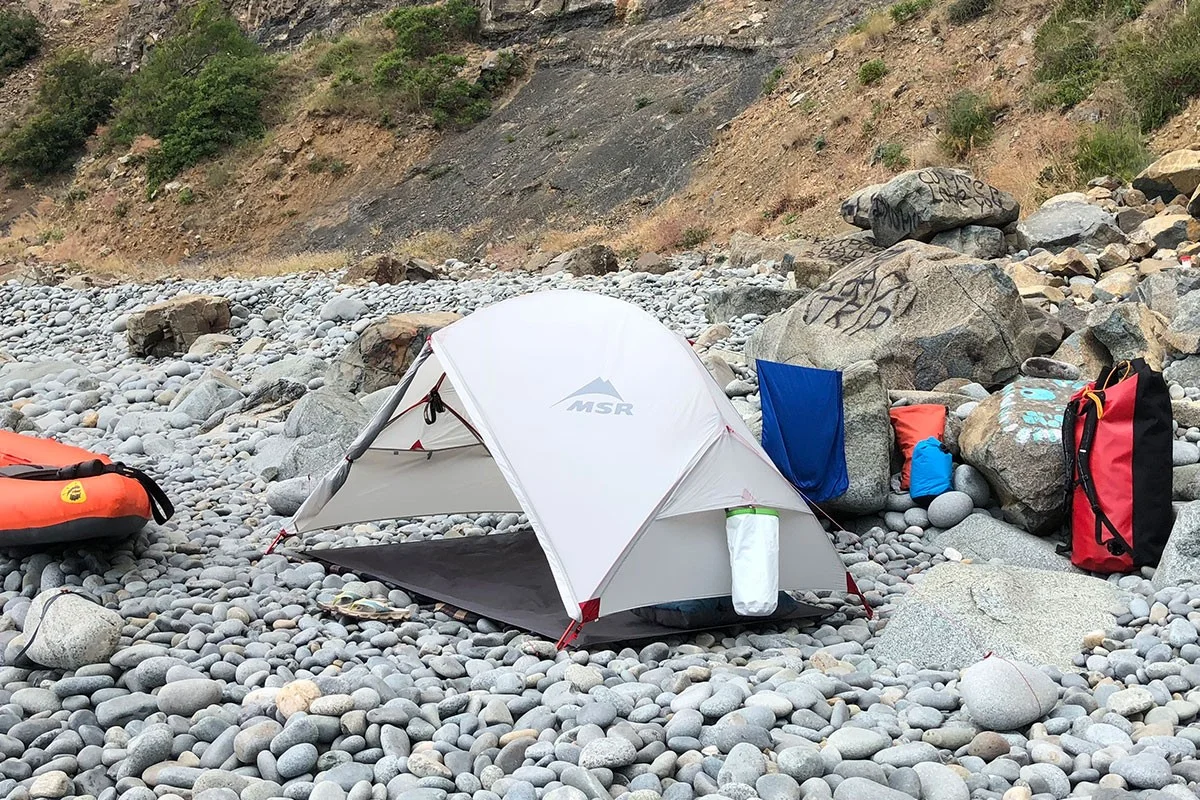
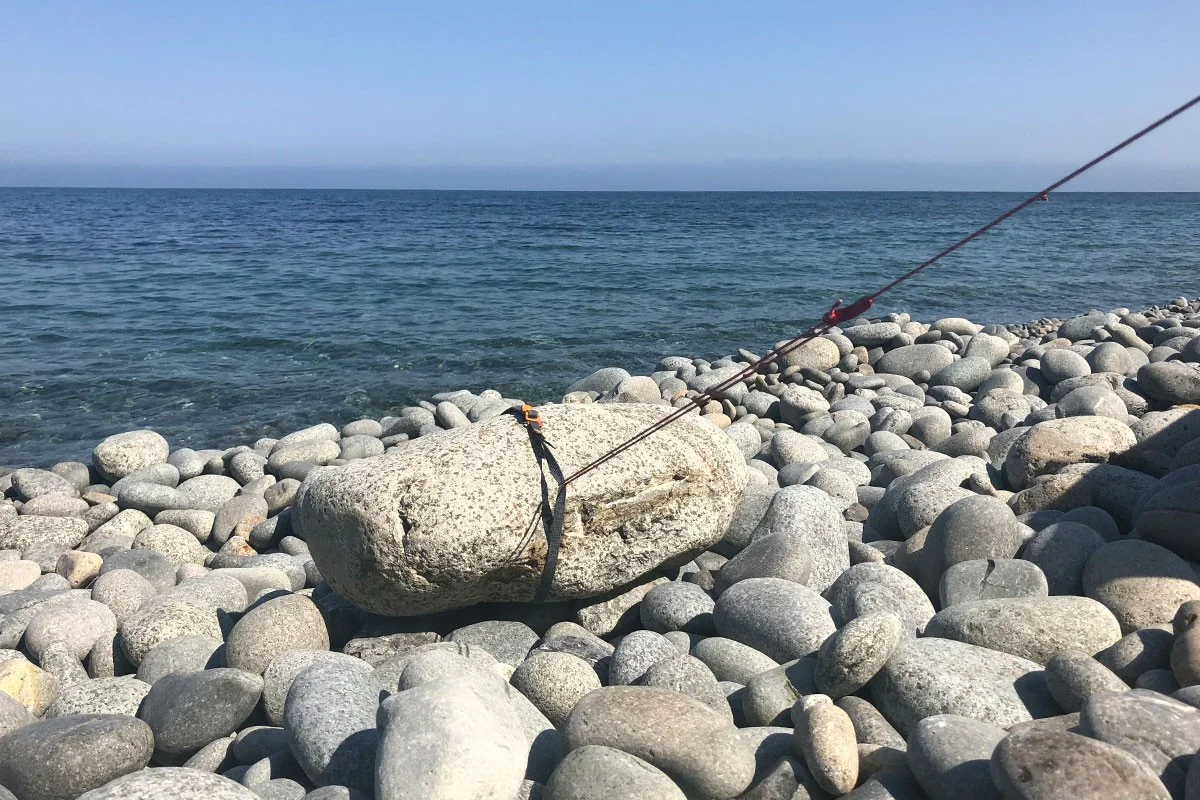
Loose sand, snow or rocky pitches may require specialist pegs or anchors. Choose a solution for the route beforehand and learn to install it. A heavy rock is not necessarily stable, and sharp edges can abrade cord.
Do not damage vegetation or use discarded objects that will remain behind. Assess improvised anchors by their actual stability; if the tent cannot be secured reliably, find another permitted, safe pitch.
Replacing cord
Choose cord for strength, stretch, diameter and compatibility with the adjuster. Paracord or accessory cord is not suitable merely because of its name. Nor is there one length for every point: follow the original system and pitching conditions.
Reflective details help reveal guylines in torchlight, but do not make them visible by themselves in complete darkness. Keep cords away from main walkways and tell companions, especially children, about anchors around the tent.
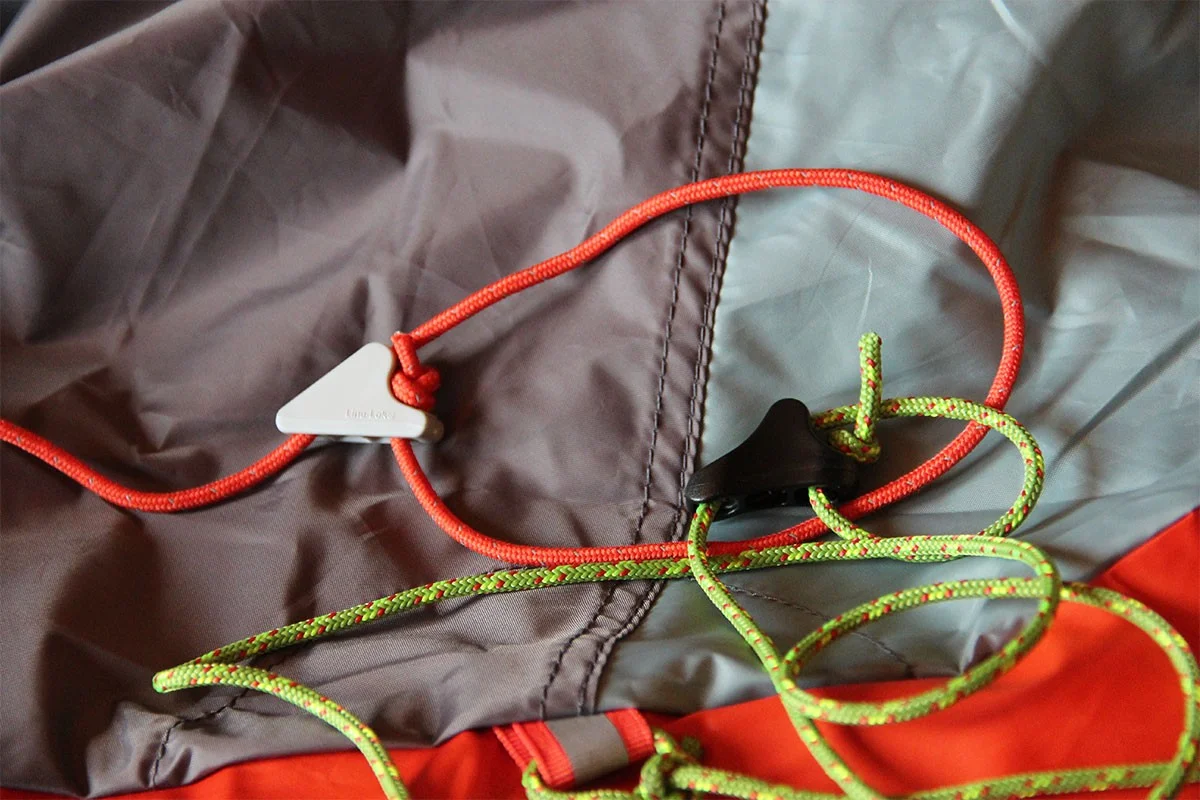
Threading checks and a final inspection
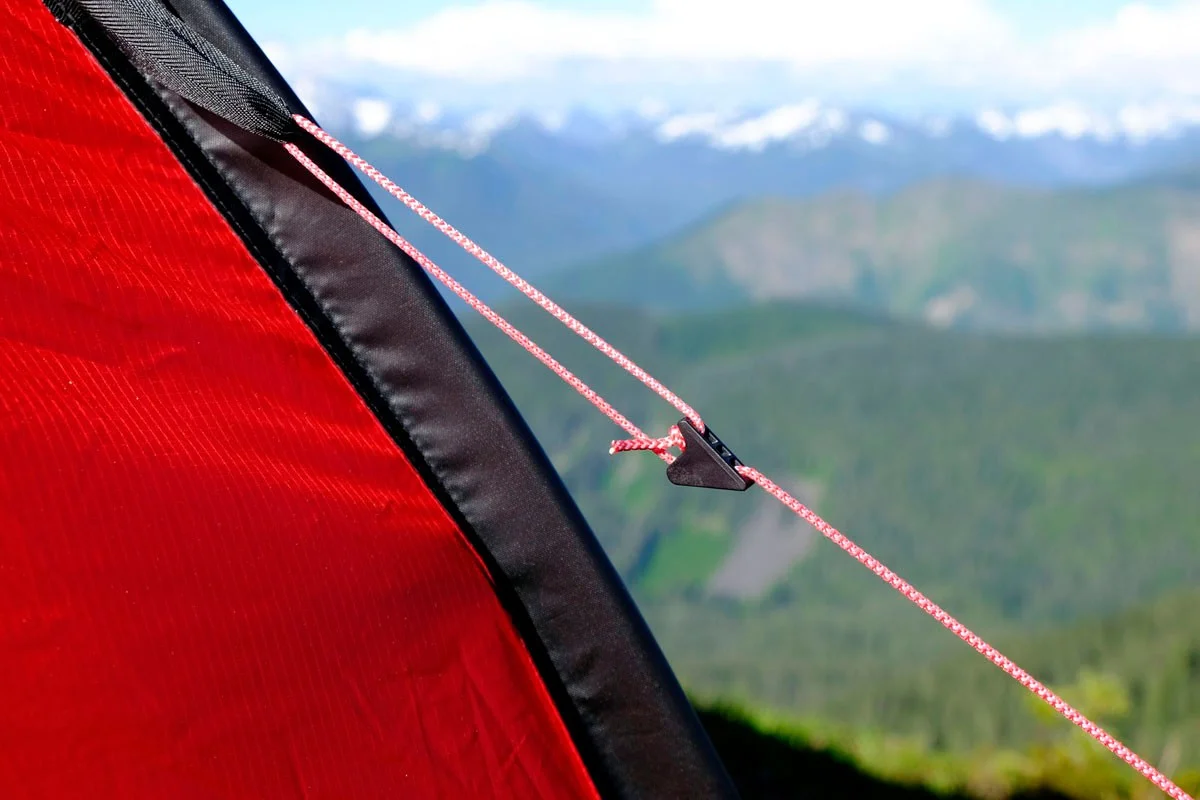
Compare the cord’s direction through the adjuster with the particular component’s diagram. Check adjustment travel, stopper knots where specified and retention of the working loop. The photographs below are examples, not replacement instructions for a similar-looking fitting.
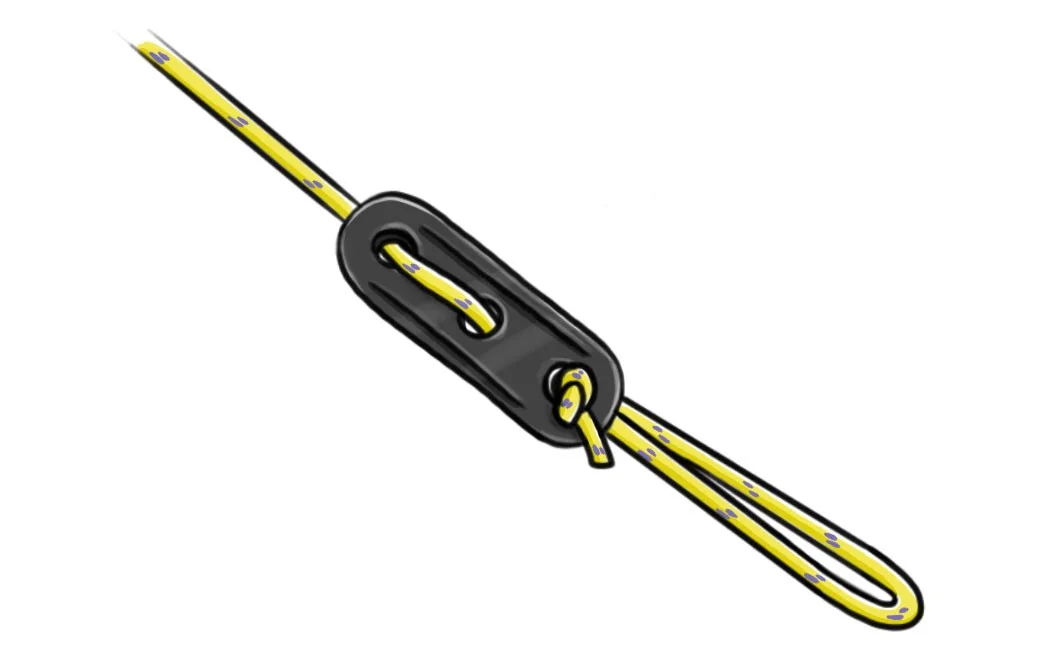
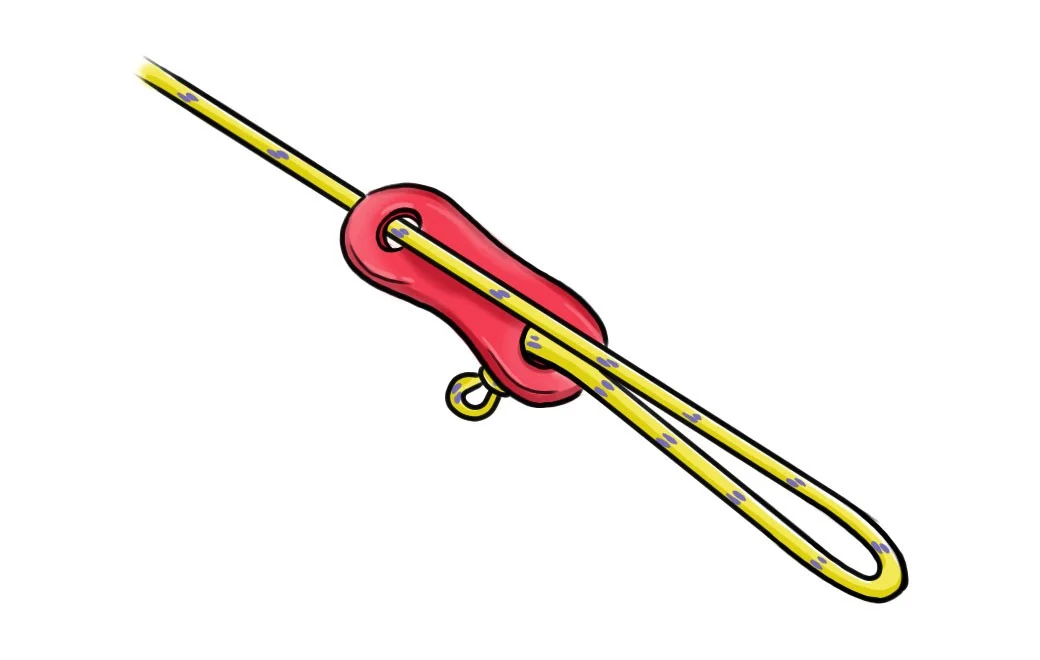
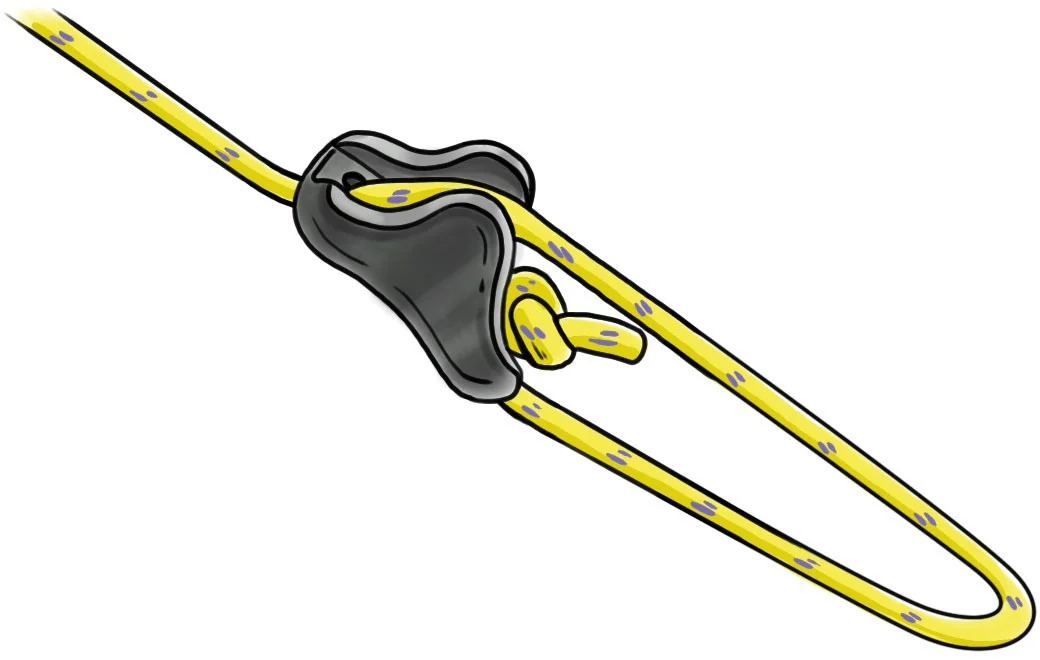
Walk around before settling down: base secured, vents open, cords holding, fabric undistorted and walkways clear. This improves pitch reliability but does not remove the tent’s limitations or the option of leaving an unsuitable campsite.