
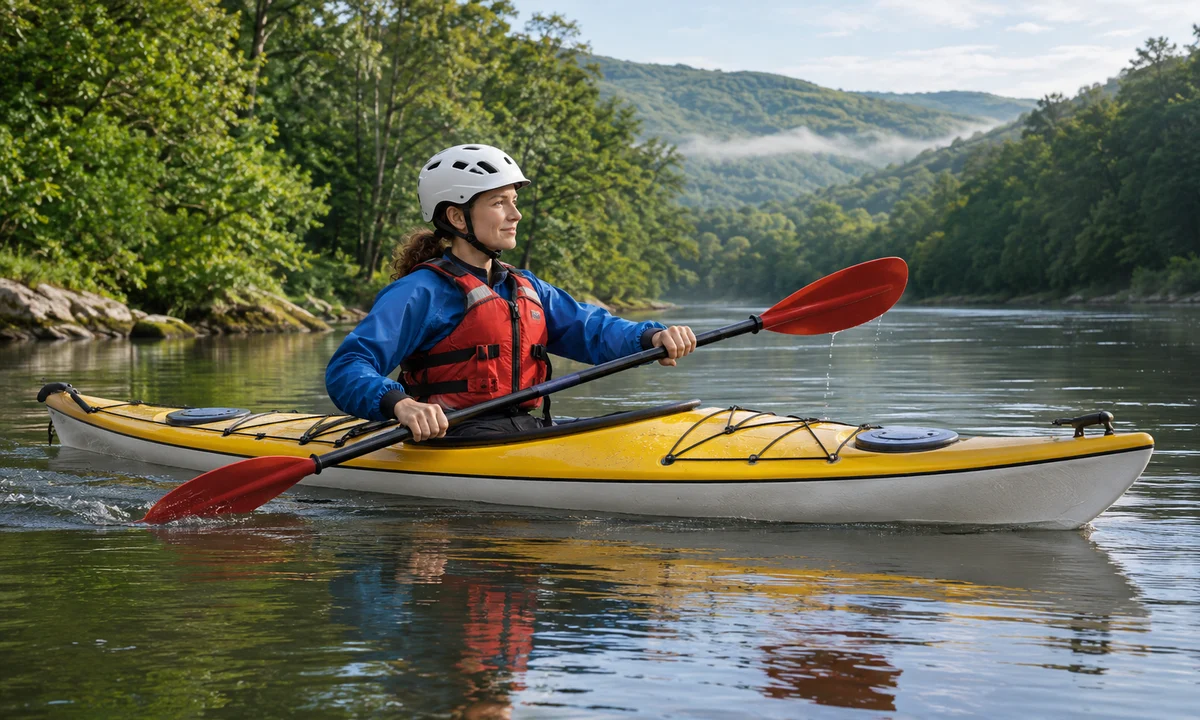
Sometimes a fresh view of a familiar place requires moving just a little lower — to water level. Reeds seem taller, a bend hides a small world of its own and a bridge you have passed many times suddenly looks different. Kayaking has a way of renewing curiosity about ordinary surroundings.
One word, many adventures
A kayaker generally sits and uses a double-bladed paddle. That simple description covers leisurely outings, sea journeys, competitive disciplines and whitewater paddling. Equipment, conditions and the skills required vary considerably between them.
On calm water, the route itself may provide the highlights: birds, waterside trees and a stop at a permitted landing place. On a lively river, the movement of the water and coordinated action take centre stage. Whitewater kayaking requires dedicated training; hiring a boat on a lake is not a substitute for that preparation.
Why it draws people in
Paddling creates a satisfying rhythm. Once the movements become more familiar, there is room to look around. You feel how the boat responds and gradually stop seeing water merely as an attractive background for photographs.
There is space for different personalities here. Some people enjoy a quiet morning outing; others prefer technical sessions with a club. Either can become a lasting interest without making every subsequent route more demanding.
A comfortable introduction
For a first outing, choose a club, school or rental operator offering instruction and guidance. Discuss the type of water, duration, boat fit and equipment suited to the session. A personal flotation device, and a helmet where the paddling environment calls for one, should suit both the activity and the wearer.
A place for rivers in your travels
Kayaking can begin as a single weekend activity. Later, it might become a reason to return to a favourite river in different seasons. The most satisfying outings leave you with memories while leaving the shore clean and available to other people and wildlife.