
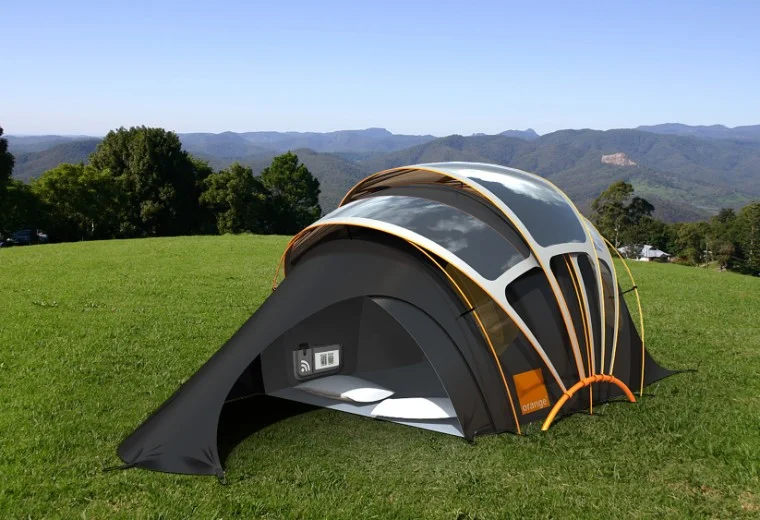
Choose for the way you camp
Camping does not necessarily require a huge tent for a large group. How you travel, how many nights you stay put and the expected weather matter more. A car lets you carry a heavier shelter, but not every road trip calls for the largest available size.
If part of the journey involves walking or cycling, assess the weight and packed size of the whole kit, including poles, pegs and a groundsheet. Compare the actual model specifications rather than a rule that a camping tent must weigh at least seven kilograms.
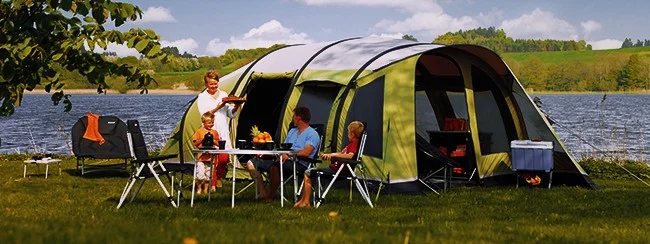
Test the layout with your own equipment
Lay out sleeping mats at home and imagine nighttime routines: where clothes, shoes and bags will go, and how you will reach the door. Stated capacity does not guarantee the same sleeping width across manufacturers. Floor length, sloping walls and headroom in the relevant part of the tent also matter.
Separate bedrooms may suit a family, but a large tent needs a suitable pitch and time to erect. One eight-person tent is not necessarily cheaper than two small ones under a campsite’s tariff: charges depend on the pitch, occupants and site rules.
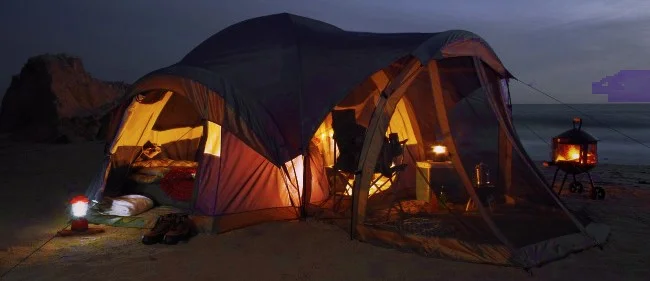
Vestibules and doors
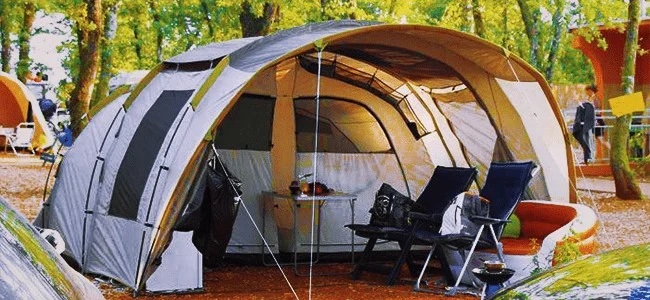
A vestibule is useful for wet shoes and some luggage. Check that belongings do not block the entrance and that you can get out at night without moving all the equipment. Several doors may help a large family, but their number alone does not determine tent quality.
Do not turn the vestibule into a stove kitchen. Flames, hot cookware and carbon monoxide are dangerous beneath a flysheet too. Cook outside at a safe distance from fabric, following the equipment instructions and campsite rules.
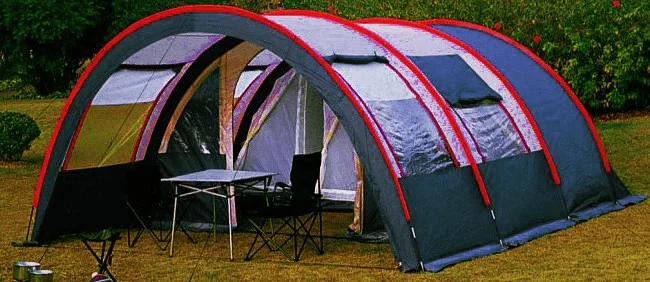
Ventilation and condensation
Check how vents adjust, whether insect screens are fitted and whether you can ventilate the shelter during rain. Do not close every vent to retain warmth: breathing and wet belongings add moisture inside. Droplets on the underside of the fly do not always mean a leak.
Check how the flysheet pitches and whether the intended gap is maintained. Correct tension and guylines matter as much as the number of windows. Dry damp belongings separately whenever possible.
Fabric, seams and frame
Polyester, nylon, blended fabrics and different coatings have distinct properties. Not all tents are silicone-coated or necessarily double-wall. Fabric waterproofness is only part of weather protection: seams, the floor, zips, construction and coating condition matter too.
There is no single compulsory hydrostatic-head figure for every trip. Likewise, pole material alone does not guarantee stability: frame geometry, guylines and the intended operating conditions matter. Check the model’s purpose instead of choosing only the largest number in a specification table.
Pitching, care and a final check
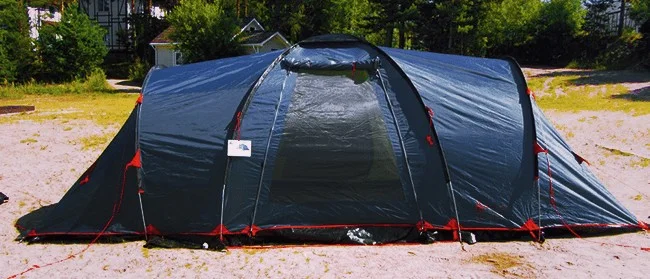
Assemble the tent before travelling, preferably with the people who will pitch it at camp. Check that parts are complete, instructions are clear and setup time is manageable without rushing. A large model particularly needs a clear pitch and room to secure every intended guyline.
After the trip, dry the fabric and clean dirt as the manufacturer recommends. Before buying, check the availability of replacement poles and repairs. A good camping tent provides the space and protection your holiday needs, rather than the greatest number of advertising promises.