
A simple idea with a long history
The hook remains one of fishing tackle’s most recognisable components. Materials and manufacturing methods have changed, but the purpose remains: retaining a fish after a bite. Its entire history cannot be reduced to one inventor or date; archaeological finds belong to different places and traditions.
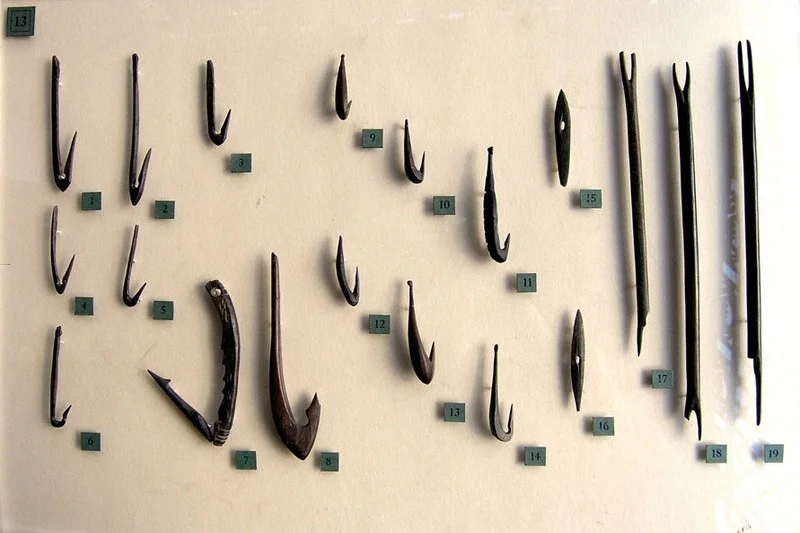
Museum collections include hooks made from bone, shell and composite components. The Metropolitan Museum, for example, holds a Japanese bone hook from the Final Jōmon period. Such a find describes a particular culture rather than establishing who first invented the fishing hook as a whole.
Materials shaped the design
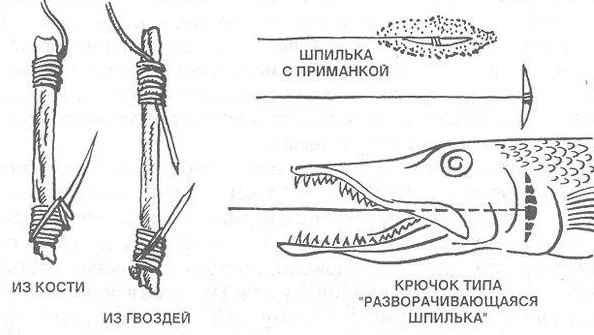
Natural materials imposed limits on shape and strength, so hooks could comprise several parts bound together with fibre. Some used a blank’s natural curve; others combined a separate point and base. These were different solutions to one task, not necessarily stages in a single evolutionary sequence.
Metalworking created other manufacturing possibilities. However, an account of ancient hooks should not become advice to bend a sewing needle at home: unknown steel and improvised heat treatment do not produce predictable tackle properties.
What matters in a modern hook
Steel grade is not the only consideration today. Shape, wire diameter, treatment, coating, eye or spade end and point quality all matter. A single hook has one point, a double two and a treble three; the barb is a separate feature near the point, not another name for the point itself.
Strength and elasticity must suit the fishing method. A fine-wire hook for a small bait and a reinforced model for a different load perform different jobs. Bending a hook through an arbitrary thirty degrees is not a universal quality test and may damage it.
Matching fish and bait
Consider how the bait sits, whether working space remains and whether the design suits the rig. Do not choose solely by expected fish size: bait, presentation and the strength of the whole outfit matter. Numbering and actual dimensions vary between ranges.
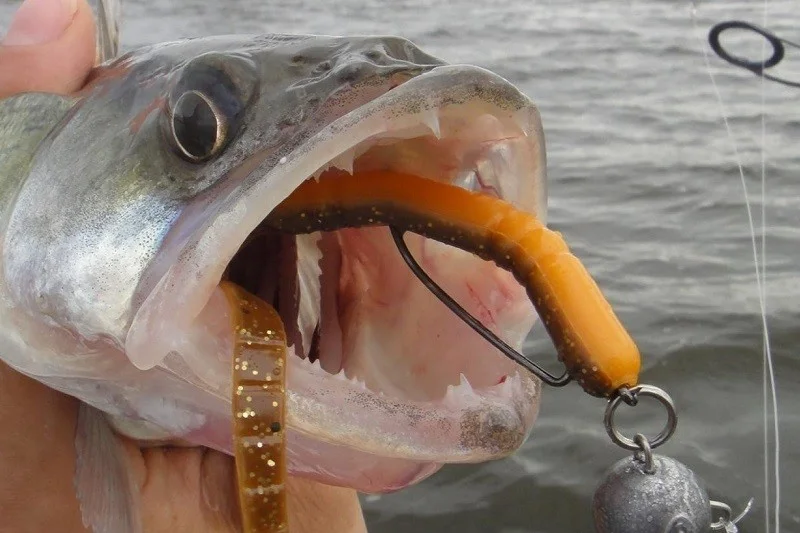
For an artificial lure, consider its action and hook position too. An oversized replacement may change the action, while an undersized one may suit the particular shape poorly. A famous brand name does not resolve compatibility on its own.
Condition and careful handling
Before fishing, inspect the point, barb, eye and bend for corrosion and obvious distortion. Replace a damaged hook rather than counting on its former strength. Store spares so sharp components cannot lie loose in pockets and bags.
Choose with fishery rules and fish-handling considerations in mind. Tackle history is interesting, but a sound, suitable hook is more useful on the bank than a legend about the most expensive metal or a miraculous shape.