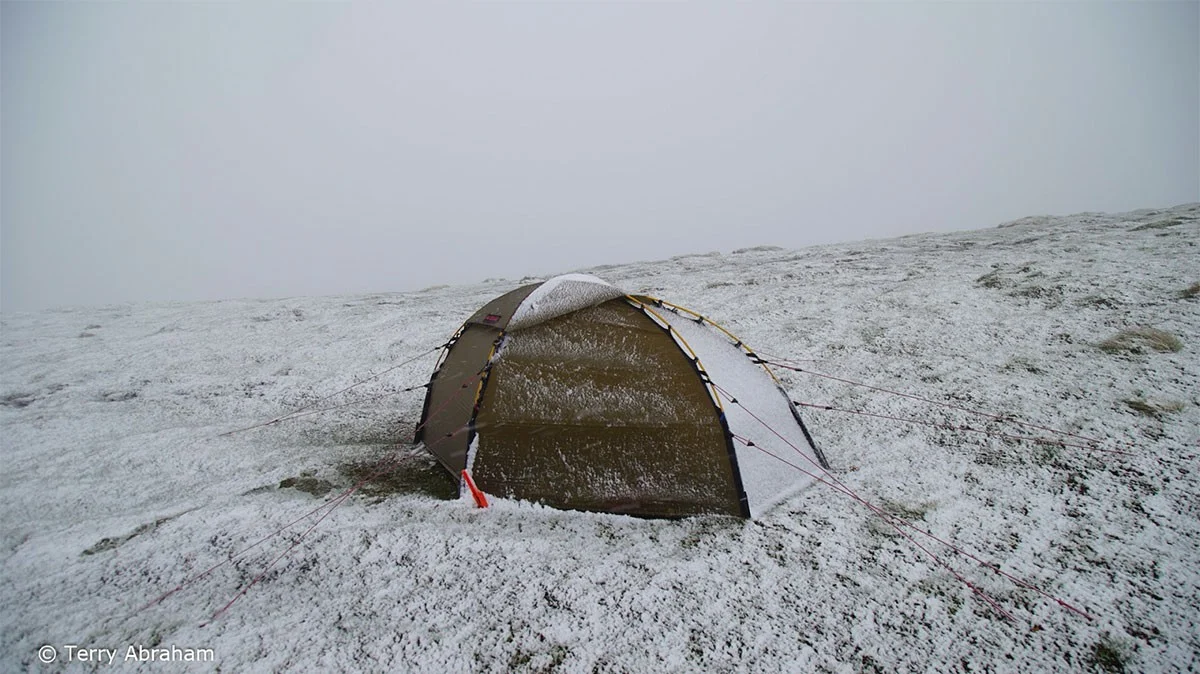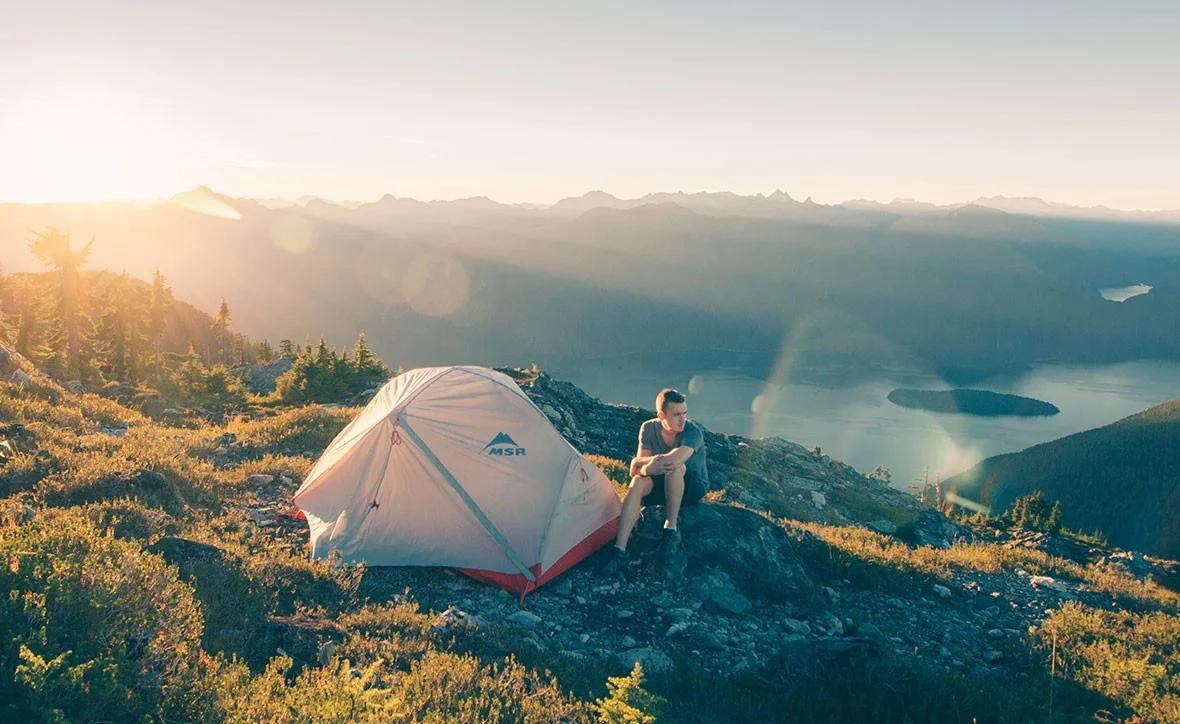
When separate sleeping makes sense
A one-person tent provides personal space and independence from a neighbour. But two separate tents are not necessarily lighter than one two-person tent, and a small size does not guarantee quick pitching. Compare total pole, fly, peg and additional ground-protection weight rather than a single catalogue figure.
Dimensions and campsite
Try your mat, sleeping bag and seated position. Check where a backpack and wet items will fit and whether entry is convenient in rain. A small footprint helps find a site but does not permit camping anywhere: consider area rules, water runoff, wind and ground conditions.
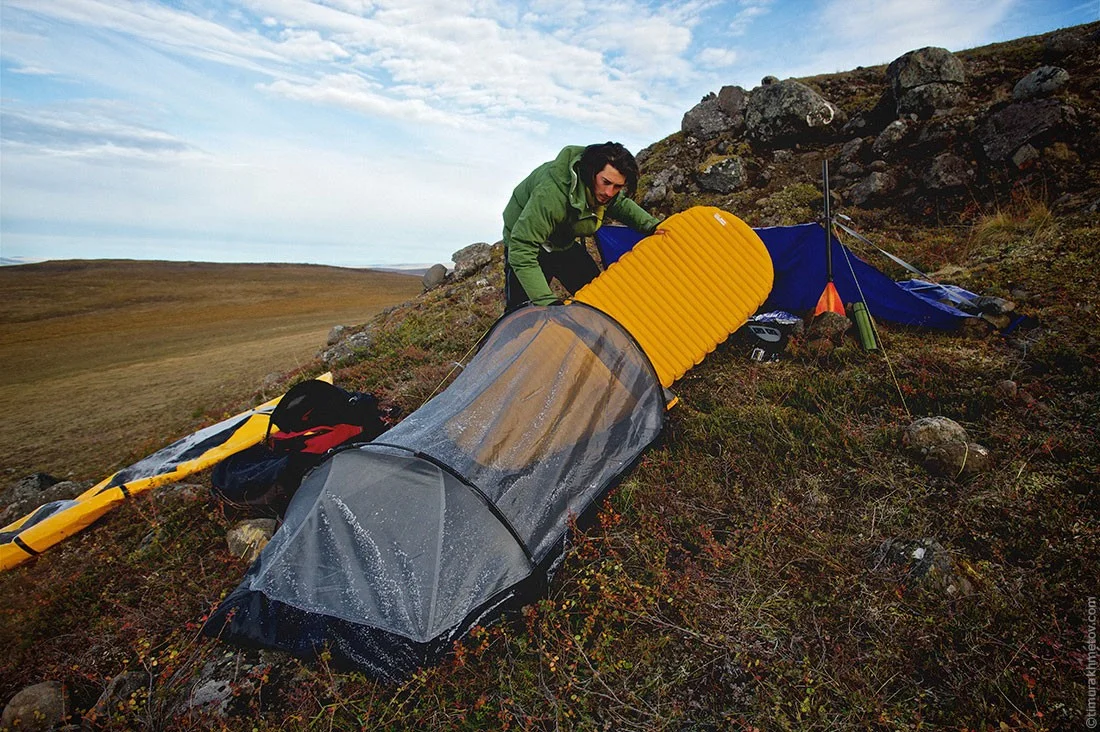
Tarp, bivy or enclosed tent
Alternatives require their own skills and a calculation of the entire system, including insect, moisture and condensation protection. They do not automatically become lighter or suitable simply because the forecast is warm. Trekking, all-season and ultralight labels do not replace manufacturer limits of use.
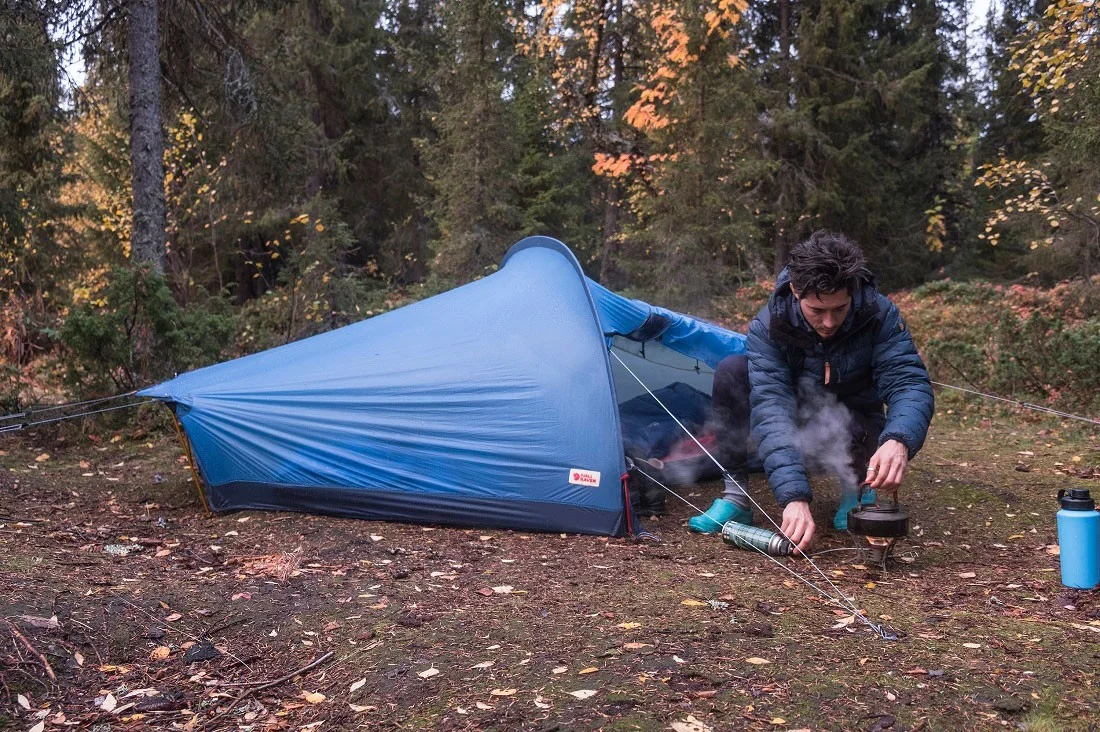
The Hilleberg Akto example
The Akto is a historically familiar example of a one-person, single-hoop design. Secure anchoring matters; do not treat it as freestanding. Check internal length with your sleeping bag and space beneath sloping walls. Kerlon fabric does not close punctures by itself: damage needs compatible repairs under the instructions. Stability depends on correct pitching and conditions rather than a promise to survive every hurricane.
Before the first walk
Assemble the kit beforehand and check poles, attachments and dry fabric. Cook outside the tent and vestibule, provide ventilation and choose a safe site. For a solo trip, separately plan communication, return and the option to shorten the route. A tent helps organise an overnight stay but cannot replace the traveller’s preparation.