
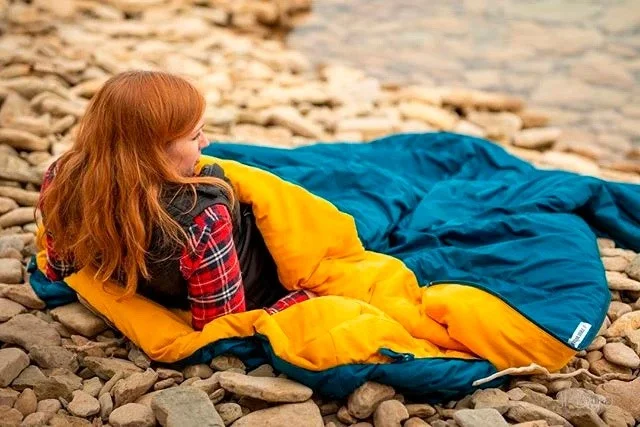
Where and how you will sleep
Car camping allows more weight and bulk than a walking route. Winter and mountain conditions require separate assessment rather than merely an extreme label. Establish expected overnight conditions, shelter and transport method. A sleeping bag works together with an insulating pad and clothing.
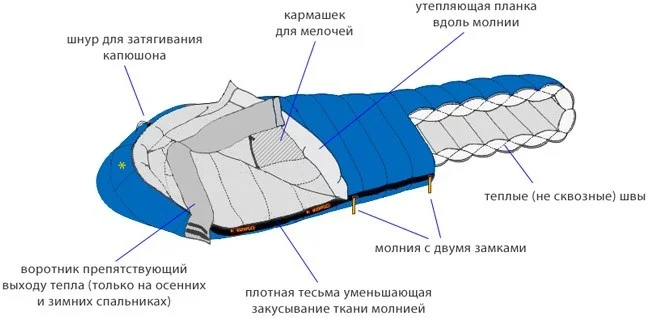
Down, synthetics and labels
Down and synthetic fills have different properties; compare actual products. Both need protection from water and correct drying and storage. Down does not inevitably lose all properties after any drying, and wet synthetic insulation cannot guarantee comfort. Water-repellent fabric is not a waterproof sack.
Comfort and the lower Limit rating concern different assessment conditions. Extreme is not a normal sleeping temperature. Check categories on the label and allow for your own sensitivity to cold; no universal guarantee covers a fixed number of hours.
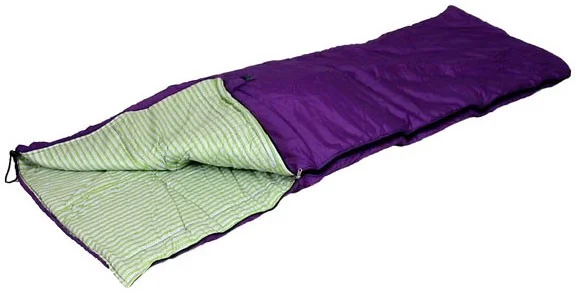
Rectangular or mummy shape
A rectangular shape offers more freedom, while a tapered mummy reduces excess volume but must suit your build. Lie inside and check shoulder and foot space without compressing insulation. Dimensions and lengths differ between manufacturers; Regular and Long names do not replace measurements.
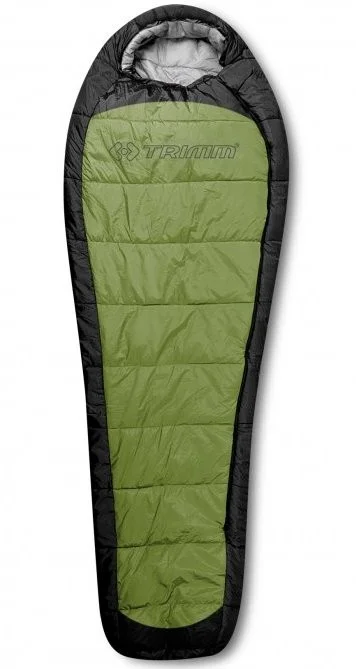
Details and care
Check the zip, insulated baffle, collar and hood. Do not cover your face inside. Two bags join only with compatible zips and designs, not simply because one opens on the left and the other on the right. Pockets are useful for permitted small items rather than a reason to put any heater inside. Follow washing, drying and long-term storage instructions.