
Illustrative photo: camp near the Appalachian trail, USA. USGS / Jeff Marion · Public domain · Original photo
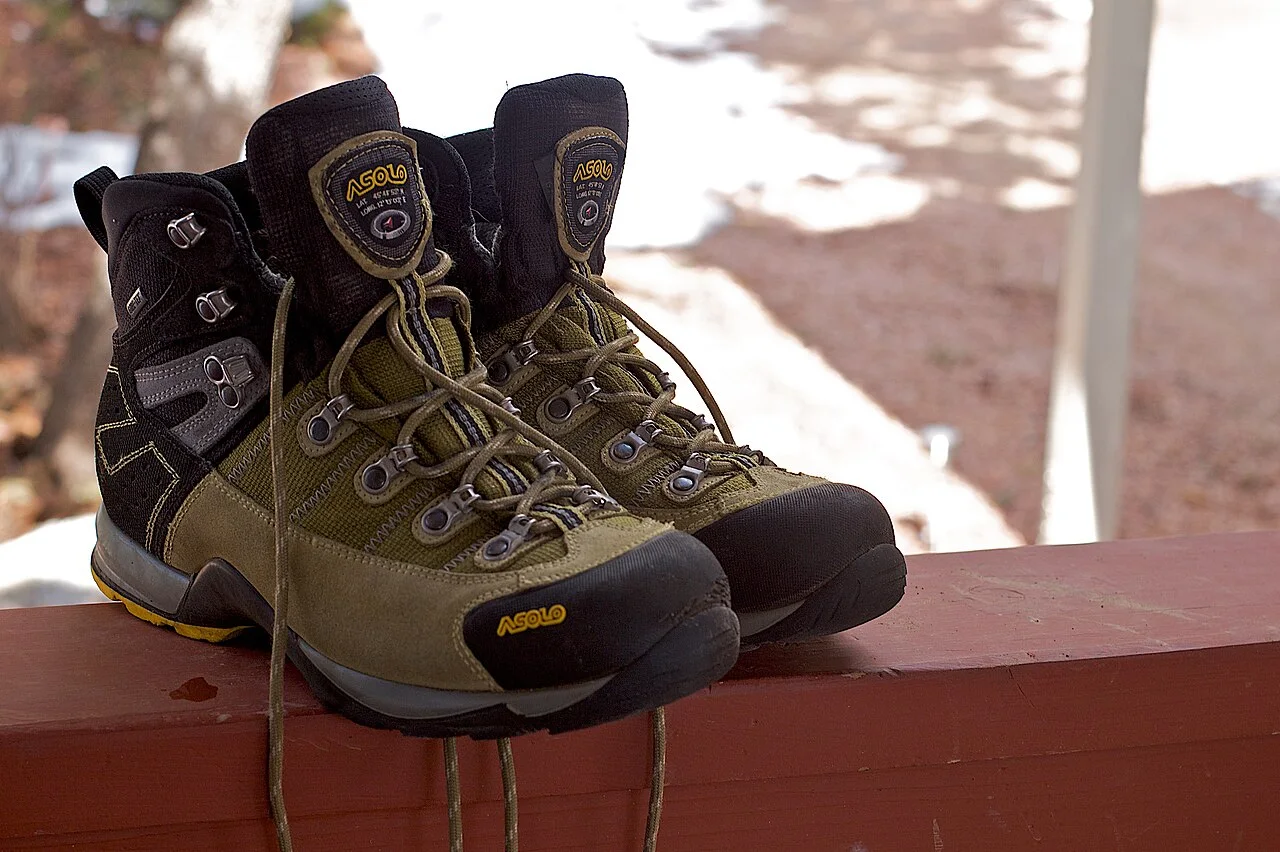
A universal pair for city strolling, wet shoreline and long trek isn’t always a successful compromise. Start with the terrain, the distance and whether you can keep your feet dry.
What to look out for
Fit
Try the pair on with the socks you plan to wear on the trip. Check heel hold and toe room while moving. Don’t assume that pronounced discomfort will necessarily disappear after a few hours of walking.
Outsole
The outsole should suit the conditions, but no tread pattern guarantees grip on every slippery surface. Avoid doubtful crossings over wet rocks and steep slopes. A new pair doesn’t automatically make a tough route easier.
Care
After the trip clean the shoes using the method approved by the manufacturer and dry them without excessive heating. Check the lacing and the condition of the outsole. Wet shoes shouldn’t be left in a closed bag for long.
Leave a buffer in your plan
Create a simple plan: where the route starts, how to return and when to inform relatives of completion. Count rest time, photos and route‑finding separately. If the group gets tired or the weather changes, shortening the walk is a reasonable decision. A spare short option is best prepared at home when you have connectivity and time to calmly compare possibilities.
Practical summary
Walk the first kilometres in the new pair close to home. This makes it easier to assess the fit and adjust the fit without turning the whole outing into a shoe test.
Next step: open trip plan and map of locations, to link the recommendations to a specific outing. Check current access to the chosen area before you set off.