
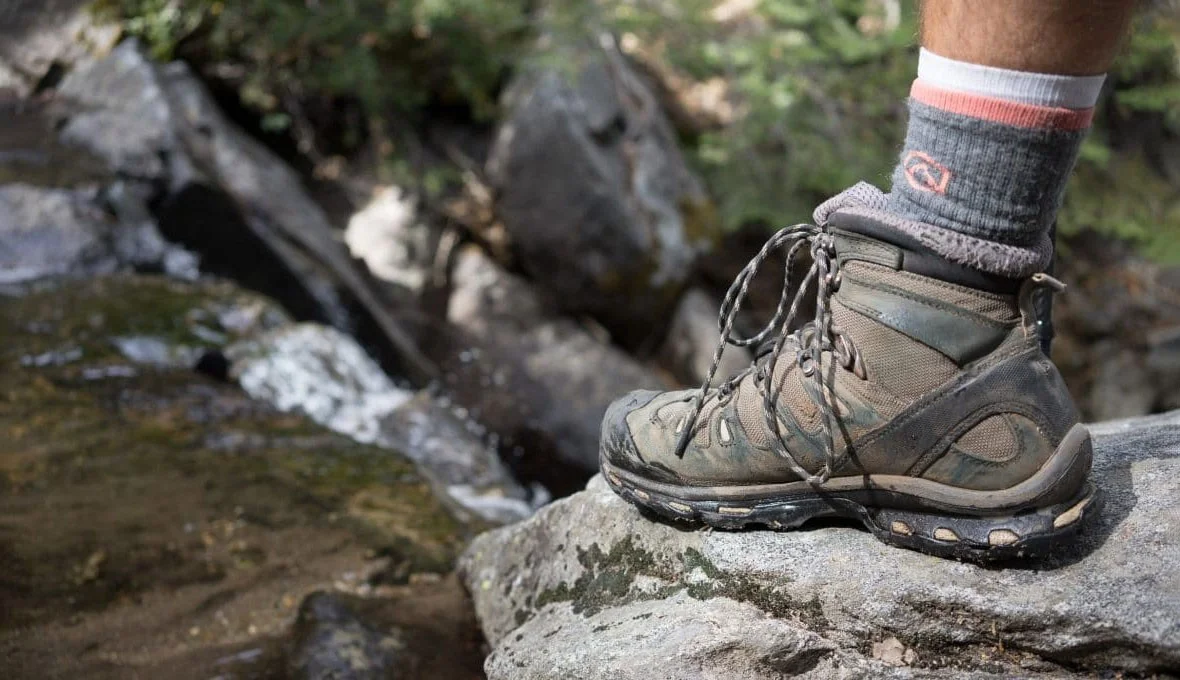
Socks work with your footwear
Comfortable socks should not bunch up, slip down or squeeze your toes. They need to fit your feet and footwear while you move. Even an expensive pair cannot fix a tight boot, a rough internal seam or an unsuitable last.
Do not expect “thermal socks” to dry soaked boots by themselves. Water that gets inside may remain for a long time; drying speed depends on footwear, weather and material. Keep a dry pair for sleeping separate from the pair you walk in.
Fabric: read the complete blend
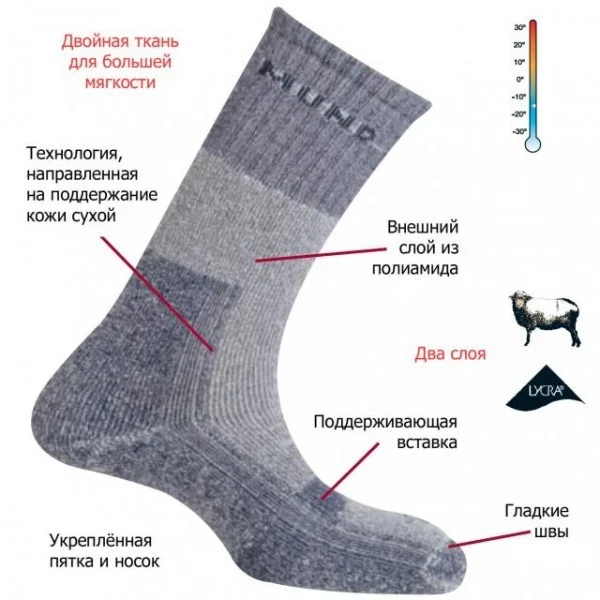
Merino wool is often blended with synthetic fibres. Polyester, polyamide and other materials help adjust durability, stretch and behaviour when damp. The percentage composition tells you more than a general advertising term on the packet.
Cotton retains moisture and can dry slowly, so compare other options for prolonged walking in wet conditions. However, not all synthetic socks behave identically, and no wool pair can promise warmth regardless of how wet it becomes.
Thickness and height
A lightweight model may fit roomy trainers more comfortably in summer, while a denser pair can add cushioning inside a boot. The key is not making footwear tight. Thick socks that compress your feet are not a good winter choice merely because of their label.
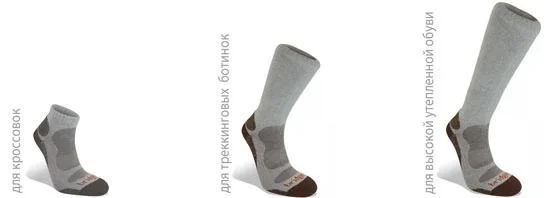
Choose height for the footwear collar and route: the sock should protect areas that may contact the boot. Light, Midweight and Expedition labels help distinguish models within a range, but are not a universal temperature scale across manufacturers.
Fit matters more than a letter size
Use the particular brand’s size chart. S, M and L do not correspond to universal shoe-size ranges. The sock heel should sit at your heel, fabric should lie without folds and toes should not press against an overstretched toe section.
Try socks with your hiking footwear and walk around, including on steps. If between sizes, do not automatically choose the smaller one: assess fit and the manufacturer’s advice. Test a new pair on a short walk before a long trip.
Changing and drying
The number of pairs depends on trip duration, weather and opportunities to wash and dry clothing. Separating walking socks from a dry sleeping pair makes sense. Keep wet socks apart from spares and dry them securely without losing them or dirtying other equipment.
If rubbing develops, stop to check for folds, grit and footwear fit instead of relying on an antibacterial treatment. Such treatments, where present, do not replace hygiene or guarantee freedom from irritation or odour.
Follow the care label
Choose wash temperature, detergent and drying method according to the particular pair’s instructions. Materials vary in their tolerance of hot water, bleach, fabric conditioner and tumble drying. Intense heat beside a campfire can damage fabric too.
After the trip, wash and dry the socks and inspect heels and toes. Actual lifespan depends on use, care and footwear fit; promising every pair at least a year without wear would be misleading.