
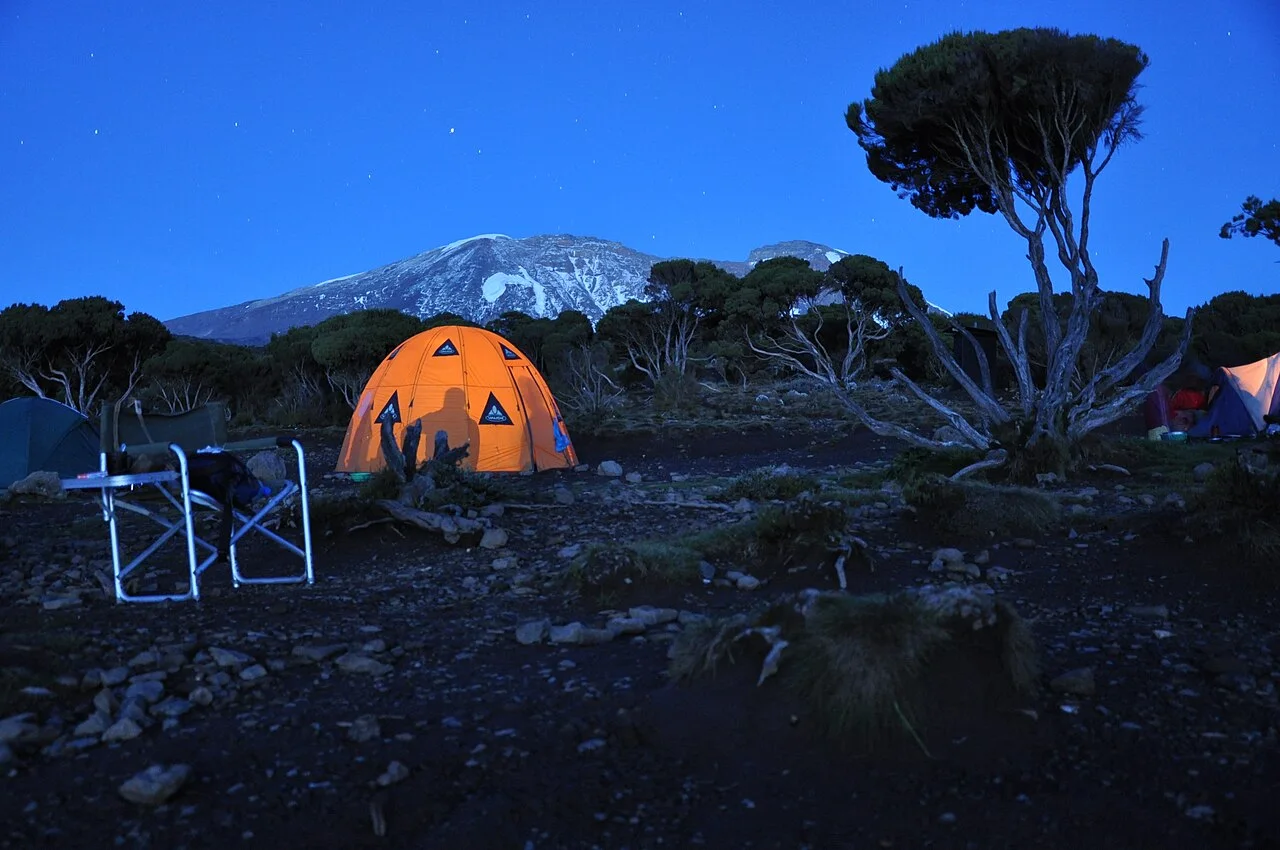
Illustrative photo: camp near the Appalachian Trail, USA. USGS / Jeff Marion · Public domain · Original photo
After rain, small wet items quickly fill the entire tent. A separate drying zone helps keep order, but it must be set up so it does not damage trees or block pathways.
What to pay attention to
Drying spot
Choose an accessible spot near the camp where items won’t fall into mud and won’t inconvenience others. Do not spread clothing on young plants. Keep in mind that evening dew can re‑wet already partially dried fabric.
Tree-Friendly Attachments
Use soft wide fasteners and check campsite rules. Do not hammer nails or cut branches. Mark the taut line with a clearly visible piece of fabric and avoid placing it on the trail.
Item organization
Dry small items in a mesh bag or under supervision so the wind doesn’t scatter them around the camp. Follow the manufacturer’s heating guidelines: a camp stove and an open flame are not suitable for drying synthetics.
Test this in calm conditions
Try any new method or gear set first at home or on a short, accessible route. Decide ahead of time what should work without prompting and what needs practice. After returning, note one or two concrete adjustments for the next trip. This way the setup gradually adapts to your conditions, and decisions are based on your own observations rather than only on others’ lists.
Practical summary
Before leaving, remove all fastenings and check the ground beneath the drying zone. No cords, clothespins or small plastic pieces should remain in the camp.
Next step: open the departure preparation list and the site map, to link the recommendations to a specific outing. Verify current access to the chosen area before heading out.