
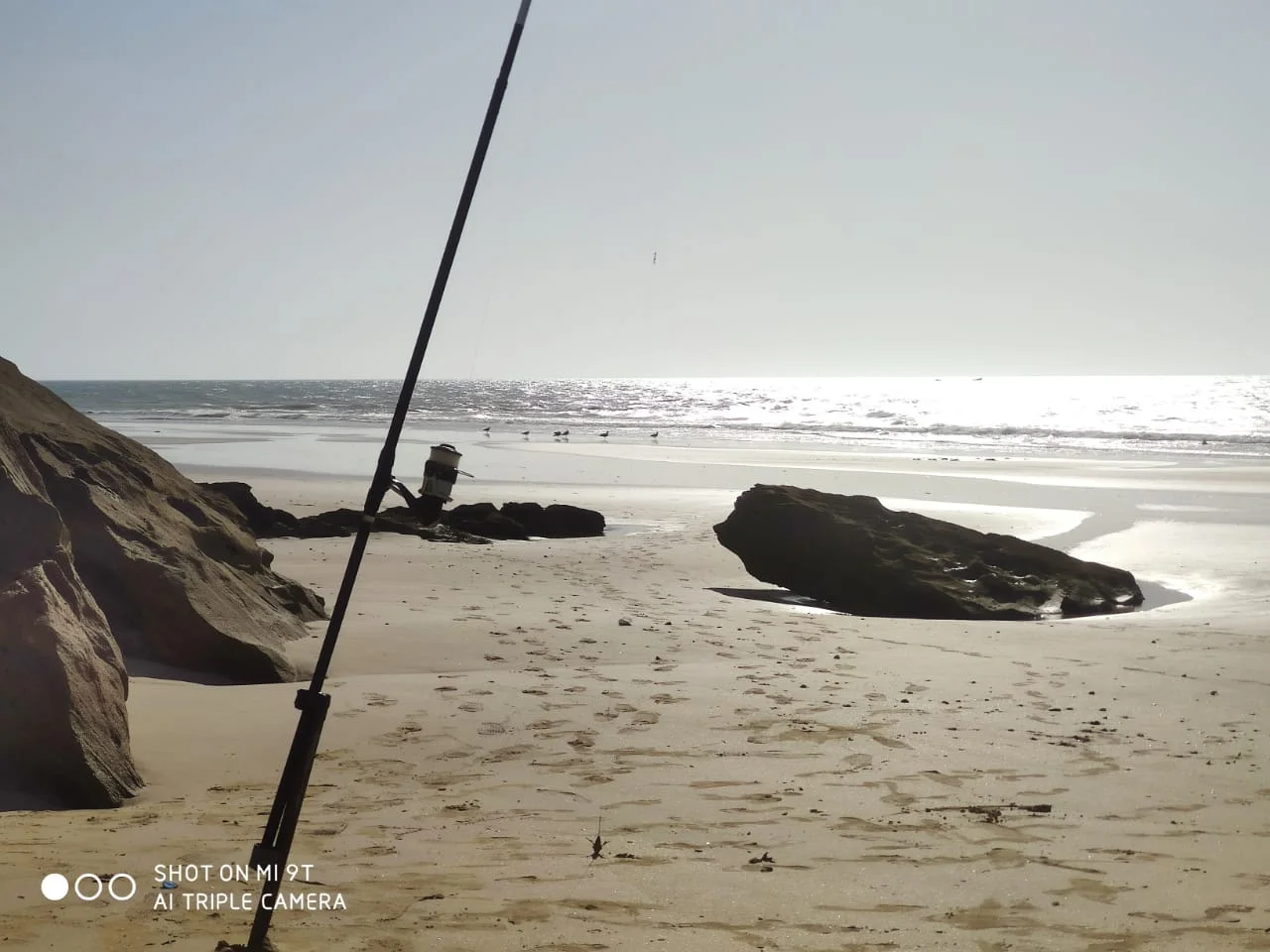
Editorial illustration SNASTI.NET.
The markings on the blank are useful only together with an understanding of the task. Choose a rod for the location, presentation method and tackle weight, rather than trying to judge quality by a single large number in the catalogue.
What to pay attention to
Length for shore fishing
A long blank can help on an open shore, but will hinder you under branches and on a narrow path. Assess the space needed for the cast and for transport. Also check the packed length of the rod sections.
Working range
The casting-weight rating describes the recommended load range, but different fishing methods require different approaches. For feeder fishing, include the weight of a loaded feeder; for spinning, include the lure and its rig. Do not treat the upper limit as a daily target.
Convenience of the setup
With the reel installed, check the grip and access to its controls. The blank’s weight is not the only thing that matters; how the complete setup feels in your hand is important too. Inspect the line guides and joints before buying.
How to verify your choice
Tackle is evaluated as a complete setup. At home, check the connections, access to adjustments and ease of handling with wet hands. On the water, start with a short test near an accessible shore: it’s easier to notice twists, excess friction or poor placement of gear than to fix them while fishing.
Practical summary
Match the specifications to your specific scenario and try handling the assembled setup. A generic piece of advice won’t account for your shore, height, transport and usual fishing time.
Next step: open tools for preparing tackle and a map of spots, to link the recommendations to a particular outing. Check current access to the chosen area before you go.