
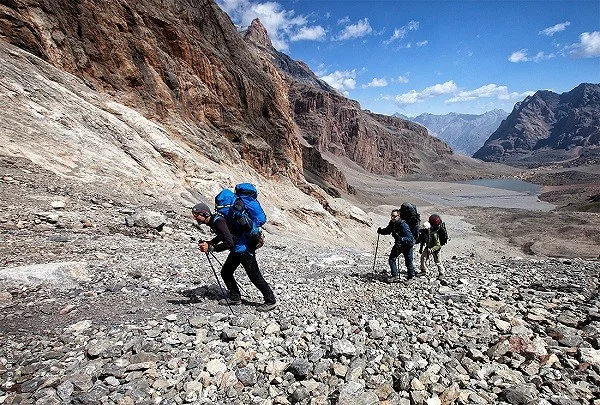
Let the route guide the design
A marked trail and a technical ascent require different footwear properties. Not every walker needs rigid double boots or crampon welts. Snow and cold are possible in summer too, but assess their likelihood for the actual route. If specialist equipment is needed, check boot and binding compatibility separately; a ledge on the sole alone does not establish it.
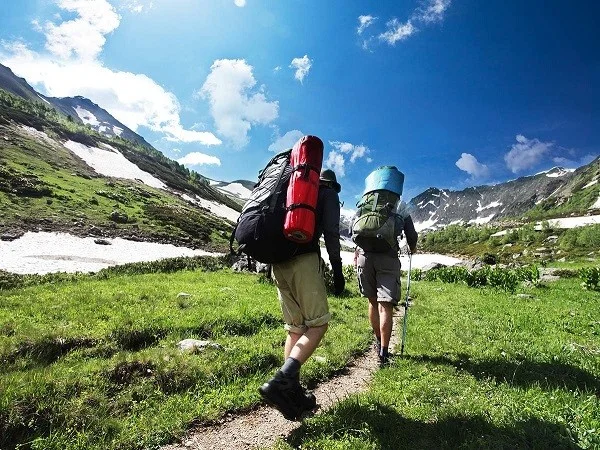
Fit with the socks you will use
Check toe space, heel retention and foot position on a descent. Feet should not be compressed or slide inside. Do not automatically buy a size larger: compare actual fit and manufacturer guidance. Try the lacing and walk with a load, then test the footwear on short walks well before the trip.
Grip and moisture
Tread cannot guarantee a slip-free step on ice or wet stone, and a high cuff does not eliminate sprains. Water protection depends on construction, condition and care; water can also enter from above. Consider drying speed, socks and opportunities to dry footwear. No pair makes every weather condition suitable for continuing.
Spares and care
For a multi-day route, plan dry socks and suitable camp footwear. Sandals do not suit every surface and cannot replace the main pair on a walking stage. After the trip, clean and dry boots by permitted methods away from intense heat. Inspect soles, seams and fittings before the next outing.