
Start with the terminology
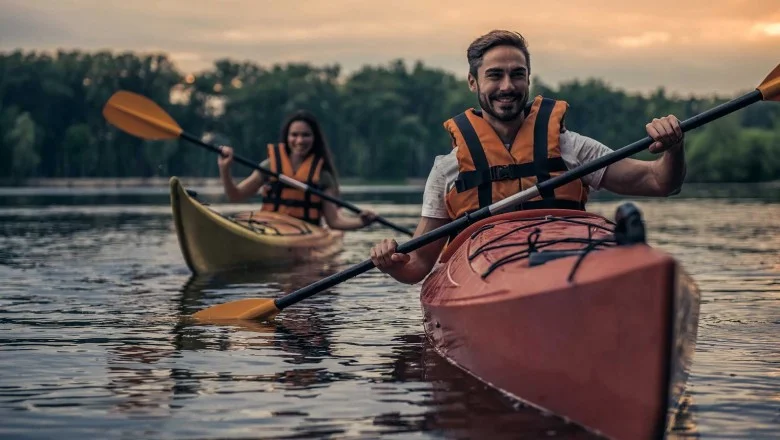
In Russian- and Ukrainian-speaking touring communities, “kayak” and “baidarka” can describe closely related boats paddled with a double-bladed paddle. The latter term is often applied to folding or inflatable touring models. A name in an advertisement alone therefore cannot establish seating, stability or intended use.
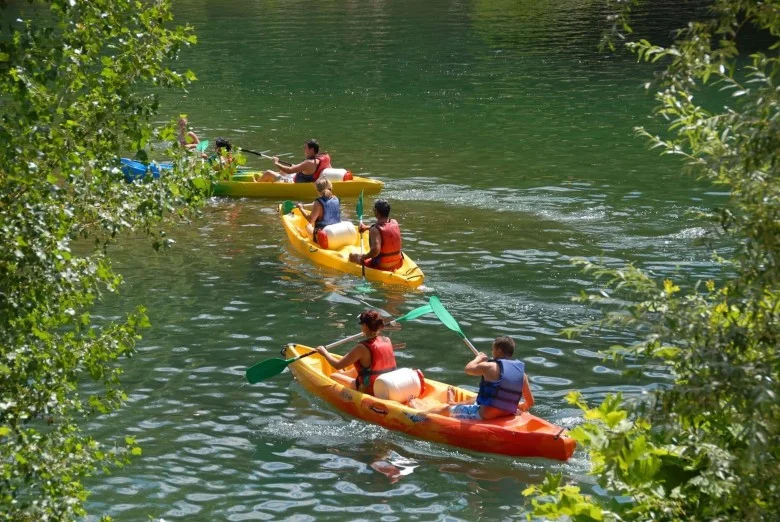
Canoe is another familiar term: the paddler usually sits or kneels and uses a single-bladed paddle. This is a useful distinction, but always consult the particular model’s description, seating arrangement and manufacturer’s instructions.
Seating and deck layout
In a sit-in kayak, the paddler’s legs are inside the hull. In a sit-on-top, the paddler sits on the open upper surface. Both are kayak designs: an open deck does not automatically make a boat a canoe.
Check seating comfort, access to footrests and freedom to paddle. Ask about load limits, luggage placement and the skills needed to re-enter after a capsize. These are more useful questions than a promise of universal stability.
Length, width and handling
Speed, tracking and turning depend on the combination of length, width, hull shape, seating and load. Not every kayak is fast, nor is every boat called a baidarka slow or safe for a beginner.
A sea outing, a calm lake and a whitewater river call for different designs and preparation. A short manoeuvrable boat is not equivalent to a touring model carrying luggage, and a broad fishing platform does not suit every wave condition.
Transport and preparation
A rigid hull needs suitable roof transport or storage space. A folding or inflatable model packs more easily into a vehicle but needs assembly, inspection and drying. Compare the complete setup—boat, seats, paddle and required equipment—not merely the hull skin’s weight.
Before travelling, find out how the fittings are installed and how the manufacturer recommends storing the boat. Do not add improvised loops or cords that could obstruct a person during a capsize.
Choosing for a first outing
Start with a lesson or a rental in suitable conditions. Tell the instructor about your experience, group and intended route. Choose a correctly sized lifejacket or buoyancy aid appropriate to the activity, and check the forecast, access and local rules.
For fishing, assess space for tackle and tools separately. For a multiday trip, consider luggage, seating and carrying the boat. A trial outing tells you more than arguing over which boat name is correct.
Compare actual models
A useful comparison lists intended use, seating, permitted load, complete weight, transport arrangements and required skills. Those details help you choose a boat for the task. “Kayak”, “baidarka” and “canoe” are starting points, not guarantees of handling on the water.