
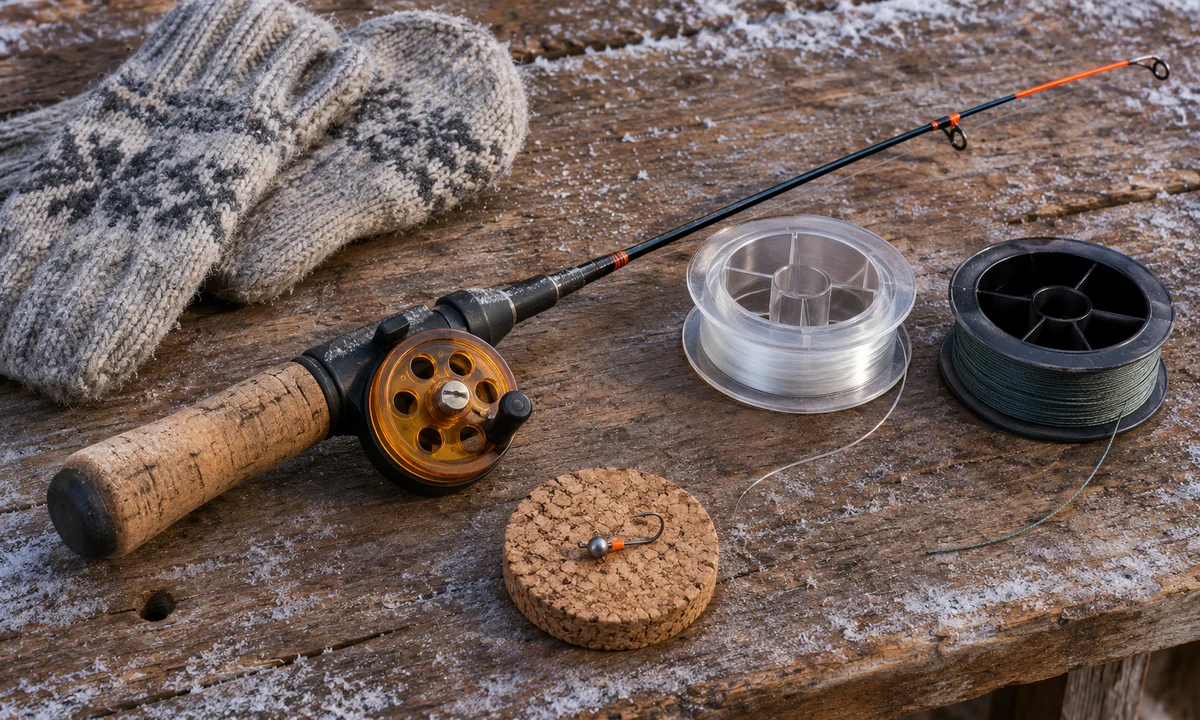
Two small spools on the shelf can carry a surprising number of promises. A more useful starting point is the lure, depth and conditions you will actually fish. The same line can feel comfortable with a small jig and awkward with a heavy spoon. There is no need to find one winner for every winter outfit: aim for a combination you understand.
Monofilament: a manageable starting point
Monofilament is a single strand. Its stretch cushions sudden pulls but also affects how clearly light contact reaches the angler. For a first small-jig outfit it is often a straightforward starting point: the rig is simple, there are few knots and its behaviour is easy to check.
Do not choose the thinnest diameter just because a label promises finesse. Lure weight, expected fish, knot quality and your ability to land the fish all matter. A thicker line has trade-offs too, including changes to the presentation of a light jig. Look for a workable balance rather than a record on a package.
Braid: direct contact and attention to freezing
Braided line usually stretches much less than nylon monofilament. That helps transmit the movement of a heavier lure at depth, but provides less cushioning during a sudden pull. Hook-setting movements and drag settings need to suit the outfit.
Water and ice can obstruct wet braid as it passes through guides. Purpose-made winter coatings aim to reduce the problem, but their presence does not remove the need for checks. Worn line, a thaw and hard frost are different situations; a single ice-fishing label cannot describe them all.
Leaders and predator teeth are a separate choice
Fluorocarbon can serve as a leader material, but its stiffness, knot and actual diameter affect a small lure. Do not automatically add a long leader: every connection should have an identifiable purpose.
Where pike are possible, use appropriate protection against their teeth. Thin fluorocarbon should not be treated as reliably bite-proof. A strong main line cannot make up for a weak or unsuitable leader.
A home check beats a brand debate
Assemble the rig, moisten and carefully tighten a knot recommended for the material. Test it with controlled tension away from your face and exposed hooks. The spool should be evenly filled without loose loops or excessive line.
Run your fingers along a slack working section: obvious fraying, flattening or damage is a reason to replace it. Repeat the inspection after contact with an ice-hole edge or a snag. Never wrap thin fishing line around your fingers to test its breaking strength or pull free a snag.
Build one familiar outfit first
One rod matched to a particular lure and a spare spool of familiar line are more useful than several untested combinations. Record the conditions and behaviour: frost, depth, lure weight, knot and any icing. That makes the next adjustment easier to explain.
Line selection does not make venturing onto ice safe. Conditions need a separate assessment, rescue equipment must be accessible and local restrictions must be checked. If conditions are uncertain, test the outfit at home and postpone the trip.