
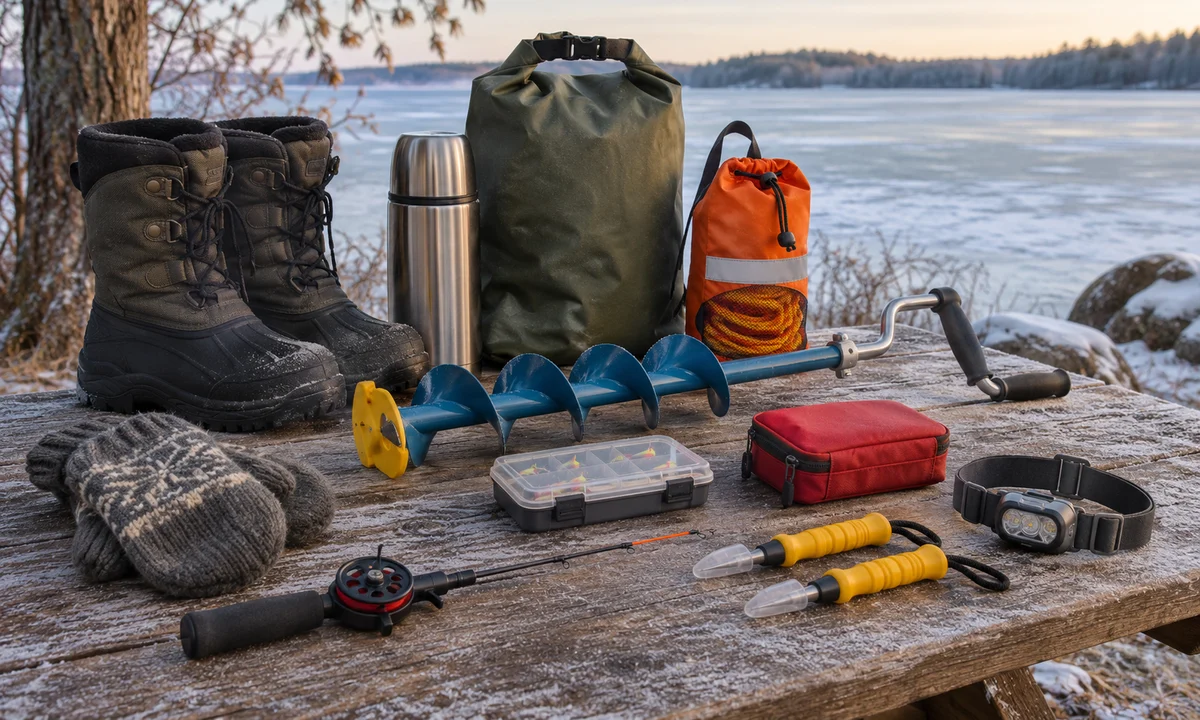
Winter fishing starts with packing the evening before, rather than drilling the first hole. Home is the best place to test your headlamp, find spare mittens and decide whether you really need another tackle box. This checklist is for a short daytime trip: organised, accessible and free from extras that hide the things you actually need.
Start with the location and return plan
Check the forecast, wind, daylight hours and current restrictions for the specific waterbody. In Ukraine, access to shorelines may be closed for security reasons; fish wintering areas and local fishing restrictions also matter. Snow and freezing weather do not mean that going onto the ice is permitted or safe.
Tell someone where you are going, who is coming and when you expect to return. Download an offline map, charge your phone and agree when you will check in. Keep your first outing short, with a straightforward way back to shelter.
Tackle for one familiar method
Take a familiar ice fishing rod, a ready-rigged spare rod or replacement rig, a small lure box, line and suitable bait. Keep scissors and a hook remover or forceps in a separate compartment. Never carry exposed hooks loose in your pockets.
For ice fishing, you will also need an auger with its blade guard and an ice skimmer. Cover the blades before moving. A tackle seat or sled should make carrying easier, rather than turn the walk to shore into a strength workout.
Spare equipment that matters more than another lure
- Dry socks, mittens and an extra insulating layer in a dry bag.
- A flask of warm non-alcoholic drink, drinking water and accessible food.
- A headlamp, spare power and a power bank protected from moisture.
- A first aid kit, personal medication and emergency insulation; a thin foil blanket does not replace warm clothing.
- A phone in a waterproof case, a whistle and a rubbish bag.
Keep spare batteries and your phone reasonably warm near your body without overheating them. Pack food and spare mittens where you can reach them without emptying the whole bag onto snow.
Keep safety equipment accessible
For an ice outing, prepare ice rescue picks, a suitable rescue rope with a floating end or a throw bag, and an appropriate flotation device. Check that it works with your winter clothing and practise using the equipment on land. Picks buried at the bottom of a tackle box will not be accessible in an emergency.
No equipment set makes questionable ice suitable for travel. If reliable information about conditions is unavailable, change the plan: a permitted shore fishing session or a walk is better than testing the risk yourself.
The last check before leaving
Does the headlamp work? Are the spare clothes dry? Are the auger blades covered? Does someone know the plan? Is there space to bring rubbish home? These five questions are more useful than trying to take every item you own.
After the trip, dry your clothing, check the tackle and note anything you missed. After a few outings, you will have a compact personal checklist that genuinely earns its place in your bag.