
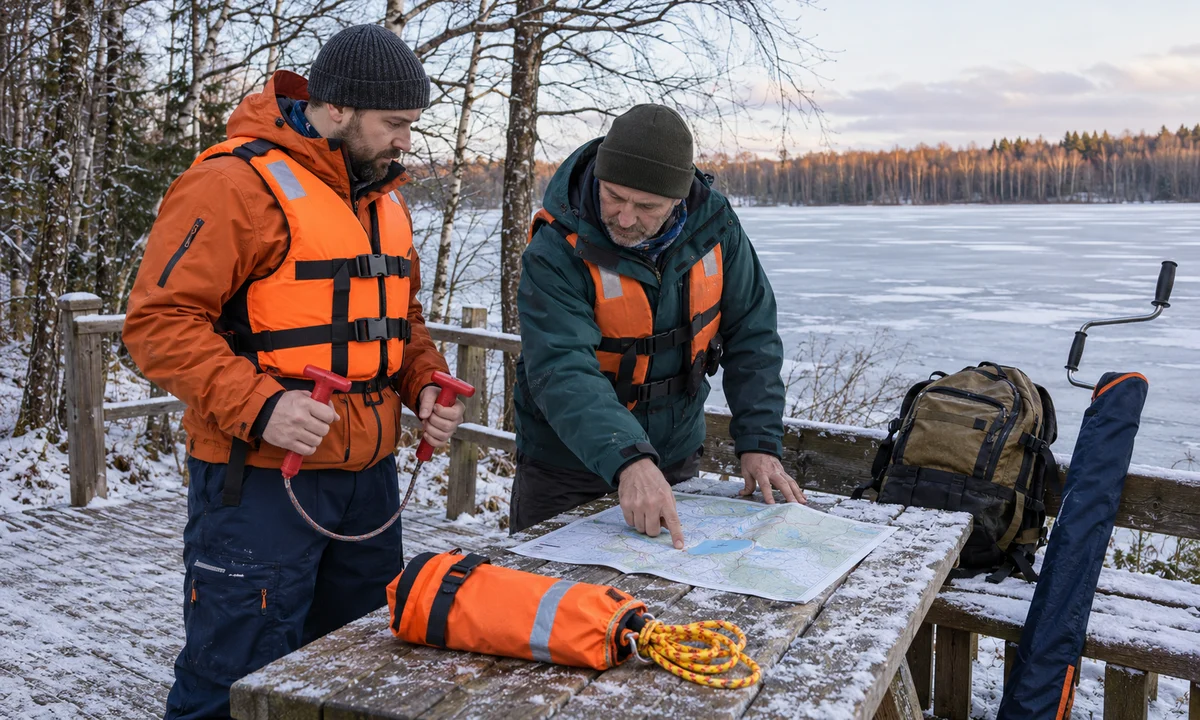
A winter lake can be beautiful: quiet air, a bright shoreline and steam rising from a flask. But the view tells you little about what is happening beneath the snow. The most useful winter fishing skill is not enduring the cold. It is being willing to change your plan. The fish will still be there after a day when you decide to stay off the ice.
Check before setting off
Find out whether access to the waterbody is permitted and whether local ice access bans, fishing restrictions or security warnings apply. Check the forecast and information from local rescue authorities separately. An old social media post does not describe current conditions.
Do not go alone. Tell someone the location and return time, and agree with your companion how you will communicate and reach warm shelter. If conditions cannot be assessed reliably, stay on shore.
Why appearances are not a guarantee
Ice varies even within a single lake. Currents, springs, discharges, changing water levels, thaws and snow cover all affect its condition. River mouths, channels, bridges, reeds and areas beside open water deserve particular caution.
One thickness measurement cannot establish the safety of an entire route. Do not test ice by stamping on it or rely on other people’s footprints or a crowd. Do not drive a car onto it. Numerical guidelines cannot replace a local assessment or grant permission to venture out.
Prepare help before you need it
Carry accessible ice picks, a whistle, a protected phone, a rescue rope or throw bag and an appropriate flotation device. Keep dry clothing and insulation sealed against water. Practise using your equipment on land rather than discovering how it works in an ice hole.
Avoid gathering closely together or drilling many holes beside each other. Alcohol impairs judgement and increases heat loss. For a first trip, skip overnight stays and fuel-burning tent heaters: carbon monoxide in an enclosed space can be deadly.
If ice cracks or you fall through
Do not run. Spread your weight, carefully lie down and crawl back in the direction you came from. If you fall through, shout for help, try to keep your head above water and spread your arms along the edge. Control your breathing if you can, and avoid exhausting yourself with abrupt attempts to pull straight upwards.
Use ice picks to gradually slide your chest onto the edge while kicking your legs. Once out, do not stand immediately: roll and crawl away from the hole along your approach route. These are general principles; practical instruction from qualified professionals before the season is worthwhile.
Help without becoming another casualty
Call 101 or 112 in Ukraine immediately, giving the waterbody, coordinates and landmarks. Do not run to the hole or stand at its edge to offer your hand. Help from a safe position using a rope or long object. If you cannot do so without endangering yourself, wait for rescuers and keep talking to the person.
After rescue, move the person to shelter, handle them gently, remove wet clothes if dry replacements are available, insulate the torso and head, and protect them from the ground. Do not rub the skin, give alcohol or use a hot bath. Offer a warm non-alcoholic drink only if the person is fully alert and can swallow normally. Suspected hypothermia needs medical attention: call 103 or 112 in Ukraine. If the person is unconscious or not breathing normally, follow the dispatcher’s resuscitation instructions.
The best winter fishing trip ends with an ordinary journey home. Cancelling an outing is a sensible decision, not a wasted day.