
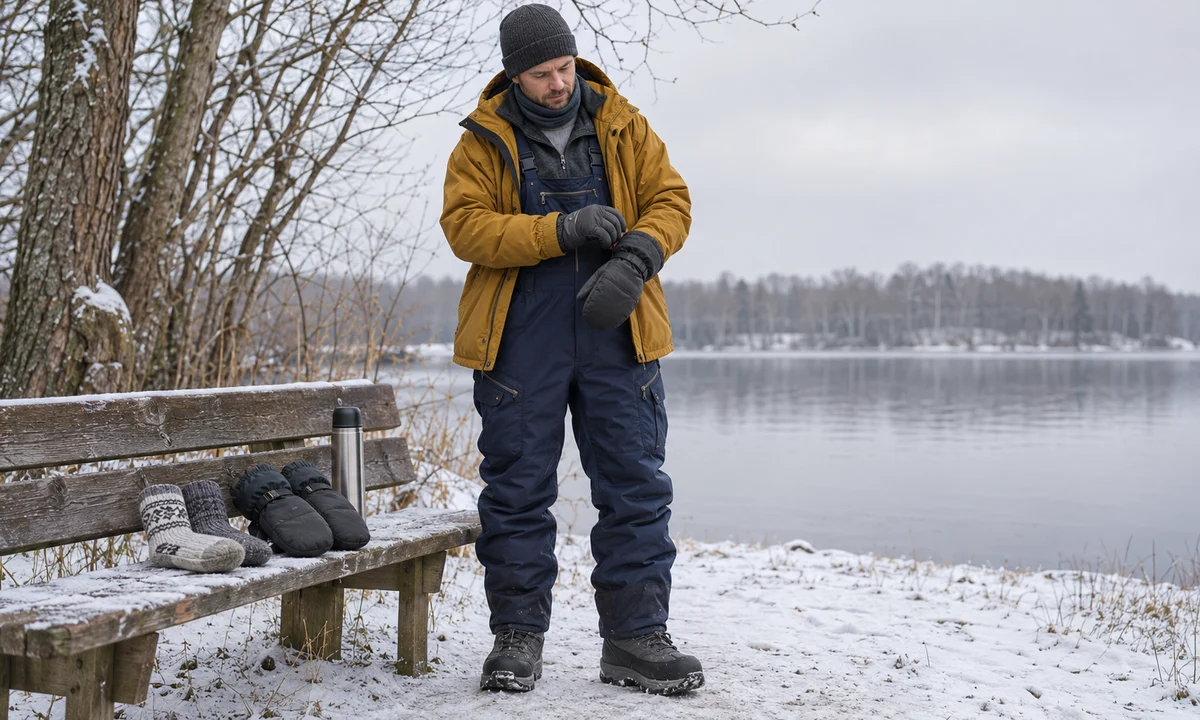
Winter fishing has a familiar paradox: you feel hot walking to your spot, then cold after a few minutes of waiting. The problem is not always an insufficiently thick jacket. Often, the clothing simply does not adapt to changing activity. Rather than hunting for one exceptionally warm suit, build a system you can adjust.
Three jobs, rather than three random jumpers
A base layer helps move moisture away from your skin. Merino wool or a suitable synthetic fabric works well. A cotton T-shirt soaked with sweat stays damp for a long time, which is an uncomfortable starting point for sitting in the cold.
A middle layer traps warmth: fleece, wool clothing or an insulated jacket can serve this purpose. The outer layer protects against wind and precipitation. Layers should not compress each other. Try the full outfit together, squat and lift your arms.
Dress for activity as well as temperature
Before walking, reduce insulation or open ventilation before you start sweating. Add a warm layer as soon as you stop, rather than waiting to become thoroughly cold. An extra jacket in an accessible compartment is often more useful than wearing excessive insulation all day.
A temperature label does not guarantee comfort. Wind, moisture, the length of your stops and your activity all affect how cold you feel. Test a new outfit close to a warm building first.
Hands and feet need room
Footwear should be insulated, dry and spacious enough for your socks and toe movement. Two thick pairs inside a tight boot are not necessarily warmer than one suitable pair: compression can restrict circulation. Remove and dry boot liners after each outing.
For tackle work, combine thinner gloves with warm mittens for waiting. Bring a dry spare pair. Add a hat covering your ears, a neck gaiter and eye protection against wind and glare. Traction cleats improve grip on slippery surfaces; they do not strengthen the ice.
What to check when trying clothing on
- Does your lower back stay covered when sitting or bending?
- Can you open pockets and fastenings while wearing mittens?
- Are the trouser legs long enough and the cuffs comfortable?
- Can you reach your whistle, phone and ice picks?
- Does the outfit work with an appropriate flotation device?
A product described as a flotation suit is not automatically a replacement for a certified lifejacket. Check the purpose and documentation of the specific model. Warm clothing cannot prevent every consequence of falling into cold water.
Know when to finish
Persistent shivering, numb fingers or difficulty handling tackle are reasons to stop fishing and seek warmth. Confusion, unusual drowsiness or slurred speech require urgent help: in Ukraine, call 103 or 112.
Keep dry spares in a dry bag and identify a warm shelter before leaving. A good outfit helps you return home comfortably; it is not equipment for proving how many hours of freezing weather you can endure.