
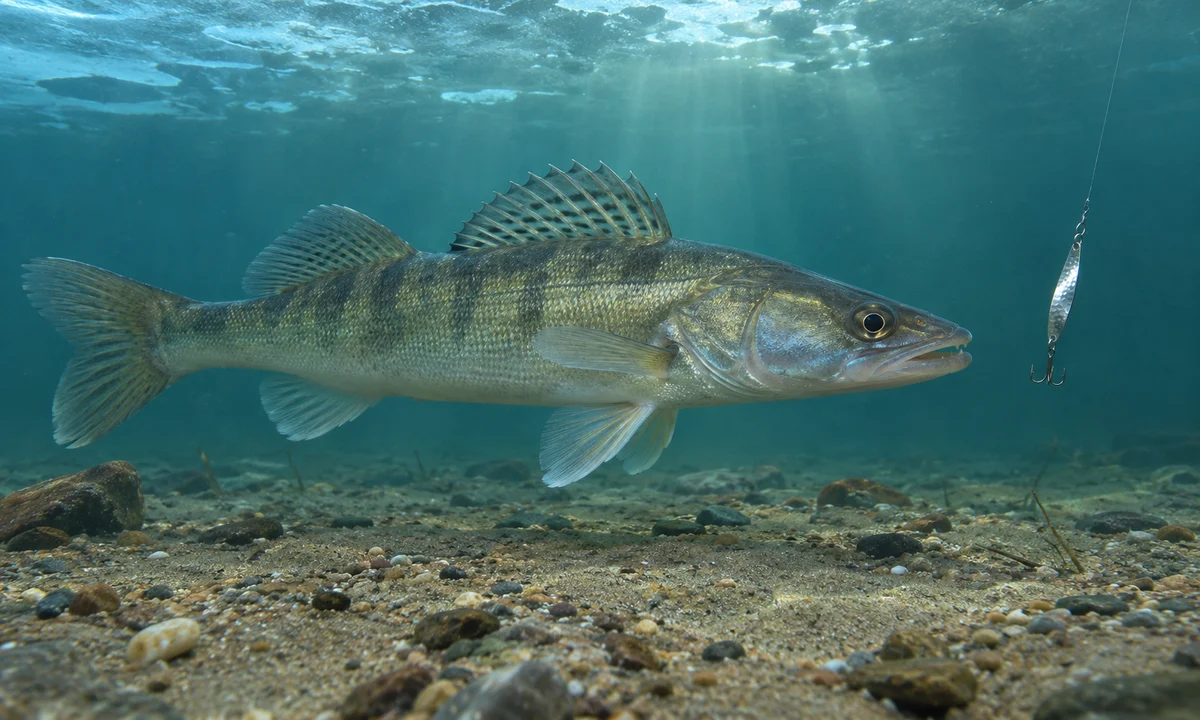
Zander fishing teaches you to notice small signals. The lure touches bottom, the line straightens, and unfamiliar resistance appears during a pause. Those details provide more information than a dozen aimless rod lifts. In winter, start with control: understand where the lure is and what happens after you move the rod. This article concerns European zander, Sander lucioperca, rather than North American walleye.
An outfit that transmits contact
Use an ice rod that handles the chosen weight confidently without collapsing during a lift. An excessively soft tip makes control difficult, but unnecessary stiffness poorly matched to the line is not helpful either. The reel and line capacity must suit the working depth.
Monofilament is generally easier to manage in freezing conditions. Braid transmits contact more directly, but it can retain water and ice up. Choose for the conditions rather than copying another angler’s setup. Where pike may be encountered, include appropriate protection against their teeth.
Weight matters more than a famous name
Vertical spoons, balancing lures and lipless vibrating lures are different tools. A narrow, heavier lure is often easier to use when reaching a working depth quickly and maintaining control are priorities. A balancing lure needs room to swing, while a lipless lure’s treble hooks can catch the line with an unsuitable presentation.
A few models offering different weights and movements are enough for a first selection. Around 6–9 cm can be a starting size for some conditions, not a rule. If current carries the lure well away, address weight and control before experimenting with colour.
Check the rules as well as the contours
Firm ground, a depth break or an adjacent plateau may interest zander. However, advice to head for a deep hole is inappropriate without checking the area’s status. Ukraine has seasonal fishing bans in designated wintering areas; check their boundaries against current orders from the territorial fisheries authority.
Do not apply one feeding timetable to every waterbody. Light, clarity and the presence of prey fish can change the situation. Keep your first outing to daylight hours instead of extending it into darkness on an assumption about evening feeding.
Presentation begins with knowing the depth
Carefully establish the bottom, choose your working level and make a short controlled lift. Allow the lure to finish moving. Then compare a different height and pause length. Constant forceful bottom pounding and a cloud of silt are not essential ingredients for a bite.
A bite may feel like a sharp knock, sudden weight or altered line tension. Set the hook in a controlled manner without an excessive whole-body jerk. Check the knot and hooks after contact. If responses stop, try the previous successful presentation again before changing every lure.
Avoid unnecessary harm
Have an unhooking tool ready and do not leave fish on snow. Fishing at substantial depth can cause pressure-related injury. Do not assume that immediate release always resolves it, and avoid deliberately seeking excessive depths.
Technical advice only makes sense where access is permitted and conditions have been assessed reliably. Stay off questionable ice, take a companion and keep rescue equipment accessible. Start with a few manageable spots: careful lure control is more useful than a long hazardous route.
More winter fishing ideas
- European perch in winter: light tackle, lure action and a careful search
- Pike in winter: strong tackle and time for the lure to pause
- Winter fishing safety
Check current restrictions and designated wintering areas with Ukraine’s fisheries agency.