
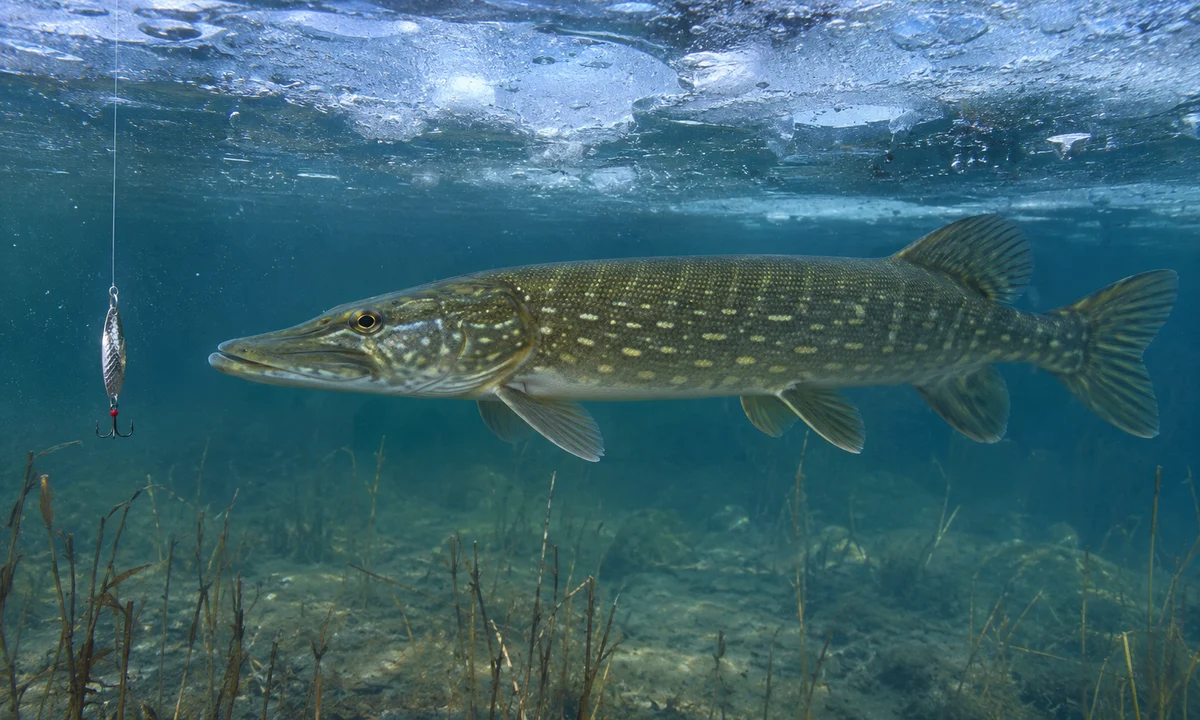
Winter pike have a distinctive presence. You watch the lure, pause, and suddenly feel solid weight instead of a gentle movement. That moment is memorable. Prepare for it without rushing: your outfit needs to handle a surge, and your unhooking tools need to be somewhere you can find them immediately.
Build strength without unnecessary bulk
Choose an ice rod with a blank suited to the lure weight and a handle comfortable in mittens. The reel should release line under load in a controlled way. Check its operation in the cold before fishing, rather than after the first strong bite.
When deliberately targeting pike, use a bite-resistant leader such as steel or titanium. Ordinary fine line should not be treated as protection against sharp teeth. Snaps and connections must suit the expected load; inspect them for damage after contact with a fish.
Balancing lures and spoons behave differently
A balancing lure swings sideways and needs space free from timber and snags. A vertical spoon can offer a more compact presentation, although its movement also depends on its shape. Do not choose a lure solely for its finish: first understand how it moves in water.
A few balancing lures around 5–9 cm and differently shaped spoons can be a starting selection. Size is a selection guide, not a promise of a trophy. The weight must maintain control at your fishing depth, and the leader should not overwhelm a small lure.
Search without compromising your route
Depth changes and vegetation edges can be interesting, but pike are not obliged to occupy every reed bed. Check several levels and consider where prey fish are holding. You do not need to drop a lure directly into submerged timber to investigate the surrounding area.
Safety matters more than attractive underwater features. Ice beside reeds, channels and inflows can be weak. Do not approach a hazardous area for the sake of a promising fishing spot. Change your plan if conditions cannot be assessed reliably.
Let the lure finish moving
Start with a moderate lift and a pause long enough for the lure to finish its movement. If there is no response, change the presentation height or make the action gentler. Constant aggressive jigging is not a universal solution for reluctant pike.
Tip-ups are a separate technique with their own rigging and supervision requirements. Before using them, check permitted tackle, hook limits and bait rules for the specific waterbody. Do not leave tackle unattended or move live fish between waterbodies.
A bite is not the end of preparation
Keep long forceps or a hook remover and suitable safe unhooking tools ready. Avoid pulling heavily loaded line with bare fingers, and never lift a large pike by the line alone. Learn correct handling from an experienced angler before your first trip.
Check current Ukrainian restrictions and the boundaries of designated wintering areas beforehand. Keep fish intended for release out of freezing air for as little time as possible, and do not lay them in snow. A good winter pike outing combines controlled tackle, attention to the waterbody and a straightforward journey home.
More winter fishing ideas
- European perch in winter: light tackle, lure action and a careful search
- Zander in winter: lure control instead of random rod movements
- Winter fishing safety
Check current restrictions and designated wintering areas with Ukraine’s fisheries agency.