
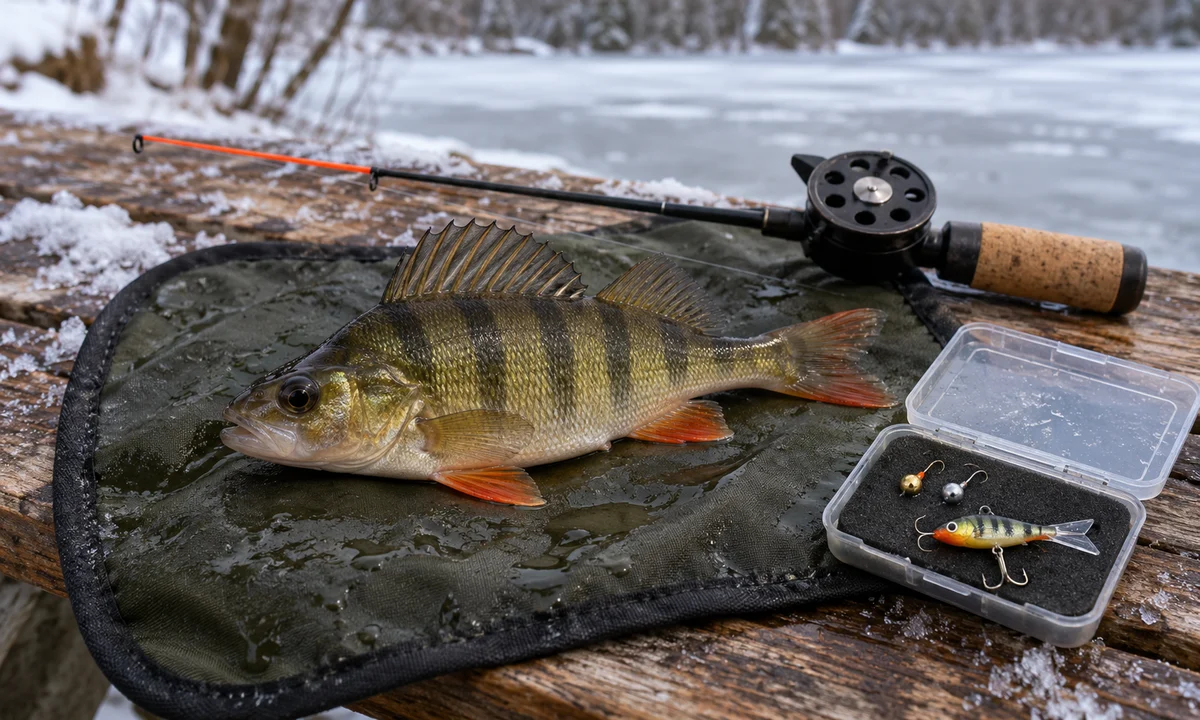
The first perch bite often feels like a brief touch: the spring indicator twitches, your hand senses extra weight, and the winter morning suddenly becomes more engaging. European perch reward observation. At one spot they chase a balancing lure; at another they respond only to a tiny jig movement. Start with a manageable outfit and a methodical search rather than a supposedly magical colour.
Match the outfit to the lure
For small mormyshka jigs, use a light ice rod with a convenient reel and a spring indicator matched to the jig’s weight. Small vertical spoons and balancing lures work better with an appropriately responsive rod tip. One rod is unlikely to control a tiny jig and a heavy balancing lure equally well.
Fine monofilament helps delicate presentation, but its strength must suit the fish, depth and conditions. Check the knot and line near the lure after snags. Going thinner simply for the number on the spool is not worthwhile: repeated break-offs do not improve sensitivity.
Three lure types, three jobs
A mormyshka with permitted bait, such as bloodworm, lets you work a spot with small movements. Baitless jigs demand particularly consistent presentation. A vertical spoon works beneath the hole, while a balancing lure swings sideways to cover a wider area.
A compact balancing lure around 3–5 cm can be a starting point for smaller perch, rather than a universal prescription. In deeper water or current, maintaining control matters more. A handful of contrasting lure types is enough: natural and bright finishes, with lighter and slightly heavier options.
Search for the shoal with a plan
Permitted areas with depth changes, firm bottom or remaining vegetation can be interesting. However, reeds and current can also coincide with dangerous ice. Fishing potential is never permission to approach a hazardous spot. Keep your search within an assessed safe route.
At each location, check close to the bottom and then a little higher. Without a response, alter the depth or movement before replacing every lure. After a bite, remember the depth and presentation height: those details are more useful than attributing success to colour alone.
The pause is part of the presentation
Begin with a short sequence of lifts and pauses. Let a balancing lure finish its swing and return, or a spoon complete its glide. If fish only touch the lure, try smaller movements, longer pauses or a small jig. Avoid changing speed, colour and size simultaneously, or you will struggle to identify what worked.
Unhook small fish intended for release promptly with wet hands. Do not leave them lying on snow. Have your unhooking tool ready and take home every piece of discarded line.
Keep the first outing short
Choose one manageable outfit, two or three presentations and a short daylight route. Check current Ukrainian fishing rules, designated wintering areas and local access restrictions. The presence of other anglers does not make a prohibited location legal.
Stay off questionable ice and do not travel alone. Open water requires a separately prepared shore fishing outfit. Understanding your tackle and returning keen to try again is a perfectly good result for a first trip.
More winter fishing ideas
- Pike in winter: strong tackle and time for the lure to pause
- Zander in winter: lure control instead of random rod movements
- Winter fishing safety
Check current restrictions and designated wintering areas with Ukraine’s fisheries agency.